 Written by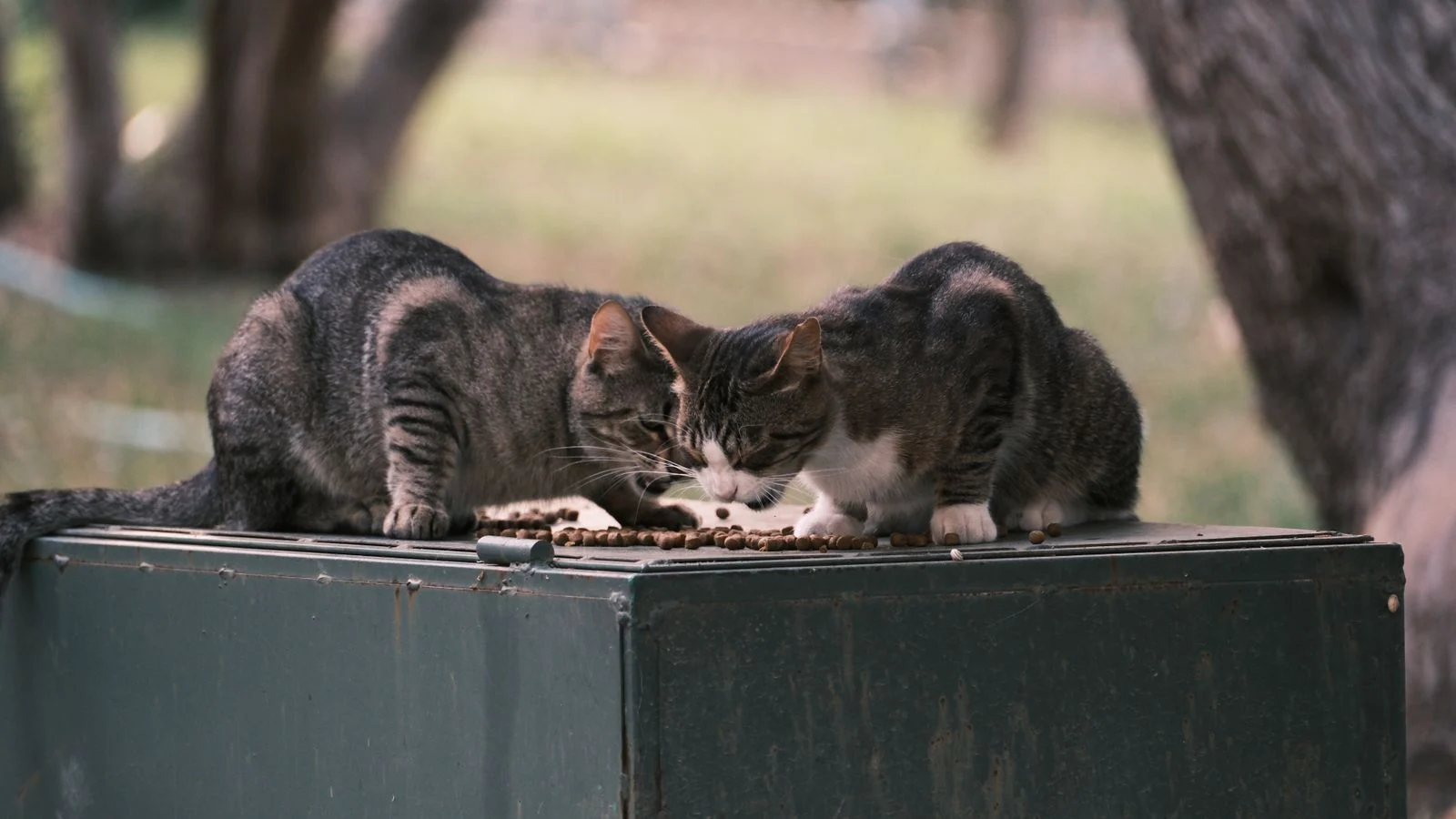
If you’ve ever set down two food bowls only to find one cat has already cleaned out both dishes while the other sits by an empty bowl looking betrayed, you know the particular chaos of feeding a multi-cat household. It’s one of the most common frustrations American cat parents run into, and it’s not just about fairness. Fast eating, food guarding, and one cat consistently out-competing another can lead to real health issues: vomiting, weight gain in the food-stealer, and weight loss or nutrient gaps in the cat who never gets a fair shot.
The good news is that a few structural changes to how, where, and with what you feed your cats can solve most of these problems without constant supervision. This guide covers why multi-cat mealtimes go sideways, the health risks worth taking seriously, and practical ways to set up feeding stations that keep every cat healthy, calm, and fairly fed — whether you’re managing three cats in a Chicago apartment or five cats on a few acres outside Austin.
Why Feeding Time Gets Complicated With More Than One Cat
Cats are not naturally communal eaters. In the wild, they hunt and eat alone, and that instinct doesn’t disappear just because they share a home with other cats. When multiple cats are fed from bowls placed close together, the more confident or simply faster cat often eats quickly, moves to the second bowl, and finishes that one too, while a more cautious or slower cat hangs back and waits for an opening that may never come.
The Cat Parent's Guide to Slow Feeding & Enrichment
Get our expert guide delivered to your inbox — plus an exclusive 15% discount code for your first order.
This dynamic is especially common in households that mix a kitten with an adult cat, or a food-motivated cat with a more anxious one, and it tends to get worse when cats are fed on a strict schedule rather than in a way that matches their individual eating speed.
The Health Risks of Uneven, Fast Multi-Cat Feeding
Beyond the daily stress, uneven feeding has real consequences. The American Society for the Prevention of Cruelty to Animals (ASPCA) notes that maintaining a healthy body weight is one of the most important things owners can do for a cat’s long-term health, and food-stealing dynamics are a common, overlooked driver of weight gain in one cat and weight loss in another within the same household. The American Veterinary Medical Association (AVMA) also points out that rapid eating in cats can contribute to regurgitation shortly after meals, which owners sometimes mistake for a food allergy when it’s really a pacing problem.
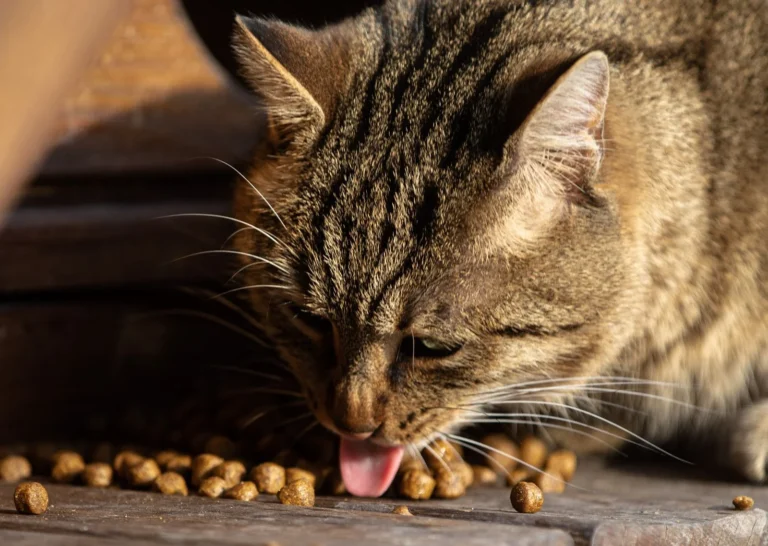
Cats who eat too fast are more prone to vomiting whole or barely chewed food, and cats who chronically undereat because a housemate keeps beating them to the bowl can develop nutrient gaps over time, along with the ongoing stress of being on guard at mealtime.
Give Every Cat Their Own Feeding Station
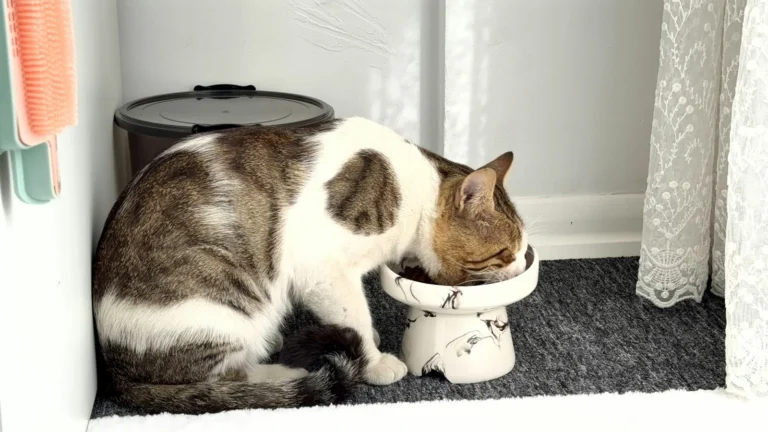
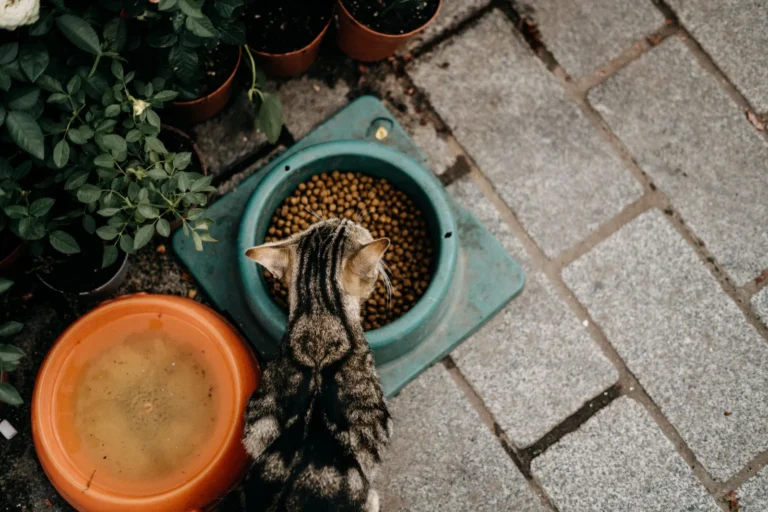
The single most effective fix is also the simplest: stop feeding cats side by side. Separate feeding stations, placed in different rooms or at opposite ends of a room with a visual barrier between them, let a food-guarder relax and let a cautious cat eat without watching over its shoulder.
For households with a food-stealer and a slow or nervous eater, feeding the confident cat first in one spot and the hesitant cat a few minutes later in a separate, quiet location often works better than feeding them at the exact same moment. In smaller apartments, going vertical helps too: feeding one cat on a stable, elevated surface like a secured shelf or cat tree platform while the other eats at ground level creates real distance without needing extra square footage.
Slow Feeders and Puzzle Bowls Level the Playing Field
Even with separate stations, a fast eater can finish well before a slower cat and then wander over to “help” with the second bowl. This is where a slow feeder or puzzle-style bowl earns its keep. Textured ridges, mazes, and raised patterns force a fast eater to work for each bite, which stretches out mealtime and gives the slower cat a genuine head start instead of a two-minute window.
Our Treat Maze Bowl is built for exactly this scenario: it can turn a thirty-second meal into a five- or ten-minute activity, which is often enough to even out the pace between cats with very different eating speeds. For a gentler, lower-pressure option, an interactive licking bowl works well for wet food or pureed toppers, slowing consumption through texture rather than food location.
Managing Cats With Different Dietary Needs
Multi-cat households often need to serve more than one type of food at once: a senior cat on a kidney-support diet, a kitten who needs kitten-formula food, or a cat managing weight who needs a measured portion while a housemate free-feeds. The American Animal Hospital Association (AAHA) notes that keeping cats on the correct, individually appropriate diet matters for long-term organ and weight health, and that only works if cats can’t simply eat from each other’s bowls.
Microchip or RFID-activated feeders are worth considering for households with a strict prescription diet, since they physically block the wrong cat from accessing the wrong food. For less strict situations, timed separation or supervised meals may be enough.
Building a Routine That Sticks
Consistency matters more than perfection. Feed at the same times each day, in the same locations, so every cat learns what to expect and where to go. If you’re introducing a new setup, such as switching a fast eater to a slow feeder or moving stations to separate rooms, make the change gradually over a week or two rather than all at once, so anxious cats aren’t startled by a new routine on top of a new bowl.
If you notice ongoing vomiting, sudden weight changes, or one cat consistently avoiding food even after separating feeding stations, it’s worth a conversation with your veterinarian, whether at a local clinic or a VCA Animal Hospital location, to rule out underlying medical causes before assuming the issue is purely behavioral.

Get Your Free Slow Feeding Guide
Everything in this article — plus portion charts, feeder comparisons and meal plans — in one printable PDF. A 15% discount code is included.
Frequently Asked Questions
How many feeding stations do I need for multiple cats?
A good general guideline is one feeding station per cat, plus one extra when possible, placed in separate locations rather than clustered together. This mirrors the “one plus one” spacing many veterinary behaviorists recommend for litter boxes, and it reduces competition and guarding at mealtime for the same reason.
Will a slow feeder work if one cat is much faster than the other?
Yes, and it’s often the easiest fix. Giving the faster eater a slow feeder or puzzle bowl while the slower cat keeps a regular dish helps close the timing gap without changing anyone’s actual food or portion size.
Is it normal for cats to steal each other’s food?
It’s common, especially in households with mixed personalities, but that doesn’t mean it’s harmless long-term. Left unaddressed, it can lead to weight gain in one cat and undereating in another, so it’s worth addressing with separation and pacing tools rather than assuming it will resolve on its own.
Should I feed multiple cats on a schedule or leave food out all day?
Scheduled meals generally give owners more control and make it easier to spot when a cat isn’t eating normally, a useful early warning sign. If you free-feed, weigh food portions per cat and monitor weight regularly so grazing doesn’t turn into overeating for the more assertive cat in the house.
Give Every Cat a Fair Shot at Mealtime
Multi-cat feeding doesn’t have to mean daily refereeing. With separate stations, a slow feeder for your fastest eater, and a consistent routine, most households see the food-stealing and mealtime tension ease up within a couple of weeks. Take a look at our full range of slow feeders and lick mats to find the right fit for every personality at your dinner table.