 Written by
To adjust dog food for activity level, change the daily amount in small steps, then let your dog’s body condition, not the bag chart, tell you whether the change worked. A dog who suddenly walks twice as far, starts a dog sport, or goes on crate rest after an injury needs a different amount of food than the same dog in a normal week. The trick is to adjust slowly and check often.
This post focuses on one question that many owners ask: how much should portions change when a dog’s activity goes up or down, and what mistakes make that change go wrong? You will find a simple adjustment method, the signs that a dog needs more or less, and when to bring your vet into the decision.
If you need a starting amount for your dog first, use our guide on how much to feed a dog, then come back here to fine tune it as your dog’s routine changes.
Slow Feeding for Weight Control & Portion Management
Get our expert cheat sheet delivered to your inbox — plus an exclusive 15% discount code for your first order.
Why Activity Level Changes What Your Dog Needs
A more active dog burns more energy, so the same bowl of food can leave an active dog too thin and a quiet dog too heavy. According to the AKC, different dogs need different amounts of calories depending on activity level, age, and even environment, and active dogs use more energy than some sedentary breeds.
Energy needs are also personal. Tufts Petfoodology notes that energy needs can vary quite a bit even among animals of similar age, size, and breed, and that a pet’s needs may change over time depending on how active it is. That is why two Beagles on the same food can need clearly different portions.
Activity is not the only factor. Neutering status, age, and how easily a dog gains weight all shift the baseline. The Merck Veterinary Manual lists typical daily maintenance energy for healthy adult dogs at 1.8 times the resting energy requirement for intact dogs, 1.6 times for neutered dogs, and 1.4 times for obesity prone dogs. Merck also stresses that any calculation is only a starting point that may need to change based on how the dog responds. Activity is one of the main reasons it changes.
What Counts as a Change in Activity
A change in activity is any shift that lasts more than a week or two and changes how much your dog moves each day. Short bursts, like one long hike on a Saturday, rarely need a portion change. A new routine usually does.
Common examples that justify a review of portions:
- More movement: a new running partner, a dog walker who adds a midday outing, agility or flyball classes, a move to a home with a big yard, or a working season on a farm.
- Less movement: rest after surgery or an injury, a new job that shortens walks, bad weather that keeps you indoors, arthritis, or simply getting older.
- Environment: the AKC notes that dogs who spend time outside in severe cold burn more calories keeping warm, using anywhere from 10% to 90% more energy than other dogs. For cold weather in particular, see our winter dog feeding guide.
Write down the change and the date it started. It sounds fussy, but it makes the next few weeks of checks much easier to read.
How to Adjust Dog Food for Activity Level, Step by Step
The safest way to adjust dog food for activity level is a small change, held for a couple of weeks, followed by a body check. Big swings make it hard to tell what is working and can upset digestion.
- Measure what your dog eats now. Weigh the daily food on a kitchen scale for a few days, including treats and chews. You cannot adjust what you have not measured.
- Record a baseline. Note your dog’s weight and do a quick body check: can you feel the ribs, is there a visible waist from above, and does the belly tuck up from the side?
- Make one small change. Add or remove a small amount from the daily ration, not a whole meal. Keep the same food so you are only changing one thing.
- Hold it. Keep the new amount steady for about two weeks before judging the result, since weight changes slowly.
- Recheck and repeat. Weigh again and repeat the body check. If the trend is in the right direction, keep the amount. If not, make another small step.
- Reverse when activity returns to normal. When a sports season ends or crate rest finishes, step the portion back the same gradual way.
Our post on how many calories a dog needs explains the math behind a starting number if you want to work in calories instead of cups.
Signs Your Dog Needs More Food
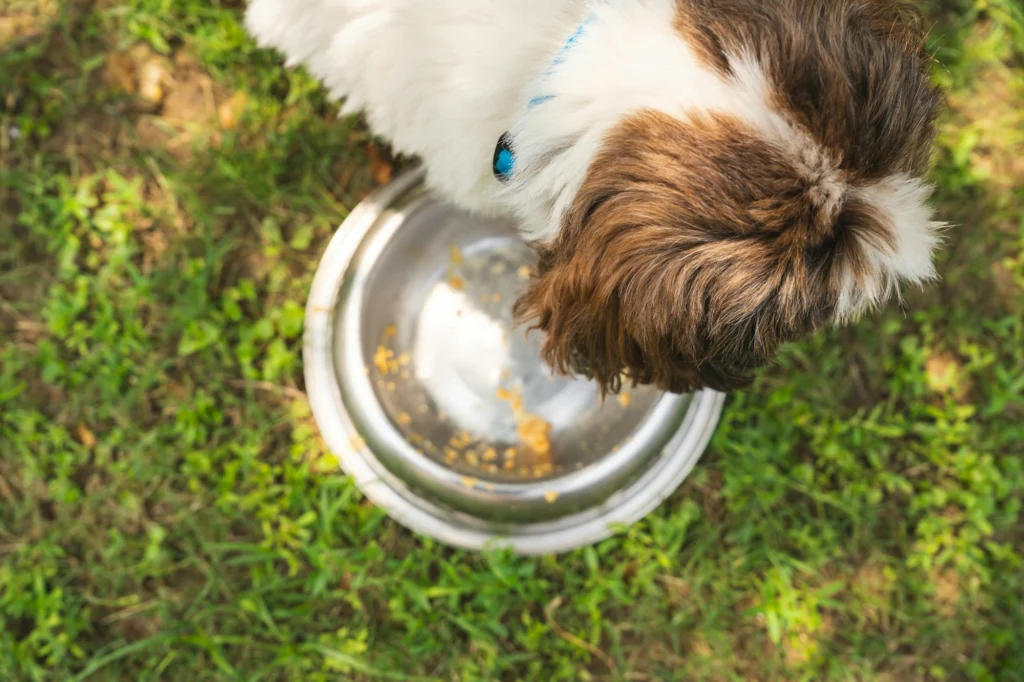
A dog that needs more food usually loses visible condition first, so watch the body rather than the begging. The AKC says a dog with a visible waist that is well proportioned, and whose ribs you can feel, is likely getting the right amount of food. When that picture starts to slip, the portion may be too small for the new routine.
Signs that the current amount may be too low for a more active dog:
- Ribs, hip bones, or the spine become easy to see, not just easy to feel.
- Weight drifts down over two or more weekly checks.
- Your dog tires earlier on the walks or runs it used to handle easily.
- Your dog finishes every meal instantly and searches the floor afterward, alongside the body changes above.
Hunger on its own is not a reliable signal, because many dogs act hungry all the time. If your dog seems starving but its body looks fine, read why your dog is always hungry before adding food. Sudden weight loss without a change in routine is a reason to call your vet.
Signs Your Dog Needs Less Food
A dog that needs less food starts to lose its waist and gain padding over the ribs, often within a few weeks of a quieter routine. This is the more common direction, because activity tends to drop gradually while portions stay the same.
This matters because extra weight is common. The Association for Pet Obesity Prevention reports that 59% of dogs evaluated by US veterinary professionals in 2022 were overweight or had obesity, and that many owners of overweight pets misjudged their pet’s body condition.
Signs that the current amount may be too high for a less active dog:
- You need to press firmly to feel the ribs.
- The waist is hard to see from above, or the belly no longer tucks up from the side.
- Weight creeps up over two or more weekly checks.
- Your dog leaves food in the bowl or skips meals, which the AKC lists as a clue to how much food a dog actually needs.
If your dog already carries extra weight, our post on whether a slow feeder can help a dog lose weight walks through a gentler plan.
Common Mistakes When Adjusting Portions for Activity Level
The most common mistake is changing portions for a short burst of activity and never changing them back. These are the errors that come up most often:
- Adding food for a weekend hike. One long day does not change a dog’s long term needs. Keep the regular amount and just make sure water is available.
- Trusting the bag chart over the dog. The AKC advises treating package feeding guidelines as a suggestion rather than a requirement, since they may lead to larger portions than needed.
- Making big jumps. Doubling or halving a meal makes it hard to read the result and can upset the stomach.
- Forgetting treats. Training treats for a new dog sport add up fast. Tufts suggests keeping treats to about 10% of daily calories, with the other 90% from a complete and balanced food.
- Cutting food during injury rest without a plan. Rest is the time to ask your vet how much to reduce, because some recovering dogs have special nutrition needs.
- Not writing anything down. Without dates and weights, it is easy to guess wrong about what changed.
Our portion control basics for dogs cover measuring tools and everyday portion habits in more detail.
Active Dogs, Sport Dogs and Quiet Dogs
Dogs with very different routines need very different plans, even within one household. Here is how the same approach plays out for three common types of dog.
| Dog’s routine | What usually happens | What to do |
|---|---|---|
| Weekend warrior (quiet weekdays, big weekends) | Weight stays steady or creeps up | Keep a steady daily amount; do not add food for single big days |
| Regular sport or working dog | Condition can slip during busy seasons | Step portions up gradually in season and back down after, with body checks every week or two |
| Quiet or recovering dog | Waist fades if portions stay the same | Ask your vet how much to reduce, then use small steps and keep meals interesting |
For very active or working dogs, talk with your vet about whether the food itself should change, not only the amount. The AAHA nutrition and weight management guidelines recommend a nutritional assessment, including body condition and muscle condition scores, at every exam, with recommendations tailored to each pet.
Keeping Smaller Portions Satisfying
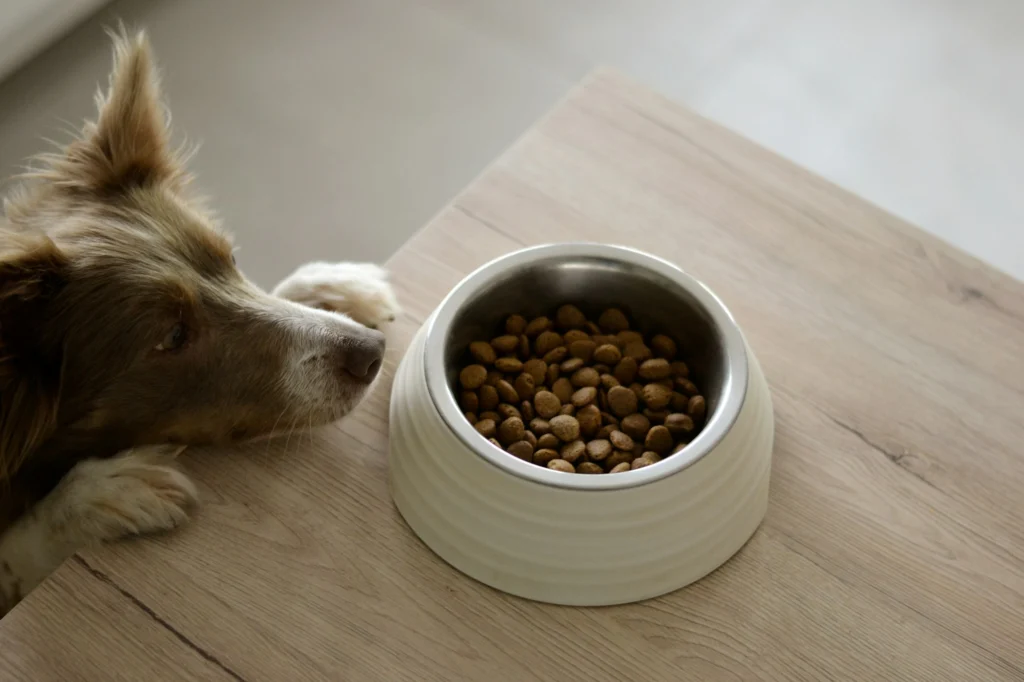
When a quieter routine means less food, the best way to keep your dog content is to make each meal last longer. A smaller portion eaten in seconds feels like nothing, while the same portion worked out of a puzzle takes time and attention.
Some easy ways to stretch a reduced portion:
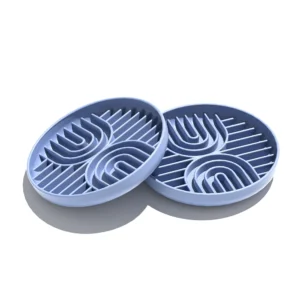
- Serve kibble in a slow feeder so your dog has to work around ridges instead of gulping.
- Split the daily amount into more meals so the bowl appears more often.
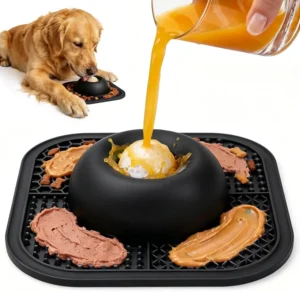
- Move part of the ration into a puzzle feeder as mental exercise on days when physical exercise is limited.
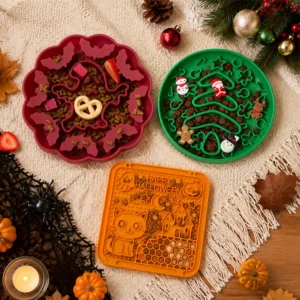
At Pets Sparkle, the Triple Maze Feeder spreads kibble across three maze sections, and the Brainy Puzzle Feeder turns part of a meal into a short brain game. Both are sized for small to medium dogs and cats. You can browse more options in our slow feeder bowls collection.
When to Ask Your Vet
Ask your vet before changing portions if your dog is recovering from surgery or injury, has a medical condition, is a growing puppy, or is losing or gaining weight without a clear reason. These are situations where a small home adjustment may not be enough.
Call your vet promptly if you notice vomiting, a sudden change in appetite, rapid weight loss, or a swollen belly with restlessness. The AKC also advises consulting your veterinarian if you notice substantial changes in your dog’s weight or eating habits. Your vet can do a body condition and muscle condition check, confirm a target weight, and suggest a daily calorie number that fits your dog’s real routine.
Feed the Dog in Front of You
Portions are not set once and forgotten. When your dog’s routine changes, adjust in small steps, hold each change for a couple of weeks, and let ribs, waist, and weight guide the next move. That simple habit protects your dog from slow weight gain in quiet months and from losing condition in busy ones. If you want calmer, longer meals while you fine tune amounts, browse our Treat Maze Bowl and other slow feeders.
Get Your Free Slow Feeding Cheat Sheet
Everything in this article — plus portion charts, feeder comparisons and meal plans — in one printable PDF. A 15% discount code is included.
Frequently Asked Questions
Should I feed my dog more on days with extra exercise?
Usually not. A single long walk or hike rarely changes a dog’s long term needs, so most dogs do best on a steady daily amount. Adjust portions when a more active routine lasts more than a week or two, and use weight and body condition checks to confirm the change is right for your dog.
How much should I cut food when my dog is less active?
There is no single percentage that fits every dog. Make a small reduction, hold it for about two weeks, then check weight and body condition. If your dog is resting after surgery or an injury, ask your vet for a target amount first, since some recovering dogs have special nutrition needs.
How often should I recheck portions after a change in activity?
Weigh your dog and check ribs and waist about every two weeks after a change, since weight shifts slowly. Once your dog holds steady for a month, monthly checks are usually enough. Write down the dates and weights so you can see the trend clearly.
Do active dogs need a different food, not just more of it?
Some do. Very active, working, or sport dogs may benefit from a food with a different calorie density, but that choice depends on the individual dog. Talk with your vet, who can assess body and muscle condition and recommend a food and amount that match your dog’s routine.
Do treats count when I adjust portions?
Yes. Treats, chews, and training rewards all count toward daily intake. Tufts Petfoodology suggests keeping treats to about 10% of daily calories, with the rest coming from a complete and balanced food. When training ramps up, trim the meal slightly to make room for the extra rewards.
Sources
The veterinary resources referenced in this post:
- American Kennel Club: How Much Should I Feed My Dog?
- Tufts Petfoodology: How Much Should I Feed My Dog or Cat?
- Merck Veterinary Manual: Daily Maintenance Energy Requirements for Dogs and Cats
- Association for Pet Obesity Prevention: 2022 Pet Obesity Report Summary
- AAHA: 2021 Nutrition and Weight Management Guidelines

Digital marketing specialist at BrightSeen Marketing Agency. Turns veterinary research into clear, practical feeding guides for pet parents.
Mahmoud works for BrightSeen Marketing Agency, which looks after our SEO and GEO and Meta ads.
View all articles by Mahmoud