 Written by
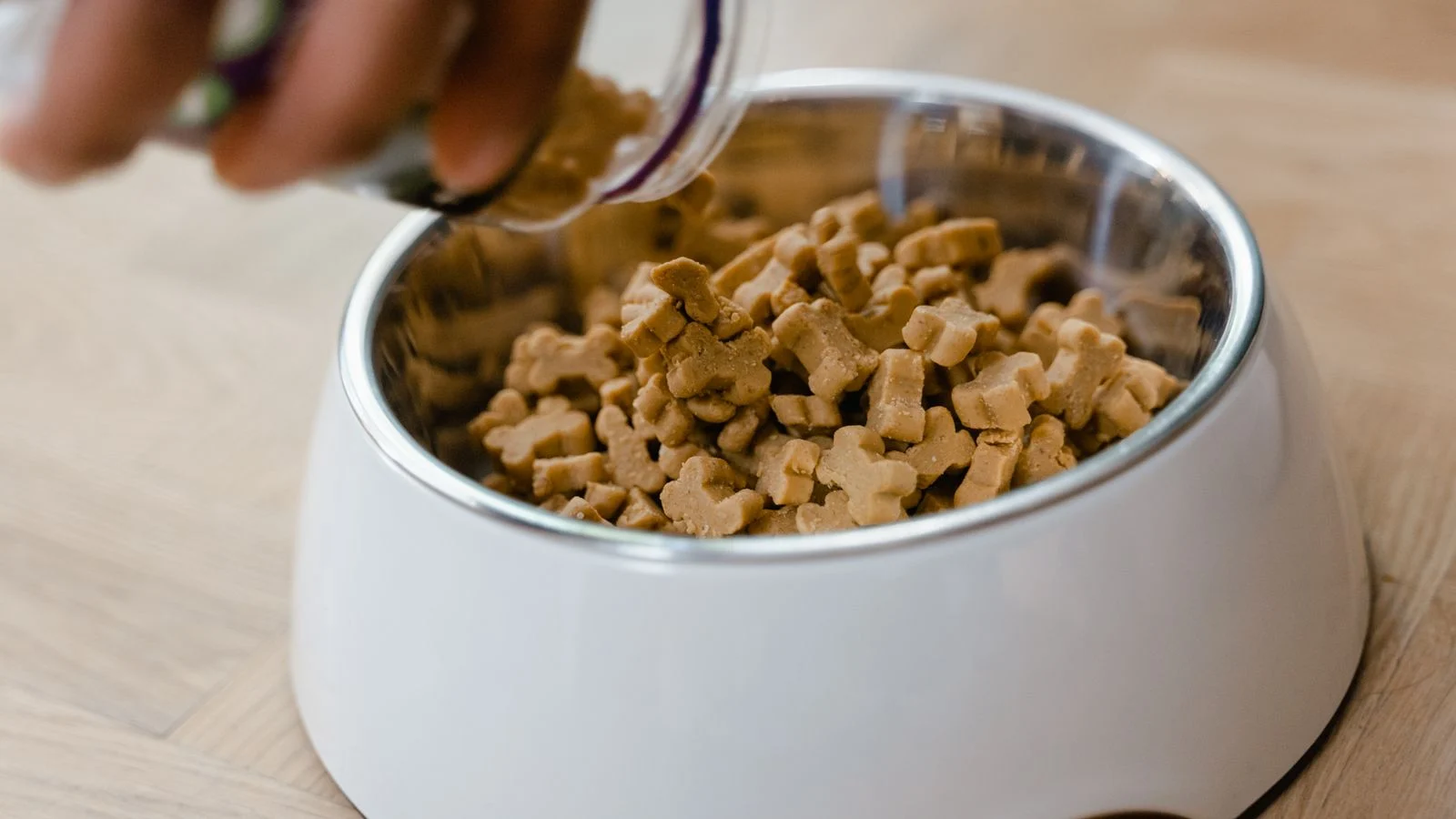
How much should you feed your dog? It is one of the most common questions dog parents ask, and getting it right matters more than you might think. Good dog portion control is the foundation of a healthy weight, steady energy, and a long, happy life. Feed too much and the pounds creep on; feed too little and your dog misses out on nutrition. This guide breaks down how to find the right amount, how vets estimate calories, how to measure accurately, and how to adjust over time.
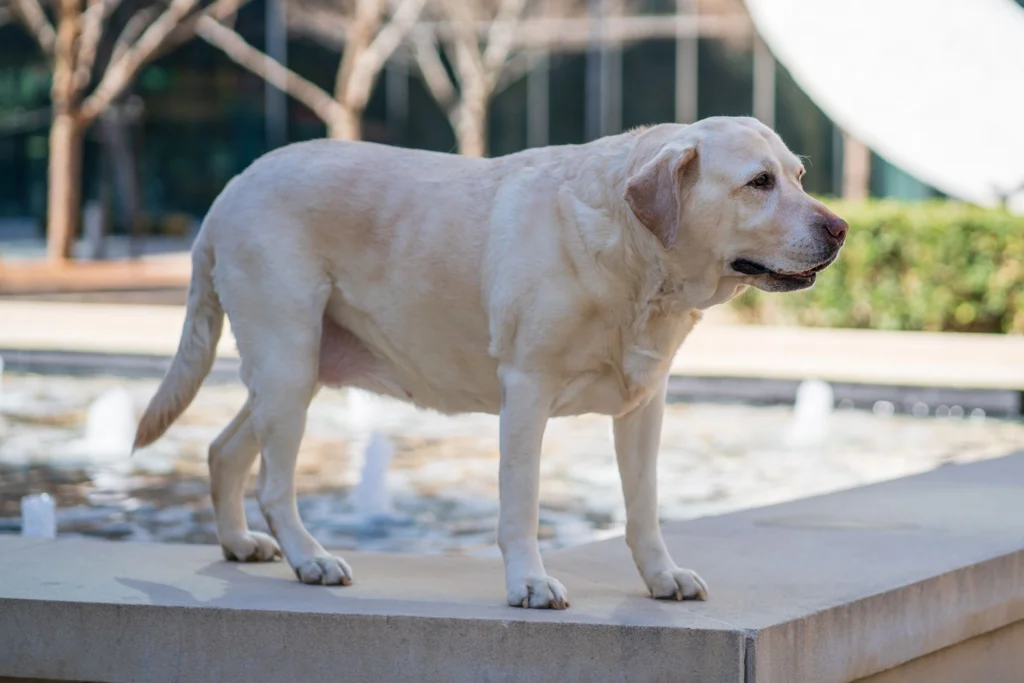
The Association for Pet Obesity Prevention (APOP) found that 59 percent of dogs evaluated by US veterinary professionals in 2022 were overweight or had obesity, and the AAHA nutrition and weight management guidelines describe nutrition as integral to longevity and quality of life, with a well-accepted positive impact on conditions such as diabetes and osteoarthritis. The encouraging news is that portion control is simple once you know the basics.
What Affects How Much to Feed
There is no single magic number, because the right portion depends on your individual dog. Several factors come into play.
Slow Feeding for Weight Control & Portion Management
Get our expert cheat sheet delivered to your inbox — plus an exclusive 15% discount code for your first order.
Weight, Age, and Activity
A dog’s ideal portion is tied to its target healthy weight, not just its current weight. Puppies need more calories per pound for growth, while senior dogs often need fewer as they slow down. A high-energy working dog or an active pup that hikes every weekend burns far more than a couch-loving companion. Seasons matter too: many dogs move less during a cold Midwest winter or when summer heat in states like Texas and Arizona keeps walks short, so portions may need small seasonal tweaks.
Breed, Size, and Health
A Chihuahua and a Labrador have wildly different needs. Spaying or neutering can lower calorie requirements, and certain health conditions change them too. When in doubt, your veterinarian can help you set a target weight and daily calorie goal tailored to your dog. This is especially worth doing after any big life change, such as a spay or neuter surgery, a new diagnosis, or the shift from puppyhood into adulthood.
The Food Itself
Calorie density varies a lot between brands and formulas. One cup of a performance food can contain far more calories than one cup of a weight-management formula. Always check the calories per cup on the label, and recalculate portions whenever you switch foods.
How to Read the Feeding Guidelines
Start with the feeding chart on your dog food bag. These charts list suggested daily amounts by weight, usually in cups. Treat them as a starting point, not gospel, since they are designed to cover a wide range of dogs and can run generous for less active pets. Use your dog’s ideal weight, not its current weight, when reading the chart.
Remember that the amount listed is usually the total for the whole day, not per meal. If you feed twice a day, split that number in half. Then watch your dog’s body condition over the next few weeks and adjust.
How Vets Estimate Calories
Veterinarians often start with a calculation called the resting energy requirement, or RER, which estimates the calories a dog needs at rest. The common formula is 70 multiplied by the dog’s ideal body weight in kilograms raised to the 0.75 power. For example, a dog with an ideal weight of 10 kilograms (about 22 pounds) has an RER of roughly 394 calories per day.
Your vet then multiplies the RER by a factor that reflects life stage and activity. A typical spayed or neutered adult might use a factor around 1.6, a very active dog a higher one, and a dog on a weight-loss plan a lower one. These are estimates, and every dog is an individual, so your vet will fine-tune the number based on how your dog’s weight and body condition respond. Knowing the basics simply helps you understand the plan and ask good questions.
Measuring Cups vs Kitchen Scales
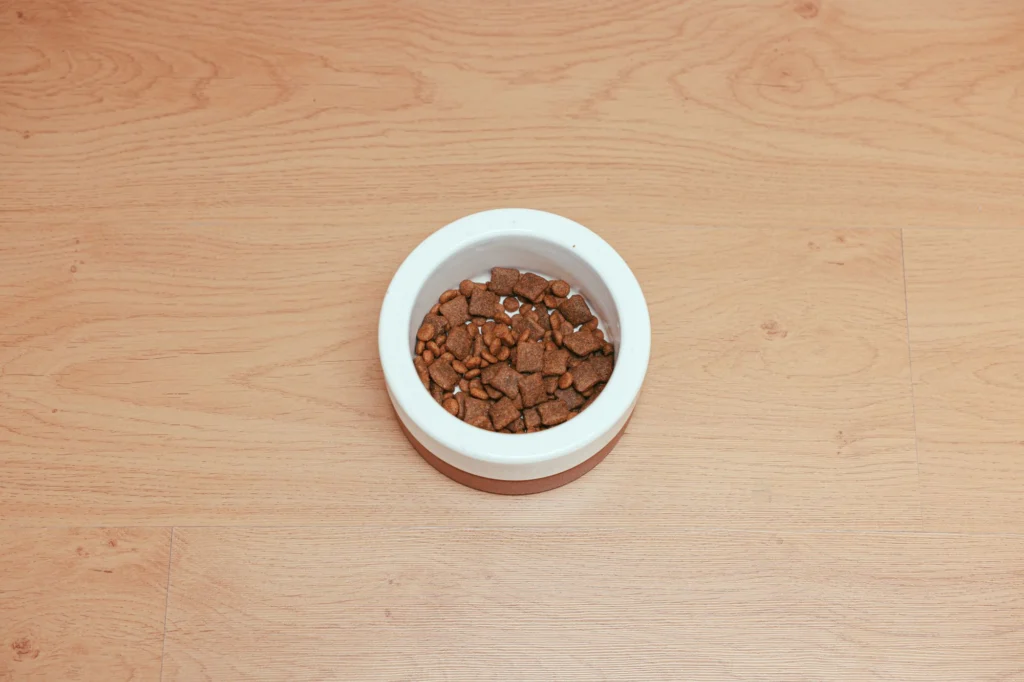
Always use a real measuring tool rather than eyeballing it, since even small daily overages add up fast. A standard measuring cup is fine if you level it off every time. A kitchen scale is the most accurate option, because a scoop packed loosely or heaped can vary by a surprising amount from day to day. Many owners weigh a level cup of their dog’s food once, write the weight on the container, and then weigh every meal from then on. Avoid using a random coffee mug or old yogurt container as a scoop.
Use Body Condition, Not Just the Scale
The best way to judge portions is your dog’s body. Run your hands along its sides. You should be able to feel the ribs without pressing hard, and your dog should have a visible waist when viewed from above and a tucked belly from the side. If ribs are buried under fat, cut back a little; if they stick out sharply, feed a bit more. Check in every few weeks and adjust gradually.
If your dog needs to lose weight, our guide on slow feeders for dog weight loss offers a practical plan.

Adjusting Portions Over Time
Sudden, dramatic changes in food are hard on a dog’s digestion, so aim for small steps. A simple guide:
| What you see | What to do |
|---|---|
| Ribs easy to feel, clear waist, weight stable | Keep the current portion |
| Ribs hard to feel, waist fading, weight rising | Reduce the daily amount slightly (around 10 percent) and recheck in two to four weeks |
| Ribs, hips, or spine very visible, weight dropping | Increase slightly and talk to your vet |
| Sudden weight change with no diet change | Book a vet visit |
Puppies need frequent adjustments as they grow, while adult dogs may only need tweaks after changes in activity, season, or health.
Portions at Every Life Stage
Your dog’s needs change throughout its life, so portion control is never a set-it-and-forget-it task.
Puppies
Growing puppies need more calories per pound than adults and do best on several small meals a day. Feed a food formulated for growth, weigh your puppy regularly, and adjust as it grows. Large-breed puppies benefit from especially careful portions, since growing too fast can strain developing joints. Our guide to feeding a fast-eating puppy has a week-by-week plan.
Adults
Most adult dogs settle into a stable routine of two meals a day. The main job now is maintenance: keep an eye on body condition and adjust for changes in activity, season, or household routine.
Seniors
Many older dogs become less active and need fewer calories, while others lose weight and muscle and need more support. Senior dogs may also have dental issues or health conditions that call for a special diet. Regular vet checks help you stay ahead of these changes, and our guide to enrichment for senior dogs shares gentle mealtime ideas.
Working and Very Active Dogs
Dogs that hunt, herd, run agility, or join you on long hikes may need considerably more food on active days. Some owners feed a little more during busy seasons and scale back during quieter months. Ask your vet how to balance this without letting weight creep up in the off-season.
Do Not Forget Treats and Extras
Treats count. A common rule of thumb is that treats should make up no more than about ten percent of your dog’s daily calories. Table scraps, dental chews, and training rewards all add up, so trim meal portions slightly if you hand out a lot of extras. Choosing low-calorie treats and using part of your dog’s regular kibble for training keeps things in balance. Fresh veggies like green beans or carrot slices can also be satisfying, crunchy, low-calorie options many dogs enjoy. Lick mat toppings count too; our lick mat toppings guide includes low-calorie ideas.
Common Portion Control Mistakes
- Free-feeding. Leaving food out all day makes it almost impossible to know how much your dog eats.
- Feeding for current weight. Use the ideal weight when reading charts for an overweight dog.
- Multiple feeders. When several family members feed the dog, meals get doubled. Keep a simple log or one pre-measured container per day.
- Ignoring the calories in chews. Some dental and bully chews are surprisingly high in calories.
- Switching foods without recalculating. A new formula may have a different calorie density.
Make Portions Work Harder With Slow Feeders
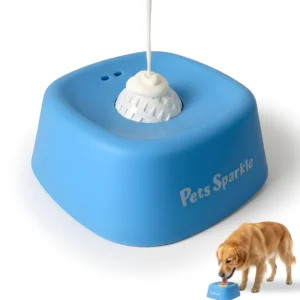
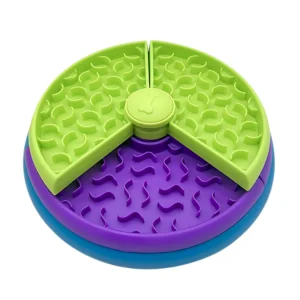
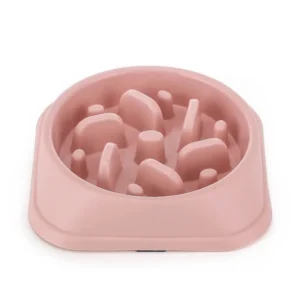
Here is a helpful trick: how your dog eats can support your portion goals. A slow feeder makes a measured portion last longer, so your dog feels more satisfied and is less likely to beg for more. Our Triple Maze Feeder stretches an ordinary portion into an engaging meal, while the Treat Maze Bowl adds a fun challenge that slows gulping and boosts satisfaction. A puzzle like the Brainy Puzzle Feeder can turn part of the daily ration into brain work. Pairing accurate portions with slower eating is a winning combination for weight management. Learn more in our complete guide to slow feeder bowls.
Get Your Free Slow Feeding Cheat Sheet
Everything in this article — plus portion charts, feeder comparisons and meal plans — in one printable PDF. A 15% discount code is included.
Frequently Asked Questions
How often should I feed my dog?
Most adult dogs do well with two meals a day, morning and evening. Puppies usually need three to four smaller meals. Splitting the daily amount into regular meals helps with digestion and hunger.
How do I know if I am feeding too much?
Watch your dog’s body condition. If you cannot easily feel the ribs, if the waist disappears, or if the number on the scale keeps climbing, reduce portions slightly and recheck in a few weeks.
Should I free-feed or use set meals?
Set meals are better for dog portion control. Leaving food out all day makes it hard to track intake and often leads to overeating. Measured, scheduled meals keep you in control.
Do spayed or neutered dogs need less food?
Often, yes. Many dogs need fewer calories after surgery. Watch body condition closely in the months afterward and ask your vet about adjusting portions.
Feed Smart, Live Long
Good dog portion control comes down to a few habits: start with the feeding guide, measure every serving, judge by body condition rather than the bowl, and count treats. Adjust gradually and check with your veterinarian when you are unsure. Small, consistent choices add up to a healthier, happier dog. Ready to make portions work harder? Explore slow feeders and portion-friendly bowls in the Pets Sparkle shop and help your dog thrive at every meal.
Sources
The veterinary and animal-welfare resources referenced in this guide:

Digital marketing specialist at BrightSeen Marketing Agency. Turns veterinary research into clear, practical feeding guides for pet parents.
Mahmoud works for BrightSeen Marketing Agency, which looks after our SEO and GEO and Meta ads.
View all articles by Mahmoud