 Written by
Midnight on New Year’s Eve is pure magic for people and pure chaos for a lot of dogs. If you are wondering how to calm a dog during fireworks this year, the good news is that you have time on your side. A few weeks of preparation and a simple plan for the night can help your dog (and your cat) ring in 2027 feeling far safer.
This guide covers the signs of fireworks fear, sound training you can start now, a safe den, a countdown checklist and calming food distractions, plus what your vet can offer, how to help a cat scared of fireworks, and when to call the clinic.
Why Dogs and Fireworks Are a Tough Mix
To your dog, fireworks are sudden, loud, unpredictable and impossible to explain. There is no warning, no visible source and no way to make the noise stop. That combination is a recipe for fear.
The Complete Slow Feeding Starter Guide
Get our expert guide delivered to your inbox — plus an exclusive 15% discount code for your first order.
New Year’s Eve adds extra pressure: late displays, neighbors’ rockets for hours, and a house full of guests, music and open doors.
The encouraging part: noise fear is something you can work on. VCA Animal Hospitals describes gradual sound training, environmental changes and, where needed, veterinary medication as the core approach.
Signs of Fireworks Anxiety in Dogs
Fireworks anxiety in dogs is not always dramatic. Some dogs bark and pace; others go quiet and hide. The UC Davis School of Veterinary Medicine lists signs such as:
- Ears pulled back and a tucked tail
- Dilated pupils
- Panting, drooling or trembling
- Snatching treats more roughly than usual
- Refusing treats altogether
The American Kennel Club adds shaking, howling and barking, noting that some dogs become frantic. A dog too scared to eat is telling you the fear is high, which is useful to share with your vet.
Start Now: Sound Training for Noise Aversion in Dogs
If you do one thing before December 31, make it this. Desensitization (gradual exposure at low volume) and counter-conditioning (pairing the sound with something your dog loves) can change how your dog feels about booms.
UC Davis recommends starting weeks to months before the holiday, and VCA Animal Hospitals advises beginning when fireworks are unlikely, practicing daily rather than weekly. With about three months until New Year’s Eve 2026, now is the ideal time.
How to do it
- Start barely audible. Play a fireworks recording so quietly your dog hardly notices, and feed small, tasty treats while it plays.
- Stop treats when the sound stops. The lesson is “fireworks mean good things.”
- Raise the volume slowly. VCA suggests moving up only after your dog stays relaxed through a couple of sessions at the current level.
- End on a good note. UC Davis advises finishing each session while your dog is relaxed and happily taking treats.
If your dog stiffens or stops eating, drop back to the last easy volume.
Build a Safe Den Before December 31
The American Kennel Club describes dogs as den animals looking for a “cave” to escape into. Set one up now so it feels familiar on the big night.
- Pick an inner room. A quiet bedroom, a large closet or a basement corner away from windows works well.
- Add comfort: their bed, a familiar blanket and water.
- Consider a covered crate, but only if your dog already loves it. VCA Animal Hospitals cautions that a panicking dog can injure itself trying to break out of confinement, so keep the door open if you are unsure.
- Practice now. Feed a few meals or chews there so it becomes a happy place, never a punishment.
New Year’s Eve Dog Anxiety Countdown Plan
| When | What to do |
|---|---|
| October to November | Start daily sound training at very low volume. Book a vet visit if your dog has a history of severe fear. |
| Early December | Set up and practice the safe den. Check that ID tags and microchip details are current. |
| Mid-December | Follow up with your vet about any prescribed medication and exactly when to give it. |
| December 31, daytime | Long walk or play session in daylight. Prep lick mats and treat dispensers. |
| December 31, evening | Close curtains and windows, turn on white noise or the TV, settle your pet in the den. |
| January 1 | Check the yard for firework debris before letting your dog out. |
How to Calm a Dog During Fireworks on the Night
December 31, 2026 falls on a Thursday, and neighborhood bangs may start early and run past midnight. Here is what to do once celebrations begin.
Walk earlier
The American Kennel Club recommends walking before sunset to avoid the bangs, and the RSPCA advises walking dogs in daylight hours. Keep the leash on in your yard after dark.
Block the sights and sounds
Close windows and curtains to muffle noise and hide flashes, as the RSPCA suggests. Add steady background sound, such as a fan, white noise machine or the TV, which the American Kennel Club notes can help.
Stay calm and act normal
The RSPCA encourages owners to act as usual and comfort a scared pet. Never scold a frightened dog; punishment only adds fear.
Manage the party
If you are hosting, ask guests to keep doors closed and let your dog stay in the den rather than in the middle of the countdown. A quieter corner of the house is the best seat for a nervous dog.
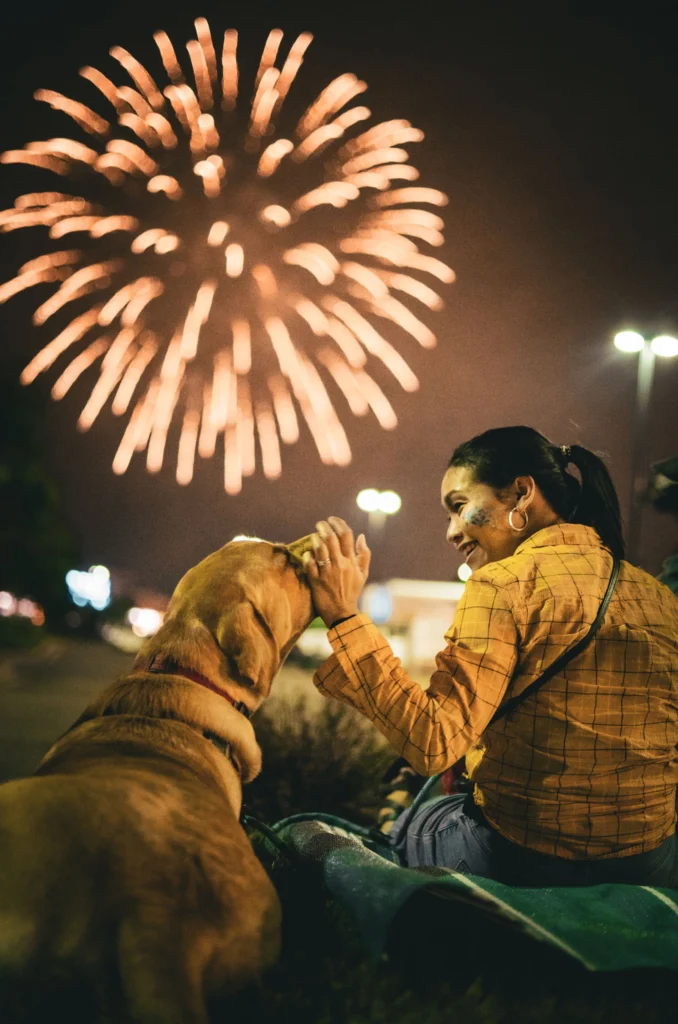
Lick Mats and Treat Dispensers as Calming Distractions
Licking and working for food are soothing for many dogs, so a well-timed lick mat or treat dispenser earns a spot in your New Year’s Eve plan.
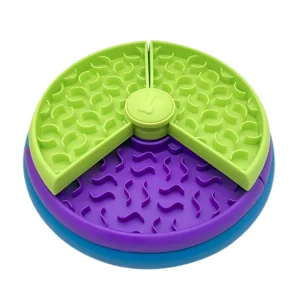
Our guide on how lick mats calm anxious dogs explains why repetitive licking helps many dogs settle. For fireworks night:
- Prep ahead. Spread and freeze a lick mat in the afternoon so it lasts longer. Try our best lick mat toppings and recipes.
- Time it well. Offer it just before the loudest stretch around midnight.
- Use a treat dispenser early. Rolling a ball for kibble keeps the brain busy during scattered bangs.
- Serve dinner slowly. Our tips on calming anxious dog mealtimes help set a calm tone.
Food distractions suit mild to moderate fear. If your dog ignores even a favorite treat, the fear needs more support.
What to Give a Dog for Fireworks Anxiety
The safest answer: talk to your veterinarian first.
VCA Animal Hospitals explains that when training is not enough, vets can prescribe anti-anxiety medication, some of which must be given ahead of the expected noise. UC Davis likewise recommends a vet appointment to discuss medication.
- Plan weeks ahead. The American Kennel Club advises discussing medication well in advance.
- Never give human medications or another pet’s prescription.
- Ask about supporting tools. VCA lists pheromone products, anxiety wraps, white noise and dog hearing protection as non-drug options worth discussing.
Cat Scared of Fireworks? How to Help
Cats often hide quietly, so their stress is easy to miss. Blue Cross notes that sudden noises can make cats anxious and that a change in urination habits can signal stress. Based on Blue Cross and RSPCA guidance:
- Keep cats indoors after dark on New Year’s Eve.
- Provide a litter box if your cat normally goes outside.
- Block cat flaps and close curtains to muffle bangs and hide flashes.
- Respect hiding spots. If your cat goes under the bed, do not coax them out.
- Add familiar background sound like the TV.
- Offer a quiet food activity. Our guide to lick mats for cats covers cat-friendly options.
ID Tags, Microchips and Escape-Proofing
Frightened pets bolt. The American Kennel Club notes that the Fourth of July sees the most dogs run away, and New Year’s Eve brings the same bangs.
- Check that your dog wears a collar with a current ID tag.
- Confirm the microchip is registered with your current phone number, as both Blue Cross and the American Kennel Club recommend.
- Check fences and gates, and use a secure harness after dark.
When to Call Your Vet
Book a vet visit before New Year’s Eve if your dog or cat:
- Has panicked, injured themselves or escaped during past fireworks or storms
- Stops eating, hides for long periods or shows changes in toilet habits
- Shows no progress with sound training after several weeks
- Is a senior or has an existing health condition
VCA Animal Hospitals advises consulting your vet if progress stalls, since underlying medical issues can complicate fear, and the RSPCA notes vets can refer you to a clinical animal behaviorist. If your pet is injured or in severe distress, contact an emergency vet.
Get Your Free Slow Feeding Guide
Everything in this article — plus portion charts, feeder comparisons and meal plans — in one printable PDF. A 15% discount code is included.
Frequently Asked Questions
Should I comfort my dog during fireworks?
Yes. The RSPCA says you can be there to comfort your pet and show them they are safe, while staying calm and acting normally yourself. Punishment only makes fear worse.
What can I give my dog to calm him down during fireworks?
Start with your vet, who can prescribe anti-anxiety medication if needed; plan weeks ahead and never give human medicines. Lick mats, white noise and a safe den support the plan.
How do I calm my cat during fireworks?
Keep your cat indoors, close curtains and cat flaps, and let them hide wherever they feel safe. Blue Cross advises against coaxing a hiding cat out.
Can I leave my dog home alone on New Year’s Eve?
A relaxed dog in a secure, quiet room is usually fine briefly. A dog with known fireworks anxiety is safer with someone home around midnight.
Do anxiety wraps and white noise help dogs with fireworks fear?
VCA Animal Hospitals lists anxiety wraps, white noise and pheromone products as supportive options. They tend to work best alongside sound training and, for severe cases, vet-prescribed medication.
Ring In 2027 With a Calmer Pet
You do not have to dread midnight. Start sound training this month, build a cozy den, talk to your vet early and keep ID current. On the night, walk early, close the curtains and stay calm.
A frozen slow licking mat for the minutes around midnight, or a treat dispenser ball for the early evening bangs, can give your dog something soothing to focus on. Here’s to a peaceful start to 2027 for everyone in your home, paws included.
Sources
The veterinary and animal-welfare resources referenced in this guide:

Mahmoud Mohamed Samir is an SEO/GEO Specialist who turns veterinary research into clear, practical feeding guides, built so pet parents get straight answers whether they search on Google or ask an AI assistant.
View all articles by Mahmoud