 Written by
Mealtime should be the easy, happy part of your dog’s day, but for some dogs it comes with real stress. Maybe your dog paces, gulps food in seconds, guards the bowl, or seems too worked up to settle. If you are living with an anxious dog at mealtimes, take heart: with a few thoughtful changes, most dogs learn to feel calm and secure around food. This guide covers the common causes, a simple calm-mealtime ritual, how to handle food guarding safely, and what to do if your anxious dog will not eat at all.
What Mealtime Anxiety Looks Like
Food-related stress shows up in different ways. Some dogs wolf down every bite as if it might disappear, a habit that can lead to choking, vomiting, and digestive upset. Others hover, whine, or bark before the bowl goes down. A few become tense or protective, freezing or growling if someone walks by while they eat. And some anxious dogs go the other way, refusing to eat when they feel uneasy. None of this means your dog is bad. It usually means your dog feels uncertain, and our job is to make mealtime predictable and safe.
If the anxiety is severe, sudden, or paired with signs of illness, check in with your veterinarian first. It is worth ruling out pain or medical issues before assuming a behavior problem, since discomfort can easily masquerade as anxiety.
Slow Feeding for Anxious, Reactive & Senior Pets
Get our expert cheat sheet delivered to your inbox — plus an exclusive 15% discount code for your first order.
Common Causes of Mealtime Stress
- Past scarcity. Rescue dogs who went hungry may carry that worry into a home where food is plentiful.
- Competition. Littermates, other dogs, or even cats can make a dog feel it must eat fast or guard its bowl.
- A chaotic feeding spot. Busy kitchens, slamming doors, and noisy appliances keep sensitive dogs on edge.
- Unpredictable timing. When meals come at random times, some dogs become anxious and pushy as they wait.
- Past negative experiences. Having food taken away or being startled while eating can create lasting worry.
- General anxiety. Dogs who are nervous in other situations often show it at mealtime too.
Build a Calm, Predictable Routine
Dogs feel safest when life is predictable. Feeding at the same times each day, in the same quiet spot, tells your dog exactly what to expect and when. That reliability lowers the background stress that makes some dogs frantic around food.
Choose a feeding area away from heavy foot traffic, loud appliances, and other pets. A corner of the kitchen or a low-traffic room works well. Keep the tone relaxed. If you rush in, fumble the bowl, and hover, your energy can rub off on a sensitive dog. Set the food down calmly and give your dog space.
Give Each Dog Their Own Space
In multi-dog homes, competition fuels anxiety. Feed dogs in separate rooms or use barriers so no one feels the need to guard or rush. For more on this, our guide to feeding multiple dogs in one household walks through simple setups that keep the peace.
Take the Edge Off Before Meals
A short walk or a few minutes of play before dinner burns off nervous energy and helps a wound-up dog approach the bowl in a calmer state. Even a brief sniff walk around the block, which lets your dog decompress through its nose, can settle the mind before food arrives. Just leave a little rest time between vigorous exercise and eating.
A Step-by-Step Calm Mealtime Ritual
- Prepare quietly. Measure the food while your dog is in another room or settled on its bed, so the rattle of kibble does not build excitement.
- Ask for a simple behavior. A calm sit or down gives your dog something familiar to do.
- Lower the bowl slowly. If your dog lunges, pause and wait for calm before continuing.
- Release and step away. Say a cheerful release word and move a few feet back.
- Let your dog finish in peace. Avoid hovering, talking loudly, or walking right past the bowl.
- Wind down afterward. Offer a quiet chew or a lick mat, then let your dog rest.
Repeating the same ritual at every meal teaches your dog that food always arrives calmly and reliably.
Slow the Gulping
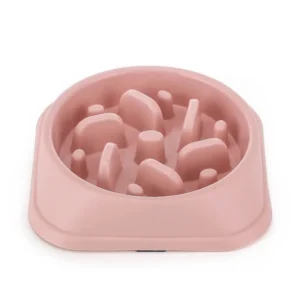
For dogs that inhale their food, speed and anxiety feed each other. Slowing the pace helps the body and calms the mind, because your dog stops feeling that frantic urgency. A slow feeder bowl or puzzle turns a thirty-second scramble into a satisfying few minutes of focus.
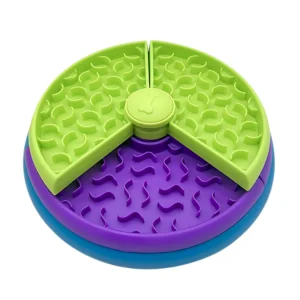
The Triple Maze Feeder spreads kibble through winding channels so your dog has to nose and lick each piece out, which naturally slows things down. For a gentler start, the Treat Maze Bowl is less challenging. Many owners find that a slower meal leaves their dog noticeably more relaxed afterward. If you are new to these tools, our post on how to introduce a slow feeder makes the switch smooth and stress free.
Use Licking to Soothe
Licking is naturally calming for dogs. The repetitive motion helps many dogs relax and lower their stress, which is why lick mats are such a favorite for anxious pups. Spreading a thin layer of a dog-safe topping across a mat gives your dog a soothing project that turns mealtime, or the run-up to it, into quiet, focused enjoyment.
Our Slow Licking Mat is a gentle way to help a nervous dog settle before or during meals. Try offering it during known stress triggers too, like July 4th fireworks or a summer thunderstorm, so your dog builds a positive association with a calming activity, an approach the ASPCA also suggests for storm fears. Our guide to lick mats for anxious dogs has more ideas.
Reduce Pressure and Build Confidence
An anxious dog often feels watched. Once you put the bowl down, step back and let your dog eat without hovering. Avoid reaching into the bowl or taking food away, which can make resource guarding worse. Instead, if you want your dog to feel relaxed about people near food, calmly toss an extra treat nearby as you pass, so your presence predicts good things rather than loss.
Positive reinforcement builds lasting confidence, and the American Veterinary Society of Animal Behavior recommends reward-based methods for all dog training, including the treatment of behavior problems. Reward calm behavior with a soft word or a small treat. Over days and weeks, your dog learns that mealtime is safe, unhurried, and pleasant.
Handling Food Guarding the Right Way
Food guarding, such as stiffening, eating faster, or growling when someone approaches, is a natural behavior rooted in worry about losing something valuable. The most important rule is never to punish a growl. A growl is a warning, and punishing it can teach a dog to skip the warning and bite instead.
Instead, manage the situation: feed your dog where it will not be disturbed, keep children away from dogs while they eat, and pick up empty bowls only after your dog has walked away. For mild guarding, the “walk by and drop a treat” approach helps your dog see approaching people as good news. For stronger guarding, especially any snapping or biting, work with a qualified trainer or veterinary behaviorist rather than trying to fix it alone.
When Anxiety Means Not Eating
Some anxious dogs skip meals entirely, especially after a move, in a boarding kennel, or during noisy events. Offer food in the quietest room you have, sit calmly nearby or leave the room if your presence seems to add pressure, and try warming wet food slightly to boost its aroma. A lick mat can also tempt a nervous eater. If an adult dog refuses food for more than a day, or a puppy or small dog skips more than a meal or two, call your vet.
When to Get Professional Help
Reach out to your veterinarian if mealtime anxiety is intense, getting worse, or affecting your dog’s weight or health. Your vet can check for pain or illness and may refer you to a veterinary behaviorist or a certified trainer who uses reward-based methods. For some dogs, a combination of training and medication prescribed by a vet makes a big difference.
Get Your Free Slow Feeding Cheat Sheet
Everything in this article — plus portion charts, feeder comparisons and meal plans — in one printable PDF. A 15% discount code is included.
Frequently Asked Questions
Why is my dog so anxious at mealtimes?
Common causes include past scarcity, competition with other pets, an overly busy feeding spot, or simply a habit of eating too fast. Occasionally, pain or illness is the culprit, so ask your veterinarian if the anxiety is new or severe.
Do slow feeders really help an anxious dog at mealtimes?
Yes, for many dogs. By slowing the eating pace and giving the mind a gentle task, slow feeders and lick mats replace frantic gulping with calm focus. They will not fix every issue on their own, but they are a powerful, easy first step.
Should I feed my anxious dog by hand?
Hand-feeding can build trust for some dogs, especially fearful ones, but it is not right for every situation and can encourage guarding in others. Use it thoughtfully, and lean on a consistent routine and calm environment as your foundation.
How long does it take for an anxious dog to relax at mealtimes?
Many dogs show improvement within a couple of weeks of a consistent routine, a quiet feeding spot, and a slow feeder. Dogs with a long history of food insecurity may need several months. Progress is rarely a straight line, so focus on the overall trend.
Is it okay to feed my anxious dog in its crate?
Yes, for many dogs a crate is a safe, private place to eat, especially in busy homes or multi-pet households. Make sure the crate is a positive space, never used for punishment, and leave the door open if your dog prefers.
Can I use a puzzle feeder for an anxious dog?
Start with easy options like a lick mat or shallow maze bowl. Very challenging puzzles can frustrate a nervous dog, so build difficulty slowly as confidence grows.
Help Your Dog Feel Safe at Every Meal
Calming an anxious dog at mealtimes comes down to predictability, a peaceful space, a slower pace, and plenty of patience. Small, steady changes add up to a dog that finally relaxes around the bowl. When you are ready to give your dog calmer, happier meals, browse our slow feeders and lick mats in the Pets Sparkle shop and take the first step toward stress-free feeding.
Sources
The veterinary and animal-welfare resources referenced in this guide:

Digital marketing specialist at BrightSeen Marketing Agency. Turns veterinary research into clear, practical feeding guides for pet parents.
Mahmoud works for BrightSeen Marketing Agency, which looks after our SEO and GEO and Meta ads.
View all articles by Mahmoud