 Written by
Watch a dog on a walk and you will see where their attention really goes: nose down, tail up, reading the ground like a newspaper. A snuffle mat brings that same searching instinct indoors. You scatter kibble or small treats into a patch of fabric strips, and your dog uses their nose to hunt every piece out.
This guide explains what a snuffle mat for dogs does, why sniffing is so good for your dog’s mind, how to introduce and clean one, how to make your own, and how it compares with slow feeders, puzzle feeders, and lick mats.
What Is a Snuffle Mat?
A snuffle mat is a pad covered in soft fabric strips, usually fleece, that create folds, flaps, and pockets. The American Kennel Club describes it as a mat where treats or kibble can be hidden among the strips so your dog has to find them by sniffing and foraging.
Puzzle Feeders & Enrichment: Beyond the Bowl
Get our expert guide delivered to your inbox — plus an exclusive 15% discount code for your first order.
Unlike a bowl, there is no single spot where the food sits. Your dog has to slow down, nudge the fabric with their muzzle, and use scent to locate each bite, turning a quick meal into a focused search game.
Why Sniffing Matters So Much to Dogs
Smell is the main way dogs make sense of their world. According to VCA Animal Hospitals, dogs have more than 100 million sensory receptor sites in the nasal cavity compared with about 6 million in people, and the part of the canine brain devoted to analyzing odors is roughly 40 times larger than the comparable area in humans. Their sense of smell is estimated to be 1,000 to 10,000 times better than ours.
Using that nose is not only practical for dogs, it appears to affect how they feel. In a 2019 study published in Applied Animal Behaviour Science, researchers Duranton and Horowitz gave one group of pet dogs regular nosework sessions (searching for hidden food by scent) for two weeks, while a control group practiced heelwork. Afterward, the nosework dogs approached an ambiguous cue faster, a sign of a more optimistic outlook. The heelwork dogs showed no meaningful change, which suggests it was the sniffing, not simply activity, that made the difference.
The wider science is still developing. A 2025 scoping review of 27 studies found environmental odors were linked with less barking and more resting in some settings, while calling for more research on scent tasks and welfare. Sniffing is natural and promising for wellbeing, not a cure-all.
Benefits of a Snuffle Mat for Dogs
Here is what a snuffle mat can realistically offer, based on guidance from the American Kennel Club and Blue Cross:
- Slower eating. Because pieces are scattered and hidden, fast eaters cannot gulp a whole portion at once, much like a slow feeder bowl.
- Mental stimulation. Searching engages your dog’s brain and natural foraging instinct, which can help ease boredom.
- A calmer activity. Sniffing is a low-key, absorbing task, which is why many owners use it to help dogs settle.
- Rainy-day enrichment. The AKC points out that snuffle mats give dogs something to do indoors when the weather is too hot, cold, or wet for long walks.
- Support for seniors. The AKC notes that snuffle mats can be particularly helpful for older dogs, offering gentle brain work without much physical strain. Our guide to feeding enrichment for senior dogs has more ideas.
How to Introduce a Snuffle Mat, Step by Step
A gradual start keeps the game fun rather than frustrating. Both the AKC and Blue Cross recommend beginning with food in plain view.
- Let your dog explore. Put the empty mat on the floor and let your dog sniff it with no pressure.
- Make it easy. Place a few high-value treats right on top of the strips where they are clearly visible.
- Add a cue. Have your dog sit or wait while you scatter food, then say “find it” to start.
- Hide food deeper. Once your dog connects the mat with treats, tuck pieces gradually further into the fabric.
- Pick it up when finished. Remove the mat once the food is gone so it stays a special activity, not a chew toy.
What to Put in a Snuffle Mat
Small, dry, strong-smelling food works best.
- Kibble: a portion of your dog’s regular meal is the simplest option.
- Small training treats: pea-sized pieces are easy to hide and great for early sessions.
Avoid wet food, canned food, purees, and sticky spreads. They smear into the fabric and leave residue that can spoil. Save them for a lick mat. As the AKC advises, keep track of how much you put in and count treats toward your dog’s daily food allowance to avoid overfeeding.
How Long and How Often to Use One
Most sessions last a few minutes, depending on how much food you hide and how deep. There is no fixed rule, so let your dog’s interest guide you. Using it for one meal or a short activity a day, and rotating other enrichment, keeps it novel.
Good times include before you leave the house, rainy afternoons, or as a calm activity before bed. To rotate between several types of feeding games, our article on enrichment toys vs puzzle feeders can help you plan a weekly mix.
Snuffle Mat Safety and Cleaning
Supervise every session
Fabric strips are soft and tempting to chew. Blue Cross advises always monitoring your dog while they use the mat so they do not start chewing the fleece or the rubber base, and the AKC suggests removing the mat after use. The AKC also notes that snuffle mats are not a good fit for heavy chewers or dogs with a history of swallowing objects.
If you have more than one dog
Give each dog their own mat and feed them apart. Hidden food in a shared space can trigger guarding or squabbles.
Keep it clean
Crumbs, drool, and food oils build up in the fabric. The AKC recommends machine washing on a gentle cycle with warm water and a pet-friendly detergent, then letting the mat air dry, with spot cleaning using a damp cloth and mild soap between washes. Having two mats makes rotation easy. For the rest of your feeding gear, see how to clean a slow feeder and lick mat.
How to Make a DIY Snuffle Mat
Blue Cross shares a simple homemade method that needs only three things: a rubber mat with holes (such as a sink mat, bath mat, or doormat), clean fleece fabric, and fabric scissors.
- Cut the fleece into strips about one inch wide and six to eight inches long.
- Thread a strip through a hole in the rubber mat and tie a knot to secure it.
- Repeat until every hole is filled. The denser the strips, the harder the search.
- Check your work. Tug each strip to make sure none come loose, and trim any long, stringy edges.
Inspect a DIY mat regularly and replace torn or loose strips so your dog cannot pull pieces free.
Snuffle Mat vs Slow Feeder vs Puzzle Feeder vs Lick Mat
Each tool uses a different natural behavior, so they work best as a team rather than a replacement for one another.
| Tool | Main behavior | Best food | Best for |
|---|---|---|---|
| Snuffle mat | Sniffing and foraging | Dry kibble, small treats | Scent games, calm indoor activity |
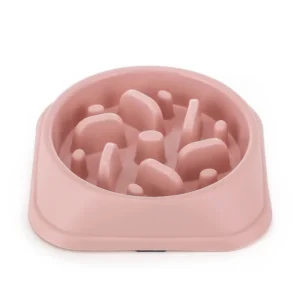
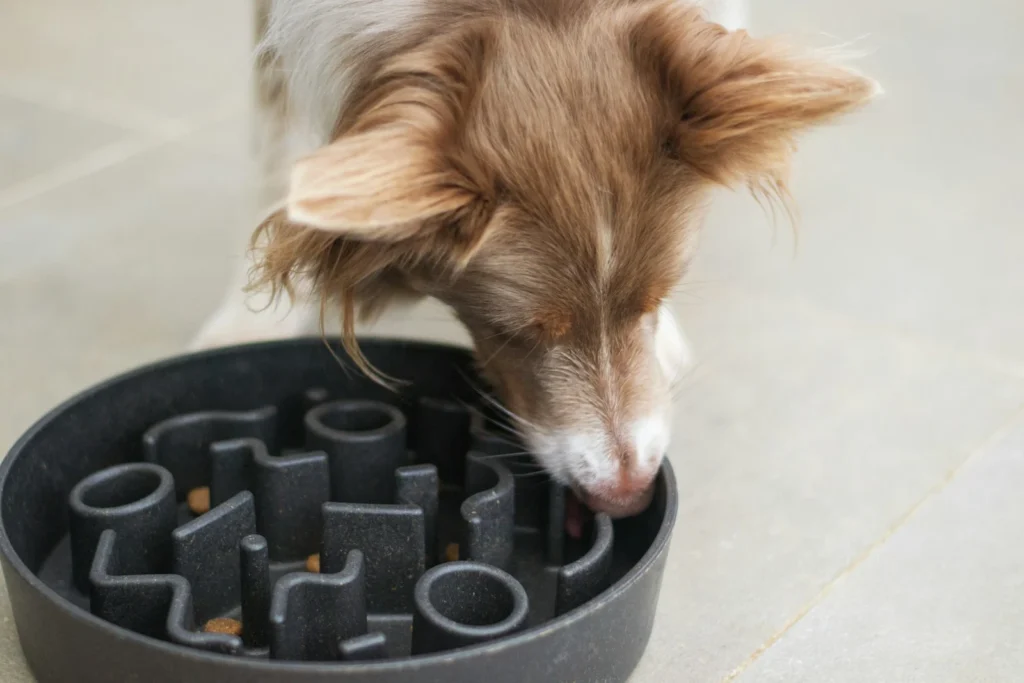
| Slow feeder bowl | Eating around ridges | Kibble, some wet food | Everyday meals for fast eaters |
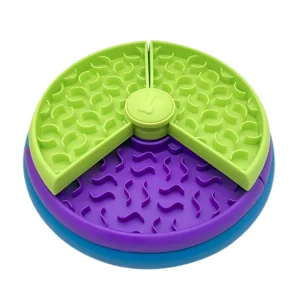
| Puzzle feeder | Problem solving with nose and paws | Kibble, treats | Boredom busting, mental work |
| Lick mat | Licking | Wet food, spreads, purees | Calming, grooming, vet visits |
A slow feeder is the practical everyday choice; a snuffle mat adds the scent element a bowl cannot. For a deeper side-by-side, read slow feeder vs puzzle feeder.
Troubleshooting Common Snuffle Mat Problems
- Your dog ignores the mat. Use smellier, higher-value treats, leave more on top, and keep sessions short. Some dogs are simply less food-motivated.
- Your dog gives up quickly. You may have hidden food too deep, too soon. Go back a step and make it easier.
- Your dog flips or drags the mat. Place it on a non-slip surface or against a wall, and stay close to redirect.
- Your dog chews the strips. Stop the session calmly, put the mat away, and try a firm puzzle feeder instead. Our guide to puzzle feeders for dog boredom covers sturdier options.
- Your dog finishes in seconds. Use smaller pieces, scatter them wider, and push them deeper.
When to Call Your Vet
A snuffle mat is a toy, not a treatment. Contact your veterinarian if you notice any of the following:
- Your dog may have swallowed fabric strips or rubber pieces, especially if they vomit, strain, seem bloated, lose their appetite, or act lethargic.
- Your dog suddenly loses interest in food or sniffing games they used to enjoy.
- Your dog shows ongoing anxiety, restlessness, or destructive behavior that enrichment is not helping.
- An older dog seems confused or disoriented.
Get Your Free Slow Feeding Guide
Everything in this article — plus portion charts, feeder comparisons and meal plans — in one printable PDF. A 15% discount code is included.
Frequently Asked Questions
Are snuffle mats good for dogs?
For most dogs, yes, as long as you supervise. They tap into your dog’s powerful sense of smell, slow down eating, and provide mental exercise. They are not ideal for dogs that chew or swallow fabric.
Can I feed my dog’s whole meal in a snuffle mat?
You can feed a dry kibble meal this way if your dog searches calmly and you supervise. Many owners prefer to use it for part of a meal or for treats, and use an easy-to-clean slow feeder for the rest.
Are snuffle mats good for puppies?
They can be a fun early training game, but puppies explore with their mouths and are more likely to chew strips. Keep sessions short, stay right beside them, and put the mat away as soon as the food is gone.
How often should I wash a snuffle mat?
Wash it regularly and whenever it looks dirty or smells. Machine wash on a gentle cycle with warm water and pet-safe detergent, then air dry fully before the next session.
Can I put wet food in a snuffle mat?
It is best to avoid it. Wet food and spreads soak into the fabric and are hard to clean out. Use a lick mat for wet toppings instead.
Build a Sniff-Friendly Feeding Routine
A snuffle mat is one of the simplest ways to let your dog use their remarkable nose. Start easy, use dry food, supervise, and wash it often.
Pets Sparkle does not sell snuffle mats, but our dog puzzle feeders and slow feeder bowls make great companions, giving your dog sturdy, easy-to-clean ways to search, think, and slow down.
Sources
The veterinary and animal-welfare resources referenced in this guide:
- American Kennel Club: Everything You Need to Know About Snuffle Mats for Dogs
- Blue Cross: How to Make a Snuffle Mat
- VCA Animal Hospitals: How Dogs Use Smell to Perceive the World
- Applied Animal Behaviour Science: Let Me Sniff! Nosework Induces Positive Judgment Bias in Pet Dogs (Duranton and Horowitz, 2019)
- Applied Animal Behaviour Science: The Value of Sniffing, A Scoping Review of Scent Activities for Canines (Fountain et al., 2025)

Mahmoud Mohamed Samir is an SEO/GEO Specialist who turns veterinary research into clear, practical feeding guides, built so pet parents get straight answers whether they search on Google or ask an AI assistant.
View all articles by Mahmoud