 Written by
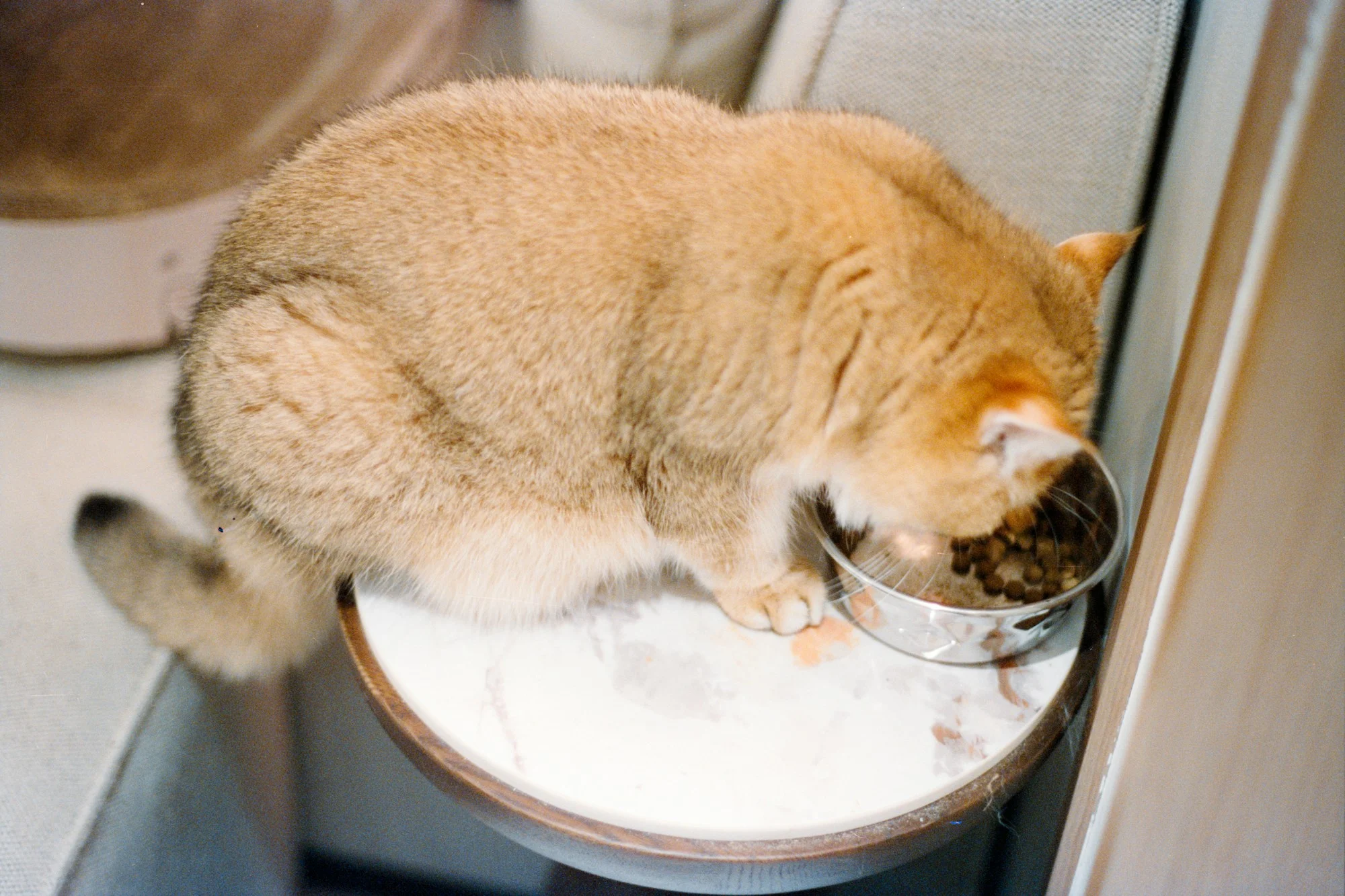
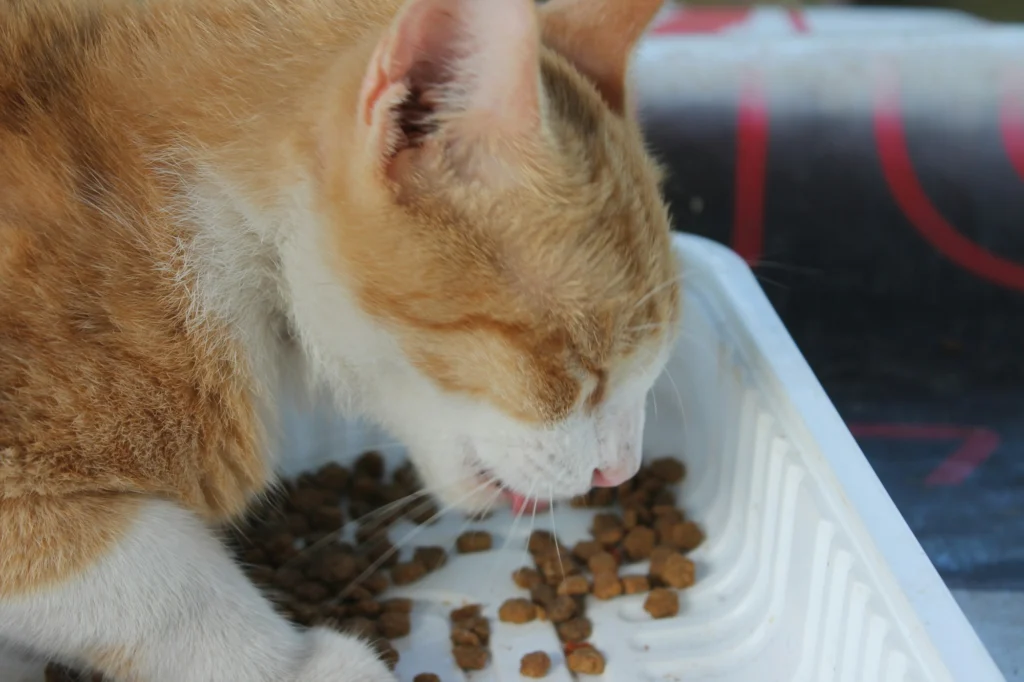
Free feeding cats means leaving a full bowl out all day so your cat can eat whenever it likes. It suits a few lean, healthy cats, but for most cats measured meals or puzzle feeding is the safer choice, because an open buffet makes it easy to overeat and hard to notice changes in appetite.
Many owners free feed simply because it is convenient, or because their cat seems to prefer nibbling. This post looks at why the habit is so common, what vets and feline welfare groups say about it, which cats can handle it, and how to move a grazing cat onto a routine without a week of yowling at the kitchen door.
If your real question is why your cat keeps asking for food, our post on why a cat is always hungry covers the medical and behavioral causes. Here we focus on the feeding method itself.
The Cat Parent's Slow Feeding & Enrichment Handbook
Get our expert cheat sheet delivered to your inbox — plus an exclusive 15% discount code for your first order.
What Free Feeding Cats Actually Means
Free feeding cats means food is available at all times, usually dry kibble topped up whenever the bowl looks low. The cat decides when and how much to eat, and nobody measures the daily total.
Cornell Feline Health Center describes this as keeping dry food available all the time, sometimes called graze feeding. Tufts Petfoodology uses the term for providing unlimited access to food and notes that it is a popular choice, especially among cat owners.
It helps to separate three things people often lump together:
- True free feeding: the bowl never runs empty and is refilled without measuring.
- Measured grazing: you weigh the full daily ration in the morning, put it out, and let the cat pace itself. When it is gone, it is gone.
- Meal feeding: set portions at set times, with the bowl picked up or empty between meals.
Measured grazing sits in the middle, and for some households it is a sensible compromise. The problems this article describes come mostly from the first option, where the amount is never measured.
Why Free Feeding Appeals to Cat Owners
Free feeding appeals because it fits busy human schedules and seems to match how cats like to eat. Both reasons have some truth in them.
Cats really are built for small, frequent meals. International Cat Care explains that cats in the wild eat frequent small meals throughout the day and night, and that feral cats can spend 12 or more hours out of every 24 looking for and catching food. The RSPCA also says cats naturally eat several small meals per day.
So the instinct behind free feeding is sound: a cat that nibbles little and often is behaving normally. The catch is in the second half of the wild pattern. A wild cat works for every one of those small meals. A pet cat with a full bowl only has to walk across the kitchen.
Other common reasons owners give:
- Long work days or travel make set meal times hard.
- The cat wakes the household at dawn asking for breakfast.
- A picky or older cat seems to eat more when food is always there.
- In a home with several cats, a shy cat might miss out at mealtimes.
Each of these has a better answer than an endless bowl, and we cover them below.
The Main Risks of Free Feeding Cats
The biggest risk of free feeding is slow, unnoticed weight gain, followed closely by losing an early warning sign when your cat’s appetite changes.
Overeating and weight gain
Tufts Petfoodology states plainly that free feeding can easily lead to overconsumption and obesity. International Cat Care agrees that cats given unrestricted access to food may overeat, which can lead to obesity. Cornell adds that grazing may be acceptable for some cats, but for others it can result in overeating and inappropriate weight gain.
Extra weight matters. According to International Cat Care, a cat that is 10 to 19% heavier than its ideal weight is considered overweight, and obesity is a risk factor for diabetes, lower urinary tract disease and joint problems such as osteoarthritis. If your cat is already carrying extra weight, our guide to helping an overweight cat slim down safely walks through a gentle plan with your vet.
You stop noticing appetite changes
When the bowl is topped up a few times a day, it is very hard to tell whether your cat ate less yesterday than usual, or a lot more. A sudden drop in appetite or a big increase can both be early signs of illness. With measured meals, an untouched bowl is obvious. If your cat stops eating, or eats far more than usual and still loses weight, call your vet.
Boredom at the bowl
International Cat Care points out that cats fed from a bowl in the same place every day need no effort to eat, and that this lack of mental stimulation can lead to boredom, frustration and stress, particularly in indoor cats. A bowl that is always full removes even the small ritual of waiting for a meal.
Stale food
Dry food left out for days loses its appeal. Cornell advises that any food left out for grazing should be replaced with fresh food every day, not simply topped up on top of yesterday’s crumbs.
When Free Feeding Can Work
Free feeding can work for a cat that stays at an ideal body condition with unlimited access, and for some cats with higher energy needs. It is the exception, not the rule.
Tufts Petfoodology says free feeding is not recommended unless all of the pets who can reach the food have an ideal body condition score and can keep it with free access. The same article notes that some animals, such as pregnant or nursing cats, may need free access to meet their higher energy needs.
If you want to keep free feeding, check these points honestly:
- Every cat with access to the bowl is at a healthy weight, confirmed by your vet.
- That weight has stayed steady over several months, not just one check.
- You still measure how much you add each day, so you know the daily total.
- Food is replaced fresh daily rather than topped up.
- You weigh your cat regularly. International Cat Care suggests cat scales or baby scales for this.
If any one of those is a no, a meal routine or measured grazing is the better fit.
Free Feeding vs Meals vs Puzzle Feeding
Each feeding style trades convenience against control. The table below compares the three most common options for an adult indoor cat.
| Feeding style | How it works | Portion control | Mental stimulation | Best for |
|---|---|---|---|---|
| Free feeding | Bowl always full, refilled as needed | Low | Low | Lean cats that hold their weight, with vet approval |
| Meal feeding | Set portions at set times | High | Low to medium | Most adult cats, cats on weight plans, multi cat homes |
| Puzzle or slow feeding | Measured daily ration spread across feeders and toys | High | High | Indoor cats, fast eaters, bored or nibbling cats |
The third row is the one International Cat Care leans toward. It recommends dividing a cat’s daily ration into at least five portions and offering them across the full 24 hours, using timed and puzzle feeders. That keeps the little and often pattern cats like while still controlling the total.
Age changes the picture too. Cornell suggests that kittens under six months usually do best on three meals a day, twice daily feeding suits cats from six months to a year, and once or twice a day is appropriate for most adults. Those are meal counts, not a ban on spreading the same food across a puzzle feeder.
How to Switch a Free Fed Cat to Measured Meals
The easiest way to stop free feeding cats is a gradual switch: measure first, then shrink the open bowl hours over a week or two while adding set meals.
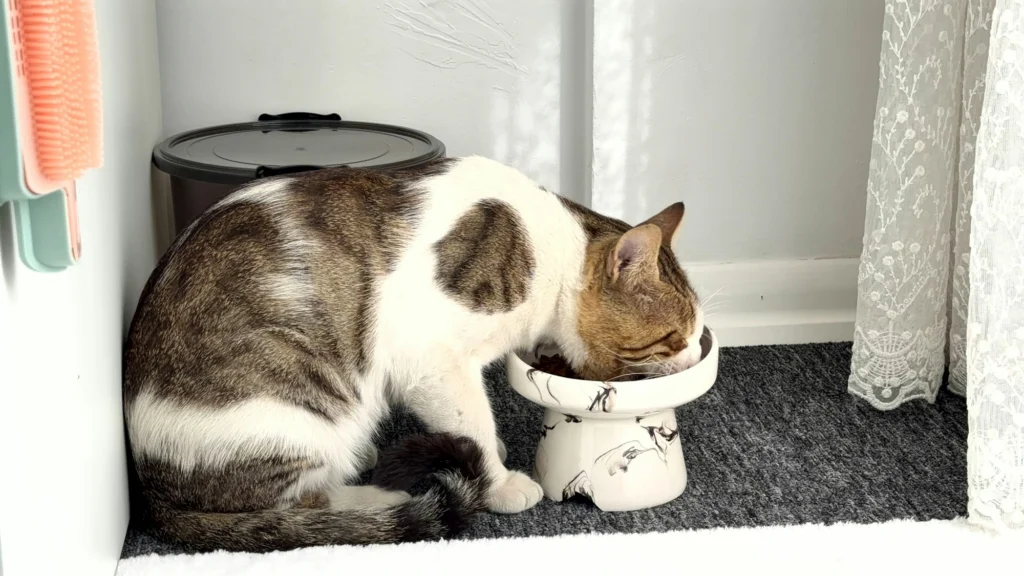
- Find the daily amount. Start with the feeding guide on the food packet, as International Cat Care suggests, then ask your vet to adjust it for your cat’s ideal weight. Cornell notes that label instructions are based on the average cat, so a less active cat may need less.
- Weigh it. Use a kitchen scale for dry food. Cups and scoops vary, and dry food is energy dense, so a small error adds up over months.
- Measure the bowl for a few days. Keep free feeding, but put out only the measured daily ration each morning. This alone stops the endless top up and shows you how your cat paces itself.
- Introduce two or three meal times. Pick times you can keep every day. Offer part of the ration at each, and leave the bowl down for a set window before picking it up.
- Move the rest into a feeder. Put a portion of the daily ration into a puzzle feeder or slow feeder so your cat still has something to work on between meals.
- Stay consistent. Cornell recommends finding a schedule that works for you and your cat and keeping it consistent. Expect some extra meowing in the first days.
Never make a cat go without food for long to force the change. Cornell warns that a cat that eats too little can develop hepatic lipidosis, a potentially life threatening liver condition. If your cat refuses food for more than a day during the switch, call your vet.
Keeping the Grazing Habit Without Overeating
You can keep the nibbling pattern your cat enjoys and still control the total by spreading the measured ration across feeders instead of one open bowl.
International Cat Care says puzzle feeders help meals last longer, increase the physical effort needed to get food, and give cats a mental challenge. They can hold dry or wet food, and some need paws while others need tongue and jaw work.
A few simple ways to do it:
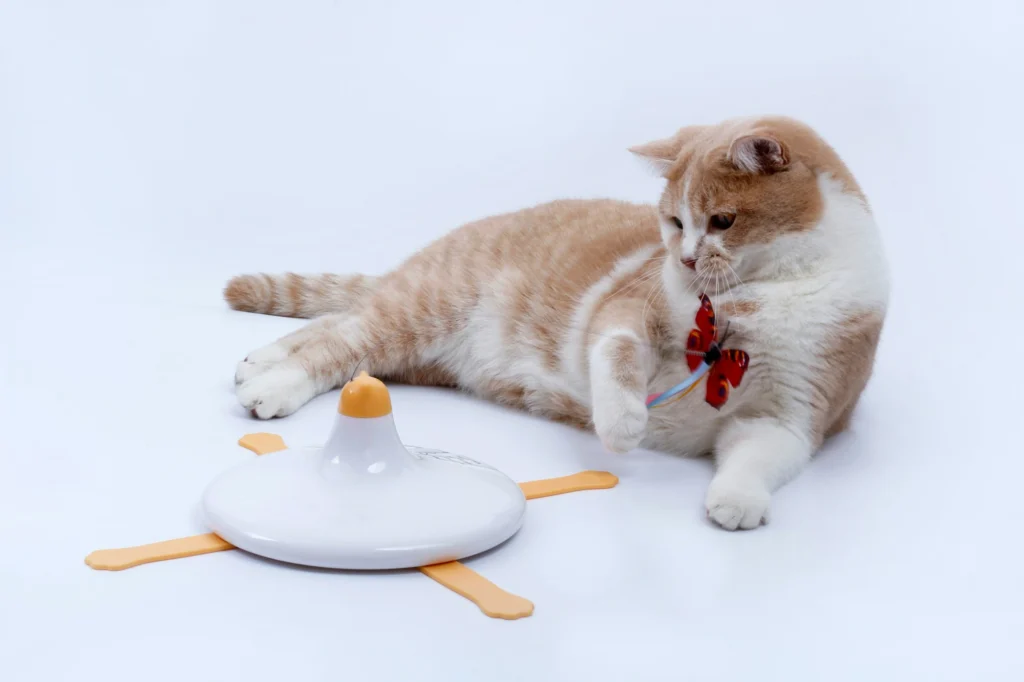
- A rolling food ball for kibble. A ball like the Pawzzle Feeder Ball releases a few pieces at a time as your cat bats it around, which suits a natural hunter.
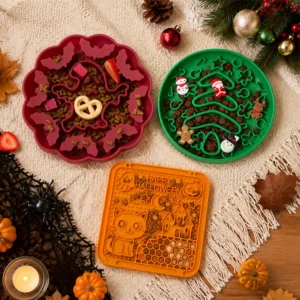
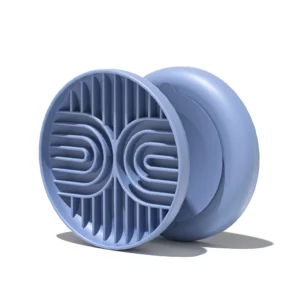
- A shallow slow feeder for set meals. At Pets Sparkle we like the Fish and Honeycomb Slow Feeder Bowl for this, since the shallow pattern slows eating without pushing whiskers against high walls.
- A puzzle board for a midday portion. The Brainy Puzzle Feeder gives a bored indoor cat a small job while you are out.
- Several stations. Hide small measured portions in two or three spots around the home so your cat has to search, a little like hunting.
Whisker comfort matters here. International Cat Care notes that cats prefer shallow bowls or saucers so they can see around them and their whiskers do not brush the sides. Our post on whisker fatigue and bowl shape explains what to look for, and the best slow feeder for cats guide compares designs side by side. For more ideas beyond the bowl, see our roundup of mealtime enrichment for indoor cats, or browse every cat feeder and enrichment toy in one place.
What about wet food? It is usually fed as meals because it does not keep well in an open bowl. Cornell notes that wet food is typically about 70 to 80 percent water and that some cats may eat too much of it with free access. Serve it in a measured portion and wash the dish after each meal. Our guide to using a slow feeder for wet cat food covers which surfaces work best.
Free Feeding in a Multi Cat Home
Free feeding is hardest to manage with several cats, because one bowl hides who is eating what. One cat may gain weight while another quietly loses it.
Cornell describes this exact problem: in a multi cat household, not every cat comes when called for dinner, so some owners leave food out all the time, yet other cats then eat too much. Its suggestion is to feed cats separately or in different parts of the house.
Practical steps that help:
- Give each cat its own bowl in its own spot, out of sight of the others if one is pushy.
- Feed at the same time so nobody finishes early and moves on to a neighbor’s dish.
- Use a separate room or a high shelf for a cat on a special diet.
- Weigh each cat regularly, since a shared bowl will not tell you anything.
Our post on feeding multiple cats in one household goes deeper into food stealing and fast eating. If one of your cats wolfs down food and then vomits, the guide to slowing down a cat that eats too fast is a good next read, and if vomiting keeps happening, call your vet.
Choosing a Routine Your Cat Can Keep
Free feeding cats is convenient, but it only suits a small group of lean, steady cats. For most homes, the better plan is to measure the daily ration, offer it as a few set meals, and put part of it into a puzzle or slow feeder so your cat still gets to nibble and work for food. Talk to your vet about the right amount, weigh your cat now and then, and keep the routine steady.

Get Your Free Slow Feeding Cheat Sheet
Everything in this article — plus portion charts, feeder comparisons and meal plans — in one printable PDF. A 15% discount code is included.
Frequently Asked Questions
Is it okay to leave dry food out for my cat all day?
It can be for a cat that stays at an ideal body condition with free access, but it is not the default. Tufts Petfoodology does not recommend free feeding unless every pet with access keeps an ideal body condition. If you do leave food out, measure the daily amount and replace it with fresh food each day.
Why is my cat always hungry when food is always available?
A cat that grazes all day can still beg, often from habit, boredom or because eating has become its main activity. Constant hunger can also point to a medical problem, especially with weight loss. Read our post on why a cat is always hungry, and call your vet if the change is sudden.
How many times a day should I feed my cat?
Cornell Feline Health Center says once or twice a day suits most adult cats, while kittens under six months usually do best on three meals. International Cat Care suggests going further for adults, splitting the daily ration into at least five small portions using timed and puzzle feeders.
Can I free feed my cat wet food?
It is better not to. Wet food does not keep well in an open bowl, and Cornell notes some cats eat too much of it with free access. Serve wet food as measured meals, pick up what is left after the meal, and wash the dish before the next one.
Will my cat be stressed if I stop free feeding?
Most cats adjust within a few days if the switch is gradual and meal times stay steady. Expect some extra meowing at first. Adding a puzzle feeder gives your cat something to do between meals. If your cat refuses food for more than a day, call your vet.
Sources

Digital marketing specialist at BrightSeen Marketing Agency. Turns veterinary research into clear, practical feeding guides for pet parents.
Mahmoud works for BrightSeen Marketing Agency, which looks after our SEO and GEO and Meta ads.
View all articles by Mahmoud