 Written by
A slow feeder for wet cat food should be shallow, wide, and textured, so your cat can lick soft food out of low ridges without pushing its face into a deep bowl. Lick mats, licking bowls, and flat puzzle feeders all fit that description, while treat balls and tall maze bowls are better saved for kibble.
Cats are not small dogs, and a feeder that works for a Beagle can annoy a cat. Whiskers, a preference for small meals, and a love of food served near body temperature all shape what a good wet food feeder looks like. This post covers why cats gulp canned food, which shapes suit them, how to split the day into small meals, and how to start, serve, and clean a wet food feeder at home.
Does a Slow Feeder Work With Wet Cat Food?
Yes, a slow feeder works well with wet cat food, as long as the surface is shallow enough for licking. Pâté and minced textures press into grooves and stay there, so a cat has to work each section with its tongue rather than taking large mouthfuls.
The Cat Parent's Slow Feeding & Enrichment Handbook
Get our expert cheat sheet delivered to your inbox — plus an exclusive 15% discount code for your first order.
International Cat Care confirms that puzzle feeders can hold both wet food from tins or pouches and dry food, and notes that cats tend to reach wet food with their tongues and jaws rather than their paws. That is the key difference from kibble feeders, which often ask a cat to bat pieces out of a hole.
A wet food feeder will not fix every problem. If your cat throws up often, loses weight, or seems unwell after meals, a new bowl is not the answer. Call your vet, and read our post on why a cat throws up after eating to understand the common reasons before the appointment.
Why Cats Gulp Wet Food
Most cats gulp wet food because it smells and tastes great and arrives as one large, easy meal in the same spot every day. Nothing about that routine asks them to slow down.
In nature, the pattern is very different. International Cat Care explains that feral cats can spend more than 12 out of every 24 hours looking for and catching food, eating many small meals across the day and night. A pet cat with a full dish twice a day skips all of that effort.
The American Association of Feline Practitioners makes the same point in its feeding consensus statement. Its panel notes that most pet cats are fed in one location, either with food always available or with one or two large, very tasty meals, and that this routine does not meet a cat’s behavioral needs for hunting and foraging. The statement recommends frequent small meals, puzzle feeders, and food placed in different spots.
Canned food adds its own twist. Cornell Feline Health Center describes canned cat food as highly palatable for most cats, which is great for picky eaters but means an eager cat can empty a flat saucer in moments. Signs that your cat is a true speed eater are covered in our guide to a cat eating too fast.
Shape Matters: Whiskers and Shallow Dishes
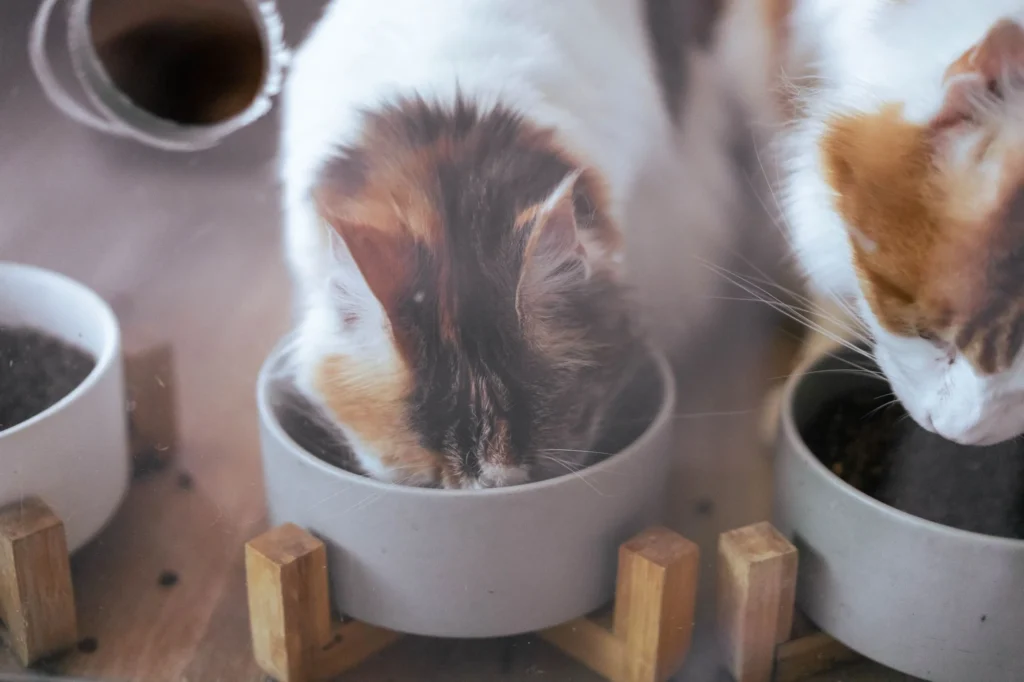
Cats generally prefer to eat from shallow, wide dishes where their whiskers do not brush the sides and they can still see around them. Any slow feeder you choose for wet food should respect that preference.
International Cat Care states that cats prefer to eat from shallow bowls or saucers so they can look around while eating and keep their whiskers clear of the bowl. That one detail rules out many products sold as slow feeders, because tall walls and narrow wells force a cat to dip its whole face in.
When you compare feeders for a cat, look for these traits:
- Low ridges. Short bumps or grooves hold wet food in place without blocking your cat’s view.
- A wide footprint. A broad surface lets you spread a small portion thinly, which is what makes the meal last.
- An open rim. A shallow edge, or no edge at all on a mat, keeps whiskers comfortable.
- A non-slip base. Cats push food around with their tongues, and a sliding feeder quickly becomes a frustrating one.
Some owners describe a cat that scoops food onto the floor or eats only from the middle of the bowl as having whisker fatigue. The idea is still debated, and our post on whisker fatigue and bowl shape explains what is known and what is not. Either way, a shallow wet food feeder is a gentle choice for sensitive cats.
What Makes a Good Slow Feeder for Wet Cat Food
A good slow feeder for wet cat food combines a shallow licking surface with enough texture to hold soft food in place. The table below compares the most common options when you fill them with canned food for a cat.
| Feeder type | With wet cat food | Good fit for |
|---|---|---|
| Textured lick mat | Food sits in a thin layer and must be licked out; no rim to touch whiskers | Pâté, mousse, small toppers, cats new to slow feeding |
| Licking bowl with a spinning center | Food rests around a moving ball, so the cat licks and nudges to reach it | Wet or dry meals for cats that enjoy a little challenge |
| Flat puzzle feeder with low ridges | Soft food fills shallow grooves and is easy to see and smell | Minced and pâté textures, mixed wet and dry meals |
| Silicone ice cube tray (DIY) | Small portions sit in separate cups, which slows a meal for very little cost | Trying puzzle feeding before buying anything |
| Deep maze bowl | Wet food packs into tall channels and the walls crowd the whiskers | Kibble for dogs rather than wet food for cats |
| Treat ball or rolling dispenser | Wet food will not fall out of the holes | Dry food and treats only |
The ice cube tray idea comes straight from International Cat Care, which suggests putting wet food in an ice cube tray as an easy homemade puzzle feeder.
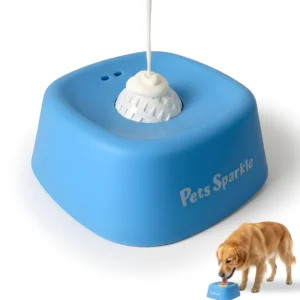
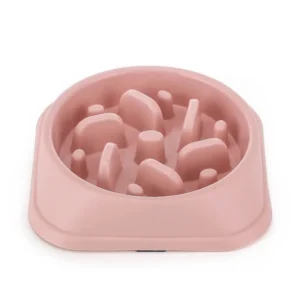
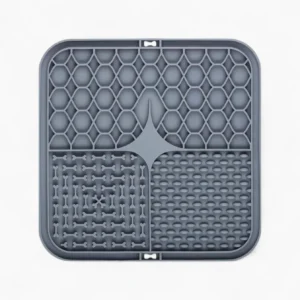
If you would rather buy a feeder designed for the job, the Pets Sparkle Slow Licking Mat is a silicone mat made for wet food, treats, and frozen toppers. The Interactive Licking Bowl uses a spinning center to turn gulps into licks, and the Puzzle Bites Feeder offers a flat surface with low ridges. All three are sized for cats and small to medium dogs. You can see the rest of the cat range in our shop for cats, and our best slow feeder for cats guide explains how we would choose between them.
Split the Day Into Small Wet Meals
Spreading your cat’s daily ration over several small meals slows eating more than any single bowl can. A feeder stretches one meal; smaller, more frequent meals change the whole routine.
International Cat Care recommends that, where possible, owners divide the daily ration into at least five portions spread across the full 24 hours, using timed feeders and puzzle feeders. That can sound like a lot of work, but wet food makes some of it easier, because several small portions fit neatly on a lick mat or in tray cups.
Age changes the plan. Cornell Feline Health Center advises that kittens under six months usually do best on three meals a day, kittens between six months and one year on two, and adult cats on one or two meals in most cases. Cornell is clear that there is no single right schedule, so think of these as a starting point to discuss with your vet.
A practical day for an adult indoor cat might look like this:
- Morning: a portion of wet food spread on a lick mat.
- Midday: a small amount of the daily dry ration in a puzzle feeder, if your cat eats both types.
- Evening: a second wet portion in a licking bowl or flat puzzle feeder.
- Before bed: the last small share, so the overnight gap is shorter.
Keep the total amount for the day the same. Splitting meals is about pacing, not adding food. If you work long hours, an automatic feeder can cover dry meals while you are out; our comparison of an automatic feeder vs a slow feeder walks through how the two can work together.
How to Start Your Cat on a Wet Food Feeder
Start with an easy setup and a familiar meal, and make the feeder harder only after your cat is clearly relaxed with it. Cats give up quickly on puzzles that feel unrewarding.
International Cat Care suggests introducing puzzle feeders gradually: keep feeding part of the daily food in a normal bowl, set the feeder so food is easy to get, and pick designs where your cat can easily see and smell the food. Here is how that looks with wet food:
- Use a food your cat already loves. A new feeder and a new flavor at the same time is too much change at once.
- Fill it generously at first. Leave a little food on top of the ridges so the first licks pay off right away.
- Serve part of the meal in the usual dish. Put a small share on the feeder and the rest in the familiar bowl, then shift the balance over several days.
- Place it where your cat already eats. A quiet spot away from the litter box and busy doorways helps an anxious cat settle.
- Watch for frustration. Walking away, pawing hard at the feeder, or crying near it means the setup is too difficult. Go back a step.
- Add texture later. Once your cat finishes calmly, spread the food thinner or press it deeper into the grooves.
Our post on cat puzzle feeders has more ideas for building difficulty slowly, and the tips in lick mats for cats cover safe toppings and how long a session should last.
Serving Temperature and Freshness
Serve wet food close to body temperature, offer only what your cat will finish in one sitting, and refrigerate the rest of the can right away. A slow feeder makes the meal longer, so freshness matters even more.
Smell drives a cat’s appetite. International Cat Care notes that cats tend to prefer food that is around body temperature, about 35°C (about 95°F), because gentle warmth makes the aroma stronger. Food straight from the fridge can be less appealing, especially when it is spread thinly on a cold surface.
Simple ways to keep a wet meal tempting and safe:
- Take the portion out of the fridge a little before mealtime instead of serving it cold.
- Mix in a spoonful of warm water and stir well, then check that it is only lukewarm before serving. Never serve food hot.
- Cover and refrigerate any opened can. Cornell Feline Health Center advises that any unused portion of opened canned cat food should be refrigerated to keep its quality and prevent spoiling.
- Pick up the feeder when your cat walks away, and throw out what is left rather than leaving it for later.
- Do not use a wet food feeder for grazing. Cornell notes that food left out for grazing should be replaced with fresh food every day, and wet food dries out far sooner than kibble.
Clean the feeder after every wet meal. Soft food dries hard in grooves and texture, so soak it in warm, soapy water first and then scrub with a small brush. International Cat Care also points out that plastic bowls can pick up odors, which some cats find off-putting, so a feeder that smells stale even after washing is due for replacement. Our step-by-step guide on cleaning a slow feeder and lick mat covers every part of the routine.
Kittens, Seniors, and Multi-Cat Homes
Kittens, older cats, and homes with several cats each need small tweaks to how a wet food feeder is used. The aim is the same in every case: a calm, unhurried meal.
Kittens
Young kittens eat more often and learn quickly, so keep their feeders very easy and the portions small. Use the simplest surface you have, such as a flat lick mat, and supervise in case a curious kitten starts chewing the edges. Our kitten slow feeding guide explains how to pace a growing cat without frustrating it.
Senior cats and cats with sore mouths
Wet food is often a better fit for cats with dental problems. Cornell Feline Health Center notes that cats with periodontal disease may find dry food hard to chew, and that wet food or dry food with water added may help. For these cats, choose the softest, shallowest licking surface and skip deep grooves entirely. If an older cat suddenly eats less, drops food, or paws at its mouth, book a vet visit.
Homes with more than one cat
Cats usually prefer to eat alone. The AAFP consensus statement recommends multiple food and water stations so that anxious cats are not pushed away from meals. Give each cat its own wet food feeder in a separate spot, ideally out of sight of the others. Our post on feeding multiple cats in one household has more ideas for stopping food stealing.
Turn Wet Meals Into a Gentle Hunt
The best slow feeder for wet cat food is shallow, textured, and easy to clean, and it works best as part of a routine of small meals through the day. Start easy, serve the food near body temperature, refrigerate leftovers, and wash the feeder after each use.
A lick mat, licking bowl, or flat puzzle feeder will not replace a vet check, though. If your cat vomits repeatedly, stops eating, or loses weight, call your vet. For a wider look at feeder types beyond wet food, our complete guide to slow feeders for cats is a good next read.
Get Your Free Slow Feeding Cheat Sheet
Everything in this article — plus portion charts, feeder comparisons and meal plans — in one printable PDF. A 15% discount code is included.
Frequently Asked Questions
What is the best slow feeder for wet cat food?
The best choice is a shallow feeder with a textured or lightly ridged surface, such as a silicone lick mat, a licking bowl, or a flat puzzle feeder. These hold soft food in place and keep whiskers clear of the sides. Deep maze bowls and treat balls work poorly with wet food, so save them for kibble.
Can I put wet cat food in a puzzle feeder?
Yes. International Cat Care confirms that puzzle feeders can hold wet food as well as dry. Choose one your cat can reach with its tongue, such as a lick mat or flat feeder with shallow grooves. A silicone ice cube tray is an easy homemade option for trying the idea first.
How do I stop my cat from eating wet food too fast?
Spread each portion thinly across a lick mat or shallow puzzle feeder, and split the daily ration into several small meals instead of one or two big ones. International Cat Care suggests at least five portions across the day where possible. If your cat still vomits after eating, call your vet.
How long can wet cat food stay in a slow feeder?
Only as long as one meal. Serve what your cat will finish in a single sitting, pick up the feeder when your cat walks away, and discard the leftovers. Cornell Feline Health Center advises refrigerating any unused portion of an opened can, and the feeder should be washed after every wet meal.
Should I warm wet food before putting it in a slow feeder?
Slightly warming it can help. International Cat Care notes that cats tend to prefer food at around body temperature because the smell is stronger. Let refrigerated food sit out briefly or stir in a little warm water, then check that it is only lukewarm. Never serve hot food.
Sources
The veterinary and cat welfare resources referenced in this post:

Digital marketing specialist at BrightSeen Marketing Agency. Turns veterinary research into clear, practical feeding guides for pet parents.
Mahmoud works for BrightSeen Marketing Agency, which looks after our SEO and GEO and Meta ads.
View all articles by Mahmoud