 Written by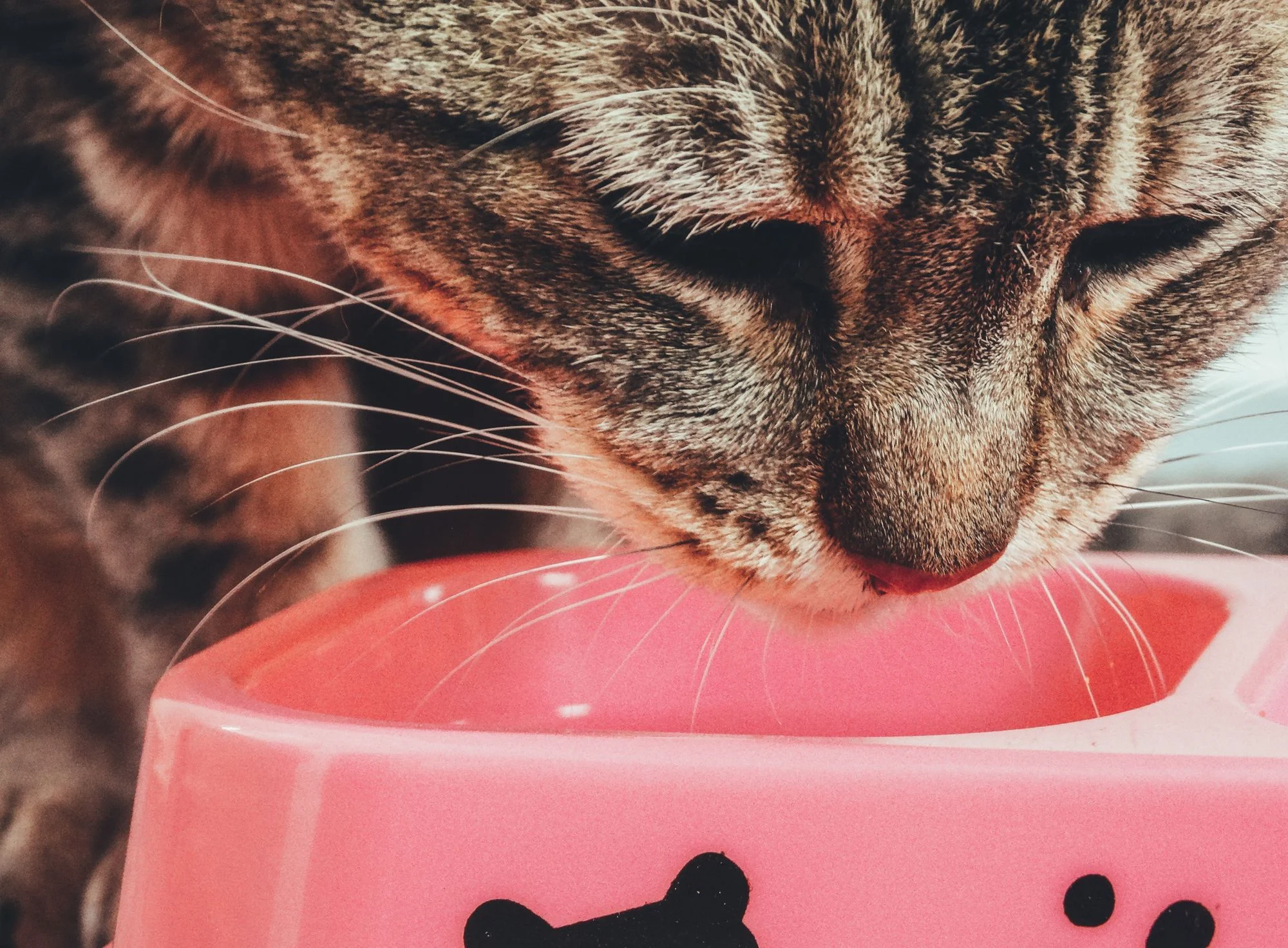
If mealtime for your cat looks more like a feeding frenzy than a calm snack break, you are not alone. Plenty of American cat parents watch their cat empty a bowl in under a minute, only to see it come right back up a few minutes later. Fast eating is one of the most common feeding complaints veterinarians hear, and it is almost always fixable once you understand why it happens.
Below are five signs that your cat is eating too fast, what is usually driving the behavior, and practical, vet-informed ways to slow things down so mealtime is safer and more enjoyable for your cat.
Why Do Cats Eat So Fast in the First Place?
In the wild, cats are built to eat several small meals a day, catching prey one piece at a time. Many indoor cats, by contrast, are fed one or two large portions, which can trigger a “get it while it’s there” instinct, especially in multi-cat households. Competition with other pets, previous food insecurity (common in rescued or formerly stray cats), boredom, anxiety, or even a food bowl that makes gulping easy can all speed up eating. The ASPCA notes that a cat’s feeding environment and routine play a major role in food-related behavior, which is why small changes to how and where you feed often make a real difference.
The Cat Parent's Guide to Slow Feeding & Enrichment
Get our expert guide delivered to your inbox — plus an exclusive 15% discount code for your first order.
Sign #1: Your Cat Finishes a Meal in Under a Minute
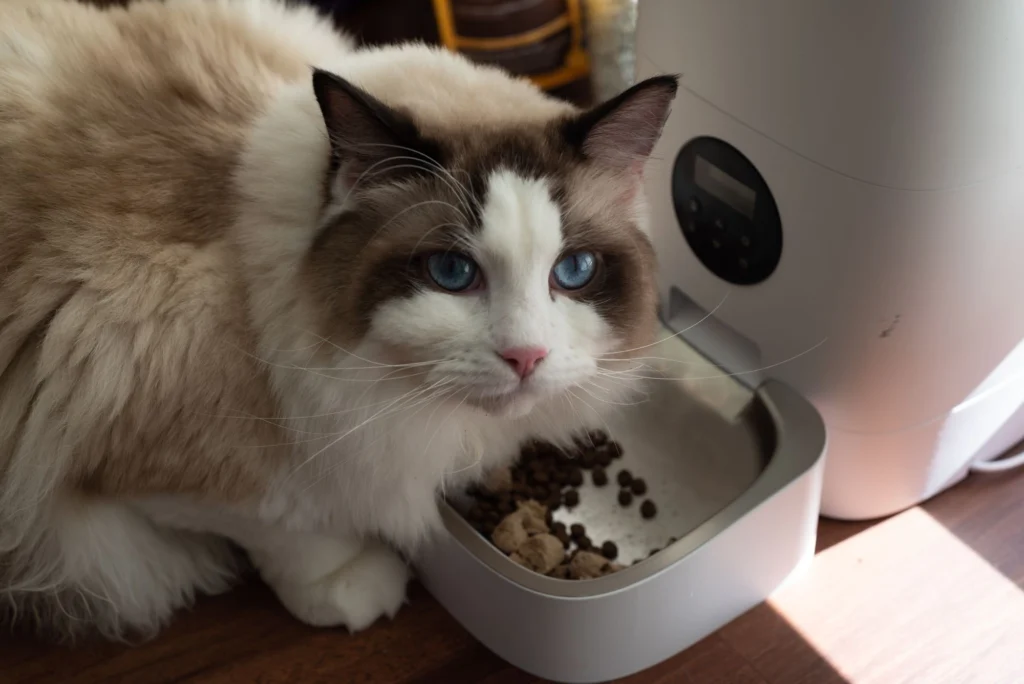
A healthy adult cat eating from a standard flat dish can often clear a portion in 60 seconds or less, barely chewing kibble before swallowing. If your cat is already walking away from the bowl before you’ve put the food bag back in the pantry, that’s a strong clue that eating is happening faster than their digestive system would prefer.
Sign #2: Vomiting or Regurgitating Shortly After Eating
This is the sign that worries most pet parents, and understandably so. When a cat eats too quickly, they often swallow large amounts of air along with barely-chewed food, which can come back up within minutes of finishing a meal. Occasional regurgitation tied to speed-eating is common, but the VCA Animal Hospitals network advises that frequent vomiting after meals should always be discussed with your veterinarian, since it can also point to food sensitivities, hairballs, or other underlying issues that have nothing to do with eating speed.
Sign #3: Gulping, Choking, or Noisy Eating
Loud gulping, smacking, or a brief choking cough during meals are all signs your cat isn’t pacing herself. Cats don’t chew the way dogs do, so when kibble is swallowed whole and too fast, it can trigger gagging or a quick cough-and-swallow reflex. If this happens at nearly every meal, it’s worth addressing rather than treating it as a quirky habit.
Sign #4: Food Guarding or Frantic Behavior Around Other Pets
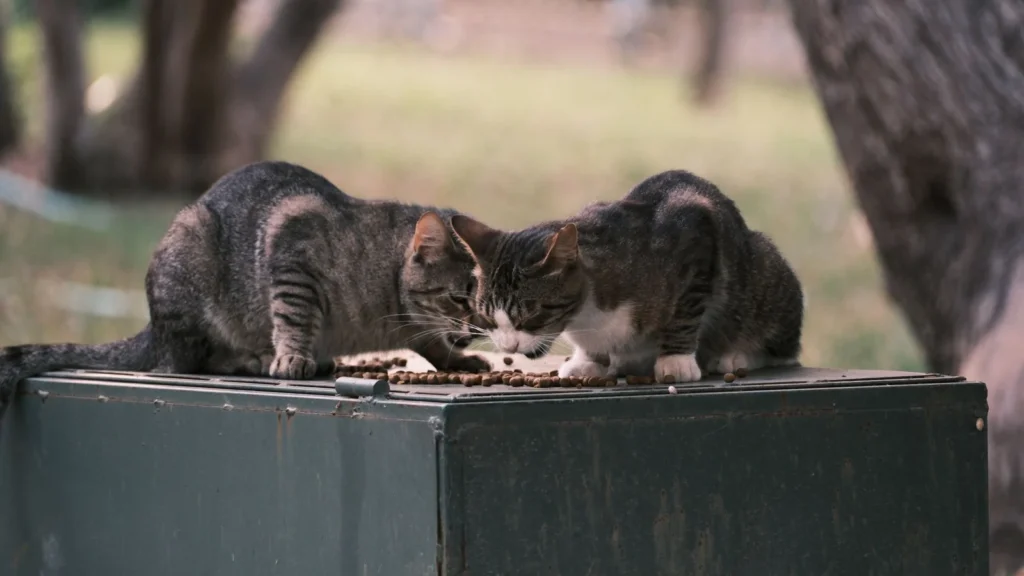
In homes with multiple cats, or a cat and a dog sharing a feeding area, fast eating is often fueled by competition. Watch for crouching low over the bowl, growling, hissing, or bolting the second food appears. This pattern is less about hunger and more about perceived scarcity, and it tends to get worse, not better, if feeding setups aren’t adjusted.
Sign #5: Bloating, Gas, or Visible Discomfort After Meals
A tight, slightly distended belly, excessive gas, or a cat that seems restless, lies down awkwardly, or avoids being touched near the stomach after eating may be experiencing discomfort from swallowed air and rapidly ingested food. Cats are far less prone to the life-threatening bloat (GDV) seen in large, deep-chested dog breeds, but the American Veterinary Medical Association notes that rapid eating can still contribute to general digestive upset, vomiting, and gas in cats of any size.
How to Slow Down a Fast-Eating Cat
The good news is that most fast-eating habits respond well to simple changes:
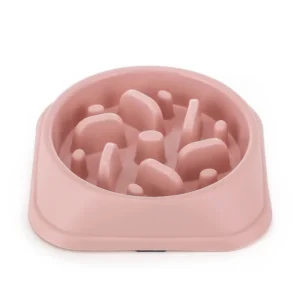
Switch to a Slow Feeder Bowl
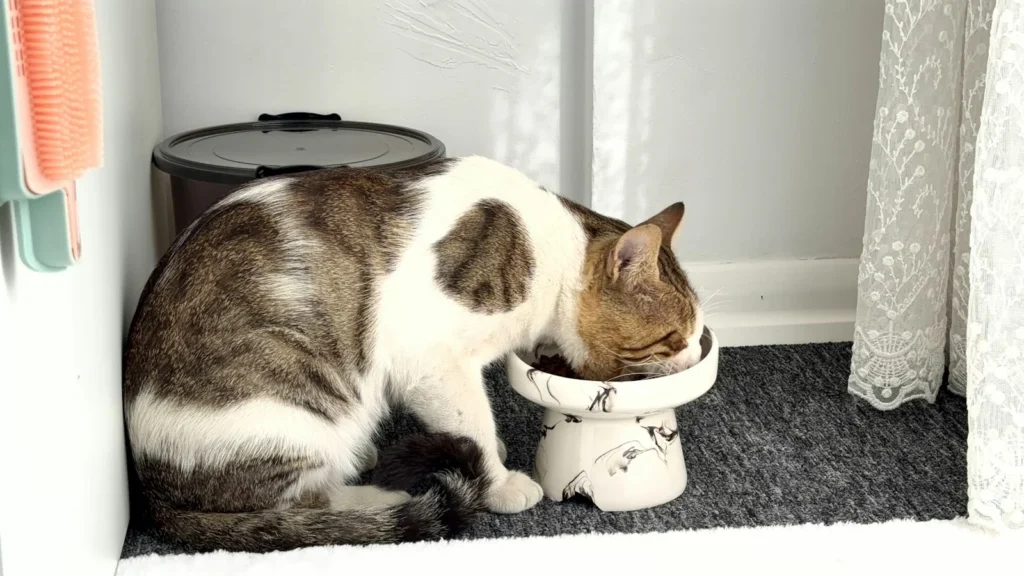
A slow feeder or puzzle-style bowl with raised ridges, mazes, or compartments forces your cat to work around small obstacles to reach each piece of kibble, naturally stretching a one-minute meal into ten or fifteen. Our Treat Maze Bowl is sized well for cats and small pets, with a gentle maze pattern that slows gulping without frustrating your cat.
Add Light Mental Enrichment
Rolling-style or puzzle feeders ask your cat to nudge, paw, or roll the feeder to release kibble, which naturally paces eating while also giving indoor cats a bit of mental exercise. The Pawzzle Feeder Ball is a popular option for cats who are motivated by a little “hunting” at mealtime.
Split Meals Into Smaller, More Frequent Portions
Instead of one or two large meals, try three to four smaller portions spread through the day. This mimics a cat’s natural grazing pattern and reduces the “last supper” urgency that drives gulping.
Separate Pets at Feeding Time
If competition is the root cause, feed cats in multiple households in separate rooms, on different levels of a cat tree, or at staggered times. Removing the sense of competition is often more effective than any bowl change on its own.
Avoid Dry-Food-Only Gulping Habits
Some cats gulp dry kibble specifically because it requires little chewing. Mixing in a small amount of wet food, or lightly moistening kibble, can slow things down and support hydration at the same time, which matters year-round for indoor cats across the U.S., from dry winter air in the Midwest to summer heat in states like Arizona and Florida.
When to Call Your Veterinarian
Occasional fast eating with no other symptoms usually isn’t an emergency. However, the AAHA (American Animal Hospital Association) recommends scheduling a veterinary visit if your cat is vomiting after most meals, losing weight, seems lethargic, or shows signs of pain around the abdomen. These can signal issues beyond eating speed, such as food intolerances, parasites, or gastrointestinal disease, that deserve a proper diagnosis rather than a bowl swap.
Get Your Free Slow Feeding Guide
Everything in this article — plus portion charts, feeder comparisons and meal plans — in one printable PDF. A 15% discount code is included.
Frequently Asked Questions
Is it normal for cats to eat fast?
Mild speed-eating is common, especially in rescued cats or multi-pet homes. It becomes a concern when it leads to regular vomiting, choking, or distress.
Do slow feeder bowls work for cats the same way they do for dogs?
Yes. The mechanism is the same: physical obstacles slow the rate of consumption. Cat-specific slow feeders are simply sized and shaped for a cat’s smaller mouth and whiskers, often with shallower mazes than dog versions.
Can fast eating cause long-term health problems in cats?
Chronic speed-eating can contribute to ongoing vomiting, poor digestion, and in some cases weight gain if it’s paired with free-feeding. It is rarely dangerous on its own, but it is worth correcting for your cat’s comfort.
How long should a cat’s meal ideally take?
There’s no strict rule, but many veterinary behaviorists suggest aiming for at least 5 to 10 minutes per meal as a reasonable pace for most cats.
If mealtime at your house has turned into a sprint, a few small adjustments can turn it back into the calm, satisfying ritual it should be. Browse our full lineup of cat-friendly slow feeders and puzzle feeders in the Pets Sparkle shop to find the right fit for your cat’s size, appetite, and personality.

Mahmoud Mohamed Samir is an SEO/GEO Specialist who turns veterinary research into clear, practical feeding guides, built so pet parents get straight answers whether they search on Google or ask an AI assistant.
View all articles by Mahmoud