 Written by
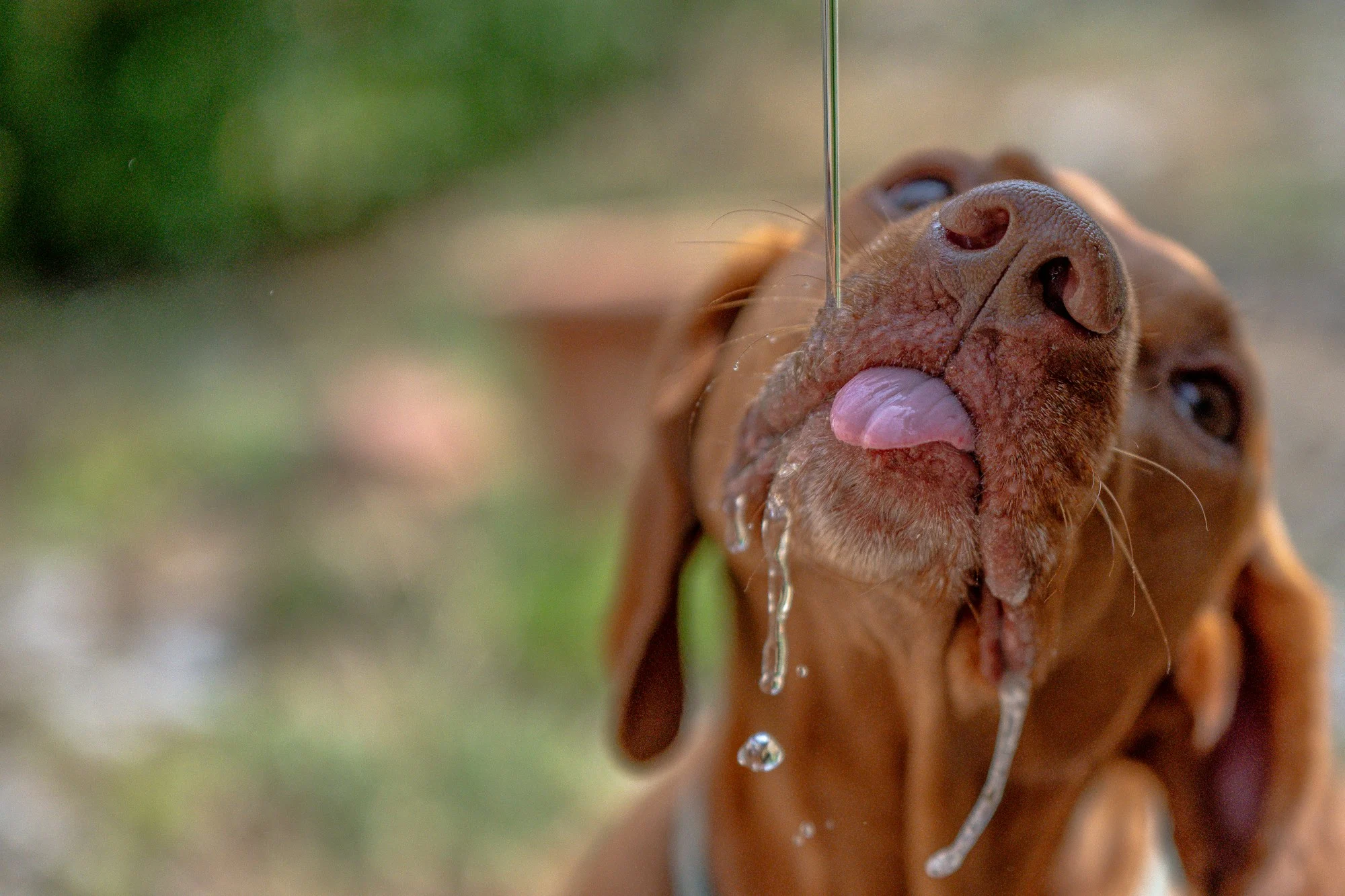
A dog drinking water too fast usually gulps air along with the water, and that can lead to coughing, gagging, hiccups, or bringing the water straight back up. In most healthy dogs it is a habit you can manage at home by offering water in smaller amounts, at the right times, and in a calmer setting. If it comes with retching, a swollen belly, or repeated vomiting, call your vet.
This post is about the speed of drinking, not just the amount. You will learn why some dogs gulp, how much water is normal, what to do after exercise, and which signs mean your dog should be checked by a vet the same day.
Why Some Dogs Drink Water So Fast
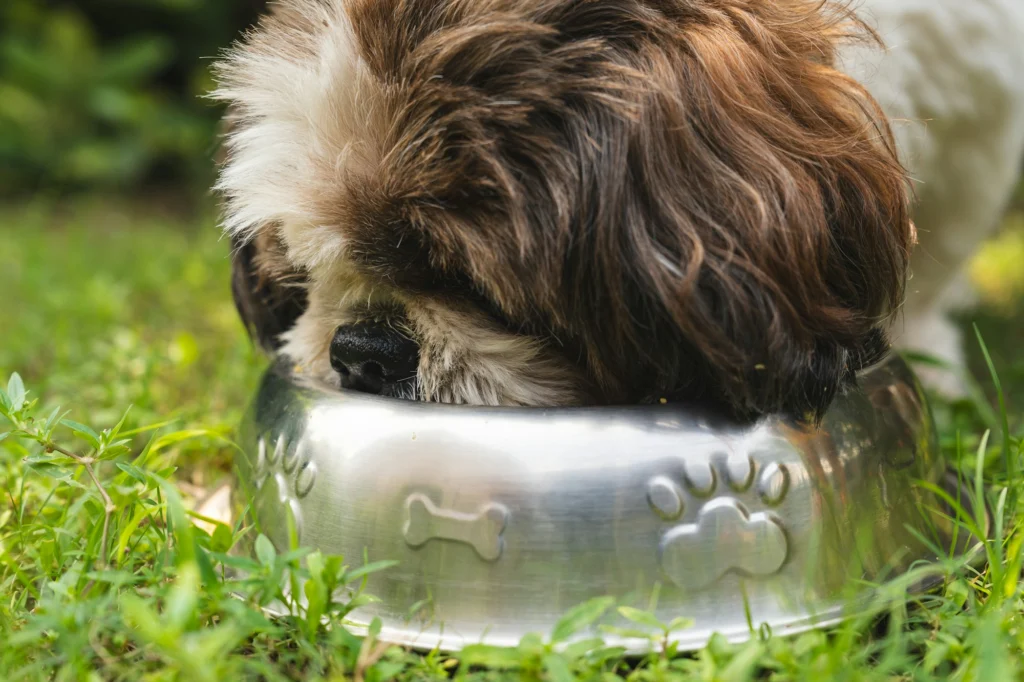
Most dogs drink fast because they are very thirsty, excited, or used to competing for resources. The cause is often the situation, not the dog. A dog that has just run in the yard, played hard, or waited a long time for its bowl to be refilled will tend to drink in big, noisy laps.
Slow Feeding for Better Digestion & Bloat Prevention
Get our expert cheat sheet delivered to your inbox — plus an exclusive 15% discount code for your first order.
Common reasons include:
- Exercise and heat. A dog that has been active or out in warm weather is thirstier and more likely to gulp.
- An empty bowl. When water runs out for a while, many dogs drink everything at once as soon as it returns.
- Competition. In homes with several pets, a dog may rush to drink before another animal arrives.
- Excitement. Some dogs drink fast right after a walk or a greeting simply because they are wound up.
- A fast eating habit. Dogs that gulp their meals often gulp their water too. Our post on dog hiccups after eating explains how swallowed air causes trouble.
Increased thirst is different from fast drinking. If your dog is drinking much more than usual every day, that pattern is a medical question, covered further below.
How Much Water Is Normal for a Dog?
Most dogs drink around 40 to 60 milliliters of water per kilogram of body weight each day, according to the AKC. The AKC adds that intake naturally changes from day to day with the weather, activity level, and diet, and that being thirsty after a hike on a warm day is not usually a medical concern.
The Cornell Riney Canine Health Center gives a practical example: a 20 pound Beagle of about 9 kilograms will drink roughly 360 to 540 milliliters a day, which is about 1.5 to 2 1/4 cups. Cornell notes that vets consider a dog to be drinking excessively when intake goes above 100 milliliters per kilogram per day.
You do not need to measure every drop. Just notice how often you refill the bowl in a normal week, so you can spot a change.
What Happens When a Dog Gulps Water
When a dog gulps water, it swallows extra air and can overwhelm its throat, so the water may come straight back up. This often looks dramatic but is usually harmless when it happens once in an otherwise healthy dog.
Typical signs that your dog drank too fast:
- Coughing or a short gagging sound during or just after drinking
- Hiccups or loud burping
- Bringing up clear water with no effort, usually within minutes
- Restless pacing for a short time before settling
It helps to know what you are seeing. PDSA explains that regurgitation is when a dog brings something up with no retching, heaving, or signs of feeling sick, and that as a one off it can simply mean the dog ate too fast. Vomiting involves heaving and nausea and has many possible causes. PDSA advises seeing your vet if regurgitation happens regularly.
How to Slow Down a Dog Drinking Water Too Fast
The simplest way to slow down a dog drinking water too fast is to keep water available all day so your dog never gets desperate, then offer smaller amounts at moments of high thirst. These steps work for most dogs:
- Keep the bowl topped up. A dog that always has water rarely needs to drink a huge amount at once.
- Offer small amounts after exercise. Give a little water, wait a few minutes, then offer a little more, instead of a full bowl all at once.
- Let your dog settle first. After a walk or play, give your dog a minute to stop panting and calm down before the bowl comes out.
- Add a few ice cubes. Many dogs lick and chase ice cubes, which naturally slows drinking. Cornell’s Riney Center lists ice cubes as a plus when bringing water for dogs on hot days.
- Use more than one bowl. In multi pet homes, separate water stations reduce the rush to drink first.
- Stay calm at the bowl. Avoid excited greetings or play right at the water station.
PDSA’s advice for dogs recovering from tummy upsets points the same way: provide plenty of fresh water and encourage your dog to drink little and often through the day.
Water After Exercise and on Hot Days
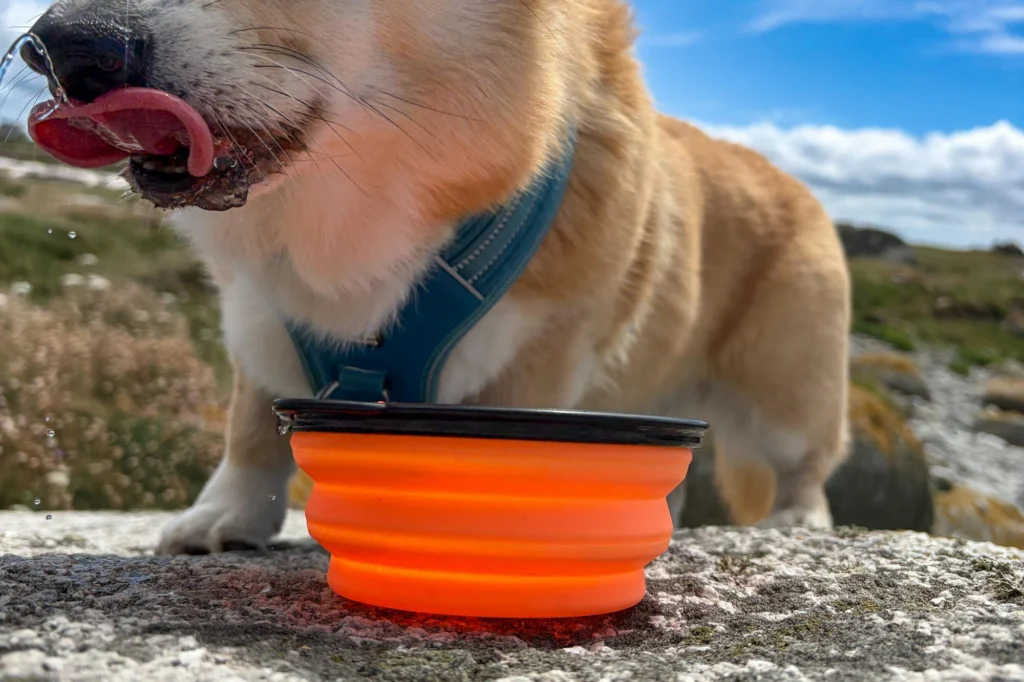
After exercise or time in the heat, your dog needs water, so the goal is to give it in steady portions, not to hold it back. Withholding water from a hot dog is never the answer.
Cornell’s Riney Center warns that dogs with thick or dark coats, short snouts, or health conditions are especially vulnerable to heat stroke, and that early signs of heat stress include panting, drooling, and lethargy. It suggests limiting outdoor time once temperatures reach 85°F, or lower in high humidity, and bringing plenty of cold water, shade, and frequent breaks.
On walks, carry water and offer small sips at regular stops instead of one big drink at the end. If your dog shows confusion, staggering, or vomiting in the heat, Cornell describes that as a more serious situation, so contact your vet straight away.
Fast Drinking, Fast Eating and Bloat Risk
Gulping food or water means swallowing air, which is one reason owners of deep chested dogs pay close attention to eating and drinking habits. Bloat is a real emergency, so it is worth knowing the signs even though fast drinking on its own is usually harmless.
The AKC describes bloat, or gastric dilatation volvulus, as a medical and surgical emergency. Signs include an enlarged belly, retching, salivation, restlessness, and pain when the belly is pressed. The AKC says to call your vet or emergency vet immediately if you believe your dog has symptoms of bloat.
For the full picture, see our guide to dog bloat symptoms and our post on whether slow feeders prevent bloat.
When Fast Drinking Means More Thirst
If your dog drinks fast because it is thirsty all the time, the real issue may be increased thirst, which needs a vet check. The AKC explains that a dog regularly drinking a lot of water can be one of the earliest clues to an underlying health problem.
Watch for these patterns:
- You are refilling the bowl much more often than usual.
- Your dog asks to go outside to urinate more often, or has accidents in the house.
- Your dog looks for water in unusual places such as puddles or the bathroom.
- The change appears without hotter weather, more exercise, or a diet change.
Cornell’s Riney Center lists urinary tract infection, diabetes mellitus, and kidney disease among the common conditions behind increased drinking and urination. Only a vet can sort out the cause, so book an appointment rather than limiting water at home.
Does the Bowl Make a Difference?
The bowl can help a little, but routine matters more. A sturdy, stable bowl that does not slide or tip lets your dog drink without rushing, and a clean bowl in a quiet spot invites calm, regular drinking. Wash water bowls often, just as you would a food bowl.
If your dog also gulps meals, fix that at the same time, since fast eaters often drink in a rush right after eating. At Pets Sparkle, the Interactive Licking Bowl uses a spinning ball to turn fast eating into slower licking, and the Triple Maze Feeder spreads kibble across three sections. Both are food bowls sized for small to medium dogs and cats. You can see more in our slow feeder bowls collection, and our post on what to do when a dog eats too fast and throws up covers the food side in detail.
When to Call Your Vet
Call your vet if your dog vomits repeatedly, retches without bringing anything up, has a swollen or tight belly, seems restless or in pain, or brings up water regularly. These signs need professional attention, and bloat signs need it immediately.
Also book a visit if your dog’s daily thirst has clearly increased, if it coughs every time it drinks, or if a puppy or senior dog seems unwell after drinking. Your vet can check for problems in the throat, stomach, or other organs and give advice that fits your dog.
Small Sips, Calm Dog
A dog drinking water too fast is usually telling you it got too thirsty, too excited, or too rushed. Keep water available all day, offer small amounts after exercise and heat, give your dog a moment to settle, and slow down fast meals too. Watch for the warning signs, and when anything looks like bloat or repeated vomiting, call your vet without waiting.
Get Your Free Slow Feeding Cheat Sheet
Everything in this article — plus portion charts, feeder comparisons and meal plans — in one printable PDF. A 15% discount code is included.
Frequently Asked Questions
Is it bad if my dog drinks water too fast?
Occasional fast drinking is common and usually harmless, but it can make a dog cough, hiccup, or bring the water back up. It matters more if it happens often, if your dog vomits repeatedly, or if you see retching or a swollen belly. In those cases, call your vet.
Why does my dog throw up water after drinking?
The most common reason is drinking too much too quickly, which sends water and air back up within minutes. PDSA notes that one off regurgitation can simply mean a dog ate too fast. If it happens regularly, or your dog seems sick, retches, or vomits repeatedly, see your vet.
Should I limit my dog’s water to stop fast drinking?
No. Keep fresh water available, and instead of limiting the total, offer smaller amounts at moments of high thirst, such as after exercise. Never withhold water from a hot dog. If your dog seems to need far more water than usual, ask your vet to check for a medical cause.
How much water should my dog drink a day?
The AKC says most dogs drink around 40 to 60 milliliters per kilogram of body weight each day, with normal changes for weather, activity, and diet. Cornell gives the example of a 20 pound Beagle drinking about 1.5 to 2 1/4 cups a day.
Do ice cubes help a dog drink more slowly?
For many dogs, yes. Licking and chasing ice cubes naturally slows intake and can make water more appealing on hot days. Cornell’s Riney Center lists ice cubes as a plus when bringing water for dogs. Supervise dogs that crunch ice hard, and offer plain water alongside.
Sources
The veterinary resources referenced in this post:

Digital marketing specialist at BrightSeen Marketing Agency. Turns veterinary research into clear, practical feeding guides for pet parents.
Mahmoud works for BrightSeen Marketing Agency, which looks after our SEO and GEO and Meta ads.
View all articles by Mahmoud