 Written by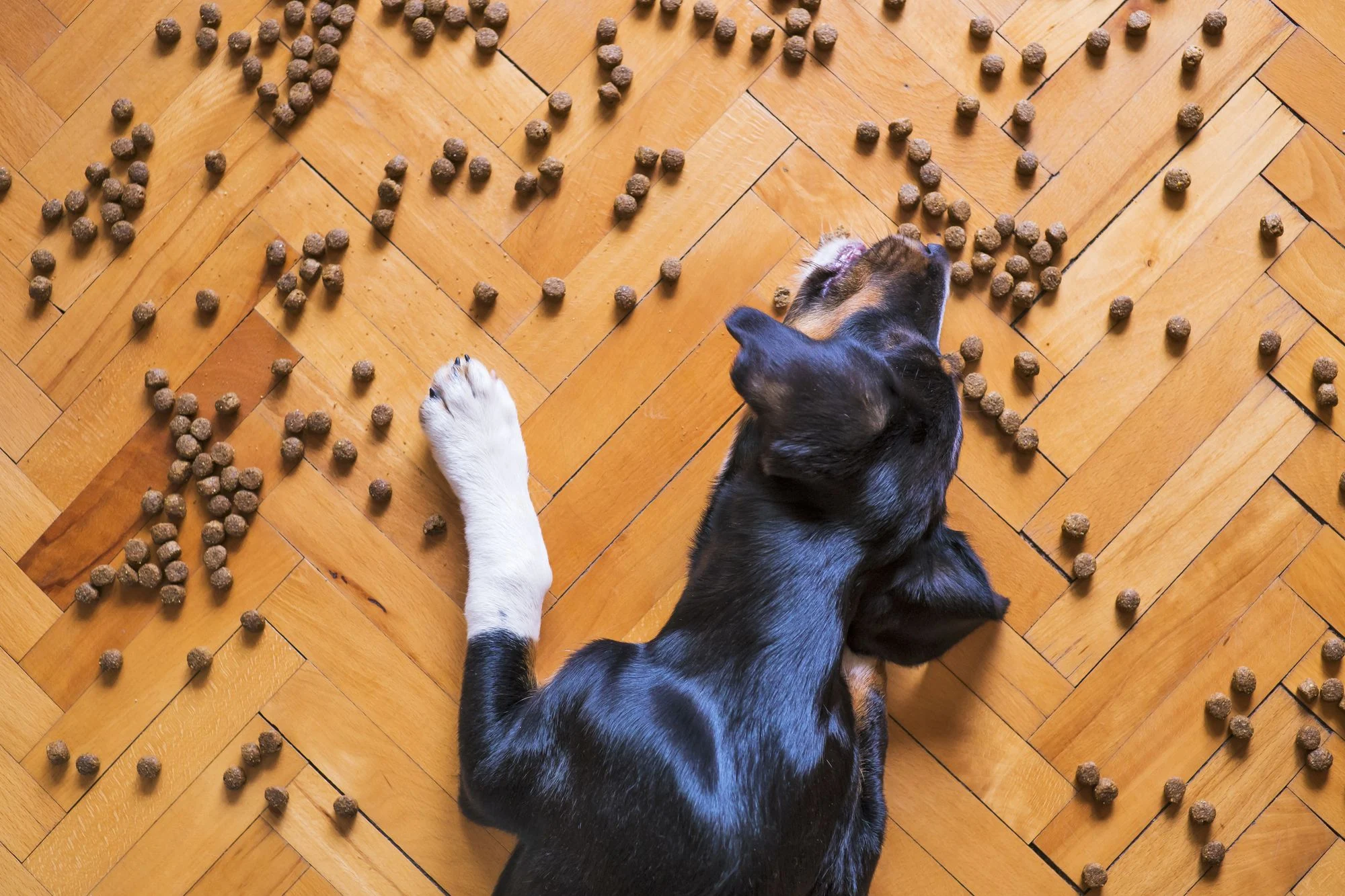
A dog choking on food is one of the most frightening things you can witness at mealtime. One second your dog is inhaling dinner, the next they are pawing at their mouth, drooling and struggling for air. In those moments, knowing what to do (and what not to do) can make a real difference.
This guide covers why fast eaters choke, how to tell choking from look-alikes, the first aid steps veterinary and first aid organizations recommend, and the habits that prevent it. Treat it as preparation, not a replacement for your veterinarian: a choking dog is an emergency, and the goal is always to reach professional help fast.
Why Fast Eaters Choke on Food
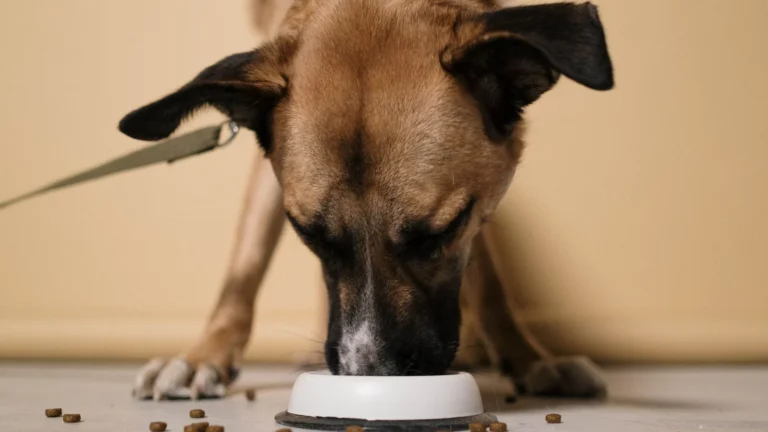
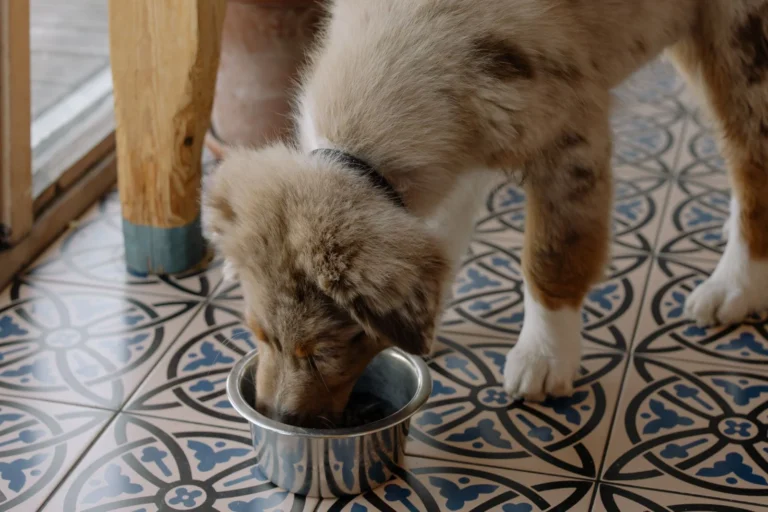
Dogs that gulp their meals take in big mouthfuls with very little chewing. The American Kennel Club lists choking as one of the main dangers of eating too fast, alongside vomiting and bloat, and notes that kibble, bones and chews are among the common items that cause choking in dogs.
Slow Feeding for Better Digestion & Bloat Prevention
Get our expert guide delivered to your inbox — plus an exclusive 15% discount code for your first order.
A dog racing through a bowl swallows food before chewing it, so a clump of kibble or a large chunk can lodge in the throat. Excitement, competition and anxiety all push dogs to eat faster. If you are not sure whether your dog falls into this group, these signs your dog eats too fast are a good place to start.
Choking vs Gagging vs Reverse Sneezing vs Regurgitation
Several mostly harmless events can look like choking. Telling them apart helps you respond correctly.
| What you see | What is happening | Can your dog breathe? |
|---|---|---|
| Choking | Something blocks the airway. Your dog struggles to inhale and gums may turn blue. | Poorly or not at all |
| Coughing or gagging | The body is clearing irritation. Air still moves in. | Yes |
| Reverse sneezing | Loud, rapid snorting inhalations through the nose that usually pass on their own. | Yes |
| Regurgitation | Food comes back up passively, often right after eating, without heaving. | Yes |
PDSA puts the key difference simply: a coughing pet can still breathe in, while a choking pet struggles to. The AKC adds that reverse sneezing is usually not serious.
VCA Animal Hospitals describes regurgitation as quick, without abdominal contractions or warning signs, while vomiting involves active abdominal effort. If your dog regularly brings food back up, read why your dog throws up after eating and mention it to your vet.
Warning Signs Your Dog Is Choking
According to the AKC and PDSA, signs that your dog may be choking include:
- Difficulty breathing in, or high-pitched sounds when trying to breathe
- Pawing at the mouth or rubbing the face or neck against objects
- Heavy drooling
- Repeated coughing, gagging or retching
- Restlessness, panic or obvious distress
- Standing in a wide-legged “tripod” stance to pull in more air
- Blue-tinged gums, lips or tongue
- Weakness, collapse or unconsciousness
Blue gums, no breathing sounds or collapse mean the airway may be fully blocked: a life-threatening emergency.
First Steps: Stay Calm and Check the Mouth
If possible, have someone call the nearest emergency veterinary hospital while you help your dog.
- Stay calm and assess. Confirm your dog is truly struggling to breathe, not reverse sneezing or coughing. A forcefully coughing dog is still moving air.
- Protect yourself. PDSA warns that a choking pet may panic and bite, even a gentle family dog.
- Look inside the mouth. If your dog allows it, open the mouth and use a phone flashlight to see the back of the throat.
- Remove only what you can see and grip. If the piece of food or object is clearly visible and reachable, carefully remove it. PDSA suggests tweezers or pliers for a visible object in a conscious pet.
- Avoid blind finger sweeps. The AKC cautions against reaching deep into the throat without seeing the object, because you can push it further down or get bitten.
If you cannot remove the blockage and your dog still cannot breathe, move straight to the Heimlich maneuver.
The Heimlich Maneuver for Dogs, by Size
American Red Cross pet first aid guidance for a conscious choking dog uses a cycle of abdominal thrusts and back blows. Adjust your force to your dog’s size.
Small dogs
- Lift your dog with their spine against your chest.
- Wrap your arms around them just under the ribs.
- Give 5 rapid abdominal thrusts, pushing inward and upward.
- If the object is still stuck, hold your dog by the hips with the head hanging down and give 5 sharp blows with the palm of your hand between the shoulder blades.
- Check the mouth and remove anything that has come loose.
Medium and large dogs
- Stand behind your dog and wrap your arms around the body just under the ribs.
- Give 5 rapid inward and upward abdominal thrusts.
- If that does not work, lift the hind legs off the ground, wheelbarrow style, so the head points down.
- Give 5 sharp palm blows between the shoulder blades.
- Check the mouth and remove any dislodged item.
The Red Cross advises repeating the cycle until the object comes out. The AKC also describes chest thrusts: pressing inward on the chest just behind the front legs so the lungs push air out like bellows. Whatever technique you use, get your dog to an emergency vet immediately, ideally with someone else driving.
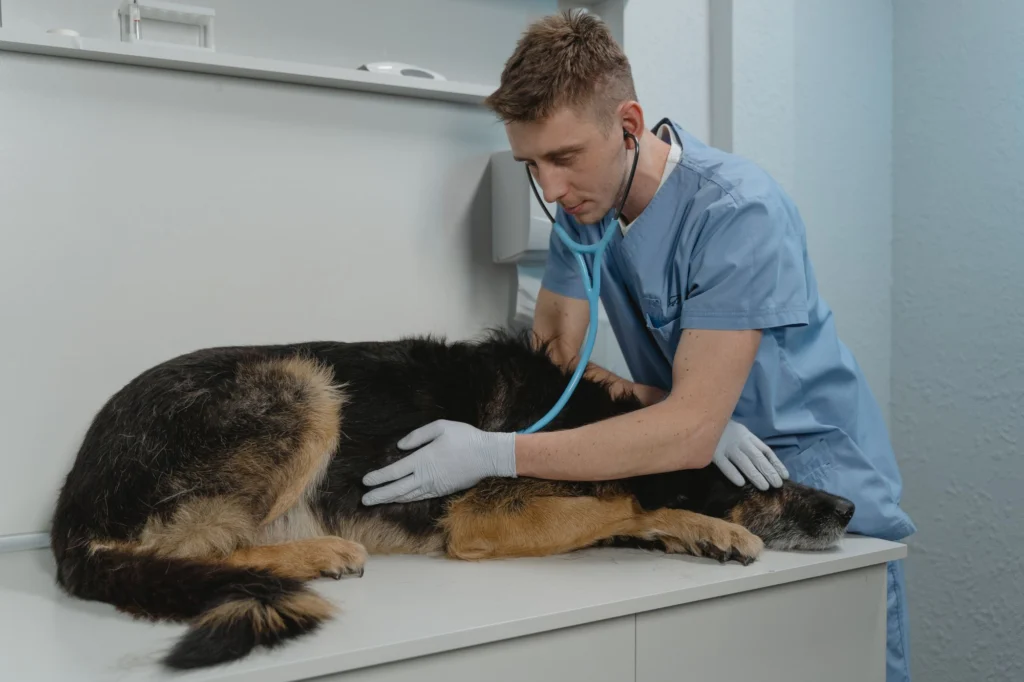
If Your Dog Collapses or Stops Breathing
If your dog loses consciousness, the Red Cross recommends giving 5 rescue breaths (sealing a small dog’s mouth and nose, or a large dog’s nose, and breathing gently until the chest rises), then 5 abdominal thrusts, then checking the mouth again. PDSA notes that once a pet is unconscious and the bite risk is lower, you can open the mouth and gently sweep your fingers across the back of the throat.
If there are no signs of a heartbeat, start CPR and go to the nearest veterinary hospital without delay. The AKC recommends taking a pet first aid course so these skills are practiced before you need them.
Aftercare: Why a Vet Check Still Matters
Once your dog is breathing normally, do not skip the vet visit. The AKC recommends a veterinary evaluation of the mouth, throat and neck after any choking episode to check for injuries or anything left behind, even if your dog seems fully recovered.
The American Red Cross also points out that choking can cause fluid to build up in the lungs, which may not be obvious right away. Afterward, keep your dog quiet and watch for coughing, labored breathing, lethargy or reluctance to eat.
How to Prevent Your Dog Choking on Food
Prevention comes down to slowing your dog down and supervising risky food:
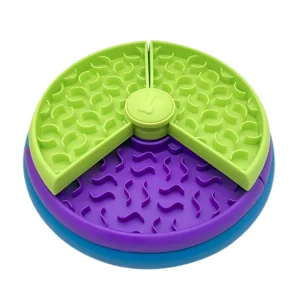
- Use a slow feeder bowl or puzzle feeder. The AKC recommends slow-feeder bowls and food puzzles to break meals into smaller bites. Our complete guide to slow feeder bowls for dogs explains how to choose one.
- Split meals. Feeding smaller portions two or three times a day, as the AKC suggests, means less food in the bowl to gulp at once.
- Check kibble size. Ask your vet whether your dog’s kibble suits their size, especially if they swallow pieces whole.
- Supervise chews. The AKC advises watching dogs with chews and removing small leftover stubs.
- Do not toss food in the air. PDSA recommends avoiding catch-feeding.
- Feed multiple dogs apart. Competition speeds dogs up. See feeding multiple dogs in one household for setup ideas.
- Keep mealtimes calm. Feed in a quiet spot once excitement settles.
Dogs at Higher Risk of Choking
Any dog can choke, but some need extra care at mealtime:
- Flat-faced (brachycephalic) breeds. The AKC lists brachycephalic airway obstruction among the medical causes of choking. A shallow, wide bowl designed for short muzzles helps; see the best slow feeders for flat-faced dogs.
- Gulpers. Dogs that finish a meal in seconds swallow more food at once.
- Senior dogs with airway conditions. The AKC also names laryngeal paralysis as a medical cause of choking. If your older dog has been diagnosed with an airway or throat condition, ask your vet about the safest food texture and feeding setup.
When to Call Your Vet
Go to an emergency vet immediately if your dog cannot breathe, has blue or pale gums, collapses, or if you cannot remove the blockage. Call your vet the same day if:
- Your dog choked and the item came out, even if they now seem fine
- Coughing, gagging or noisy breathing continues after an episode
- Your dog seems painful, drools excessively, or will not eat or drink
- Your dog regularly gags, regurgitates or coughs during or after meals
- Reverse sneezing episodes become frequent or severe
When in doubt, call.
Get Your Free Slow Feeding Guide
Everything in this article — plus portion charts, feeder comparisons and meal plans — in one printable PDF. A 15% discount code is included.
Frequently Asked Questions
Can a dog choke on dry kibble?
Yes. The American Kennel Club lists kibble among the common causes of choking in dogs. Fast eaters who swallow without chewing are most at risk.
How do I know if my dog is choking or just coughing?
A coughing dog can still breathe in, while a choking dog struggles to get air, may paw at the mouth, and can develop blue gums. If you are unsure and your dog seems distressed, treat it as an emergency and call your vet.
Should I put my fingers down my dog’s throat?
Not blindly. Remove an object only if you can clearly see and grip it, ideally with tweezers or pliers, because a blind sweep can push it deeper and a panicked dog may bite.
Why does my dog need a vet visit if the food came out?
Choking and the force of first aid can injure the throat or chest, and fluid can build up in the lungs. A vet check confirms nothing is left behind and your dog is breathing normally.
Do slow feeders really reduce choking risk?
The AKC recommends slow feeder bowls and food puzzles for dogs that eat too fast, since they encourage smaller bites. They are a helpful tool alongside supervision and calm feeding, not a guarantee.
Calmer, Safer Mealtimes Start With the Bowl
First aid prepares you for an emergency, but daily habits keep it from happening. If your dog races through meals, a maze-style bowl such as the Triple Maze Feeder or one from our slow feeder bowl collection can turn gulping into a steadier, safer meal. And if a choking scare ever happens, get your dog to the vet right away.
Sources
The veterinary and animal-welfare resources referenced in this guide:

Mahmoud Mohamed Samir is an SEO/GEO Specialist who turns veterinary research into clear, practical feeding guides, built so pet parents get straight answers whether they search on Google or ask an AI assistant.
View all articles by Mahmoud