 Written by
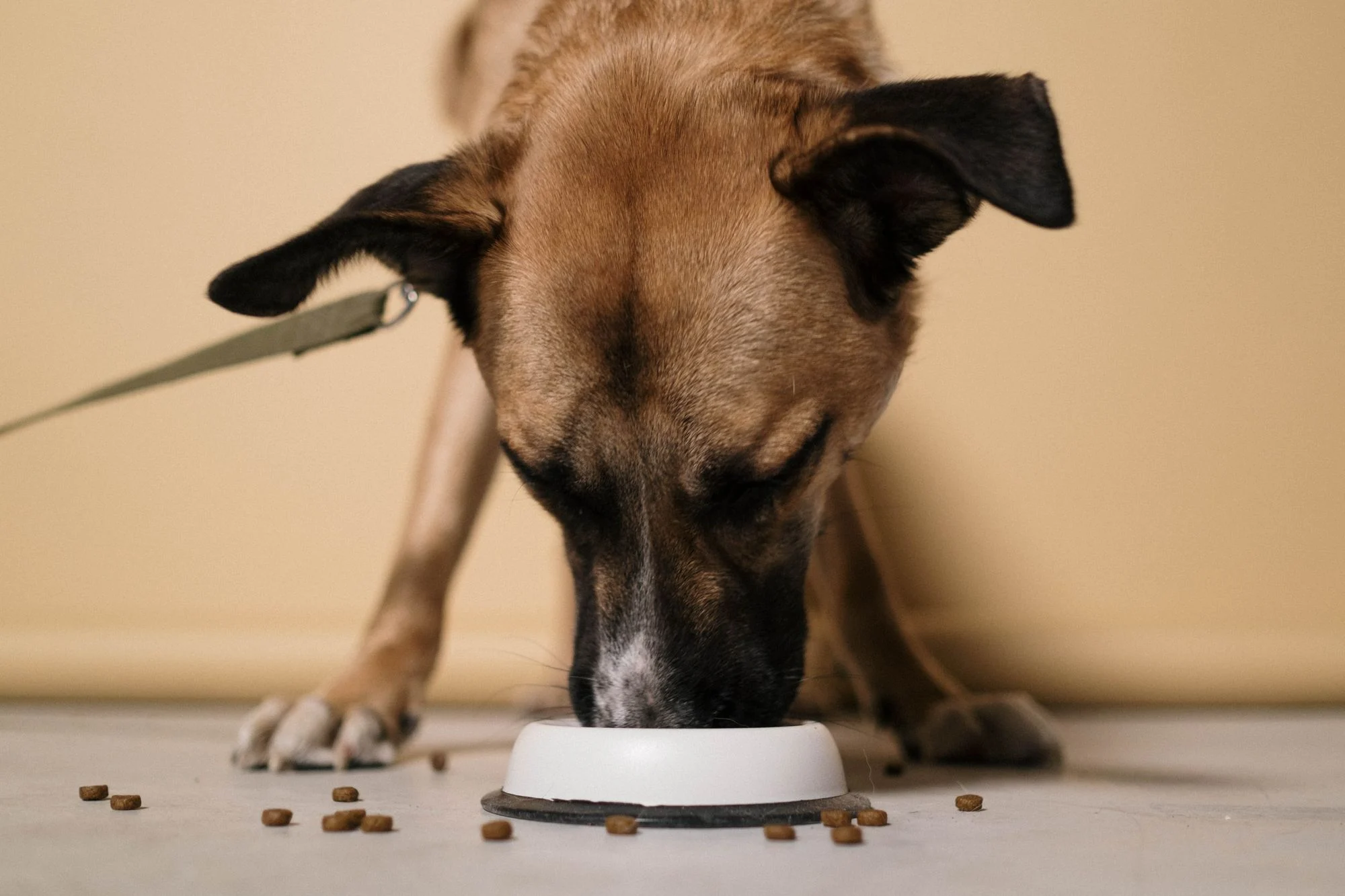
Raised pet bowls are not automatically bad for dogs and cats, but they are not automatically good either. For most healthy small and medium pets the bowl height matters little, while for large and deep-chested dogs the research is mixed enough that the safest default is a stable bowl at floor level unless your vet says otherwise.
If you have ever eyed an elevated feeding stand in a pet store, you have probably wondered whether it is a smart upgrade or an unnecessary extra. Below is what veterinary research actually says, which pets may benefit from a lift, and what to do instead if your real goal is slowing down a fast eater.
Why Owners Choose Raised Pet Bowls
People choose raised pet bowls for understandable reasons. A bowl lifted a few inches off the ground means less bending for a tall dog, less water splashed across the floor, and a tidier feeding corner in a small kitchen. Many owners also assume that raising the bowl is kinder to an aging dog’s neck, back and joints.
Slow Feeding for Better Digestion & Bloat Prevention
Get our expert cheat sheet delivered to your inbox — plus an exclusive 15% discount code for your first order.
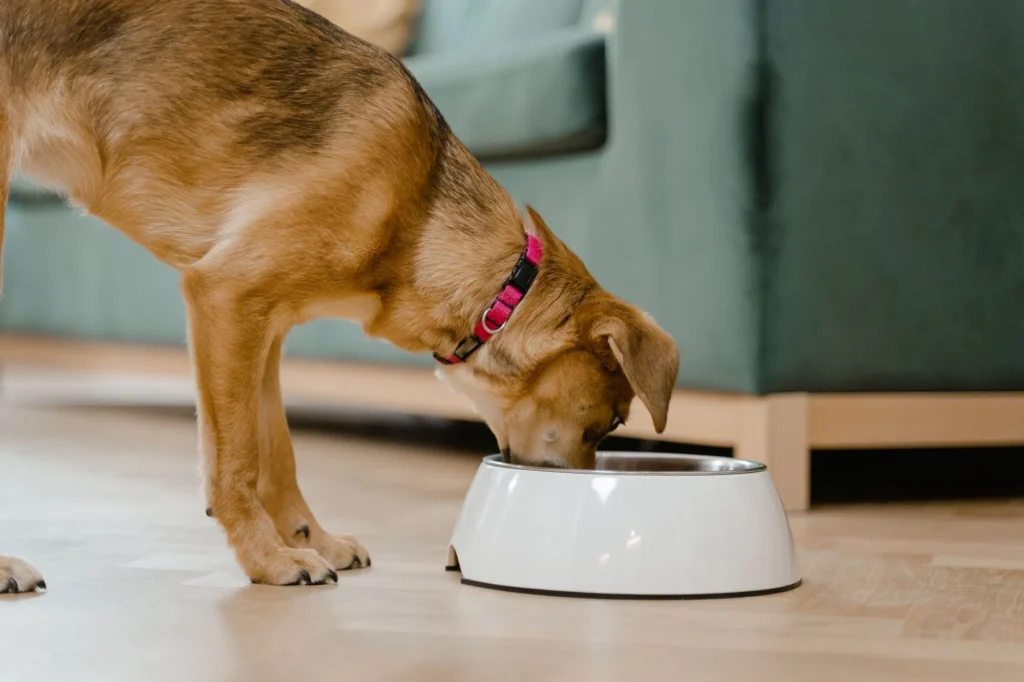
For years, raised feeders were also recommended as a way to reduce the risk of bloat in big dogs. That idea is the part that deserves a closer look, because the science does not support it the way the marketing sometimes suggests.
What the Purdue Bloat Study Found
Bloat, formally called gastric dilatation-volvulus or GDV, happens when the stomach fills with gas and can twist on itself. It is a medical emergency, and the Cornell University College of Veterinary Medicine describes it as a condition that needs immediate veterinary care. If you want to know the warning signs, read our guide to dog bloat symptoms.
The study most often quoted about bowl height comes from Purdue University. Researchers led by Dr. Larry Glickman followed 1,637 dogs from 11 large and giant breeds and reported the results in the Journal of the American Veterinary Medical Association in 2000. According to the published abstract, about 6 percent of the dogs developed GDV during the study. Factors significantly linked to higher risk included increasing age, having a first-degree relative with a history of GDV, eating faster and having a raised feeding bowl. The authors estimated that roughly 20 percent of GDV cases in the large breed dogs and 52 percent in the giant breed dogs were attributable to having a raised feed bowl.
It helps to be precise about what that means. This was an observational study, so it shows an association rather than proof that a raised bowl causes bloat. It also looked only at large and giant breeds, so it says little about a Chihuahua or a house cat. Still, notice that eating speed showed up on the same list. That detail matters later in this guide.
What Other Experts Say, and Why the Evidence Is Mixed
Not every source reads the research the same way. Cornell’s Riney Canine Health Center lists using a raised food bowl among the factors that may increase GDV risk, alongside large breed size, a deep chest, eating too quickly and feeding one large meal a day.
The American Kennel Club is more cautious. In its article on bloat, an AKC veterinary author writes that earlier studies pointed one way, that those findings were later challenged, and that with conflicting results a solid recommendation cannot be made about bowl height. The same article is clear about two other points: dogs fed one meal a day are twice as likely to bloat as dogs fed two meals a day, and fast eaters have five times the risk of slow eaters.
So the fair summary is this. One well-known study linked raised bowls with more bloat in big dogs, other experts say the overall evidence conflicts, and nobody has shown that raising the bowl prevents bloat. The factors that look more consistent across sources are how fast a dog eats and how much food arrives in a single meal. Our guide on whether slow feeders really prevent bloat goes deeper into that second point.
Which Dogs Should Be Most Careful
The dogs in the Purdue study were large and giant breeds, and Cornell describes a deep, narrow chest as a recognized risk factor for bloat. If your dog is a Great Dane, Weimaraner, Saint Bernard, Standard Poodle, Irish Setter or similar build, treat bowl height as a decision to make with your vet rather than a default purchase.
Unless your vet advises otherwise, a raised bowl is generally best avoided when:
- Your dog is a healthy large or giant breed with no medical reason for elevation.
- A parent or sibling has had bloat.
- Your dog gulps food, which you can check against our list of signs your dog eats too fast.
- Your dog is older and deep chested, since age was also linked to risk in the Purdue study.
If you own a big breed, our roundup of the best slow feeders for large dogs shows options that stay low and stable on the floor.
When Your Vet May Recommend a Raised Bowl
None of this means elevated feeders are never appropriate. A veterinarian may suggest lifting the bowl for dogs with specific needs, such as:
- Arthritis. VCA Animal Hospitals notes that raised food and water bowls can reduce strain on the neck and back for dogs with osteoarthritis.
- Neck or back pain. If lowering the head hurts, a modest lift can make meals more comfortable.
- Megaesophagus. These dogs need to eat in an upright position, as explained in the next section.
If a big dog has one of these conditions, your vet will weigh the comfort benefit against the bloat question for your individual dog. That is a medical decision, not a shopping decision. For more mealtime ideas for older dogs, see our guide to feeding enrichment for senior dogs.
Megaesophagus Is a Special Case
Megaesophagus is a condition in which the esophagus cannot move food properly down to the stomach. A standard raised bowl is usually not enough for these dogs. The Merck Veterinary Manual describes feeding with the dog’s upper body elevated at least 45 degrees, for example with the dog standing on a ramp or with the front legs on a platform, and keeping the dog in that position for at least 15 minutes after eating so gravity helps food reach the stomach.
Food texture, meal size and positioning all matter, so feeding a dog with megaesophagus should always be directed by your veterinarian. Do not use a slow feeder or puzzle feeder for these dogs unless your vet specifically approves it.
How to Measure Bowl Height If Your Vet Recommends One
If your vet does recommend a raised bowl, a bowl that is too high makes your dog stretch upward, while one that is too low defeats the purpose. To find a starting point:
- Have your dog stand squarely on a flat surface.
- Measure from the floor to the lowest point of the chest, roughly where it meets the front legs.
- Use that number as a starting height for the bowl rim, so your dog eats with a level or slightly lowered head rather than reaching up.
- Watch a full meal. The neck should look relaxed, with no crouching or stretching.
- Share the measurement with your vet, who may want a different height or angle for your dog’s condition.
Adjustable stands let you fine tune the height over time, and a heavy, non-slip base keeps the bowl from sliding while your dog eats.
Raised Bowls and Cats
The bloat research above concerns dogs, so it does not translate directly to cats. For cats, bowl height is mostly a comfort question. Some older cats with stiff joints may find a slightly raised dish easier, and it is worth asking your vet if your senior cat hesitates or crouches awkwardly at mealtime. Our guide to feeding senior cats covers gentle changes that help.
A raised bowl does not fix fast eating, and it does not solve the discomfort some cats show when a deep bowl presses on their whiskers. For many cats, the width and shape of the dish matters more than the height. We explain this in our article on whisker fatigue in cats.
Slow Down Meals at Floor Level Instead
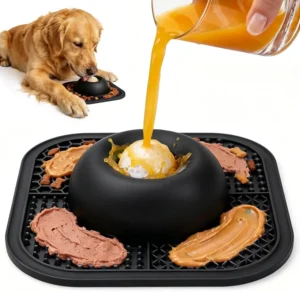
If your real goal is to stop a dog or cat from wolfing down food, a raised bowl is the wrong tool. Eating speed is exactly the factor that appears alongside bowl height in the research, and it is something you can change directly. According to the AKC, slow feeder bowls with fingers or center posts slow dogs down physically, and it is also worth addressing any anxiety about eating around other pets.
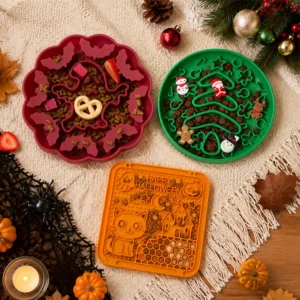
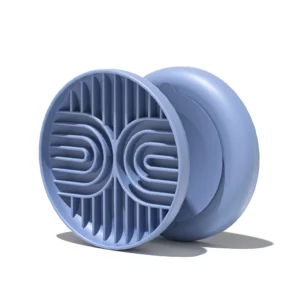
At Pets Sparkle, the textured Interactive Licking Bowl uses ridges to make each bite take longer, while the maze design of the Triple Maze Feeder keeps a gulper busy with a low, stable shape. Both sit at normal floor height. If you are new to this, our guide on how to introduce a slow feeder shows how to make the switch smoothly.
To compare options by size and feeding style, browse the full range of slow feeder bowls or read our guide to the best slow feeder for dogs.
Choosing the Right Setup for Your Pet
Start by asking what problem you are trying to solve. If your pet eats too fast, a slow feeder at floor level addresses that directly. If a diagnosed condition makes floor level eating uncomfortable, a raised bowl may be right, but the decision belongs with your veterinarian. If neither applies, a sturdy bowl in a quiet corner is a sensible default for most healthy pets.
Call your vet right away if your dog has a swollen belly, retches without producing vomit, or seems restless and in pain after eating. Those can be signs of an emergency.
For a breed example, see how we set up a floor-level slow feeder for German Shepherd dogs.
Get Your Free Slow Feeding Cheat Sheet
Everything in this article — plus portion charts, feeder comparisons and meal plans — in one printable PDF. A 15% discount code is included.
Frequently Asked Questions
Are raised pet bowls bad for every dog?
No. The Purdue research that raised concern looked at large and giant breeds. For other dogs, bowl height alone is not considered a major risk, but a stable floor level bowl is still a safe default unless your vet advises a lift.
My vet recommended a raised bowl. Should I still worry?
Not if the advice is based on your dog’s own health, such as arthritis or megaesophagus. General research guides default choices and does not override individual veterinary advice. Ask your vet about the best height and any bloat precautions.
Do raised bowls prevent bloat?
There is no research showing that they do. The Purdue study linked raised bowls with more bloat in large and giant breeds, and the AKC says results conflict. Slowing down meals and avoiding one very large meal are better supported steps.
Can a raised bowl help a cat?
It can make mealtime more comfortable for some senior cats with sore joints, but it will not slow a fast eater or relieve whisker discomfort. Wide, shallow dishes often help more. Check with your vet if your cat struggles at meals.
What is a safer way to slow down a fast eater?
Use a slow feeder or maze bowl at floor level and consider two smaller meals instead of one large meal. The AKC links both faster eating and single daily meals with higher bloat risk.
Sources
- JAVMA: Non-dietary risk factors for gastric dilatation-volvulus in large and giant breed dogs (Glickman et al., 2000)
- American Kennel Club: Bloat in Dogs
- Cornell University College of Veterinary Medicine: Gastric dilatation volvulus (GDV) or bloat
- VCA Animal Hospitals: Helping Your Dog with Osteoarthritis
- Merck Veterinary Manual: Disorders of the Esophagus in Dogs

Digital marketing specialist at BrightSeen Marketing Agency. Turns veterinary research into clear, practical feeding guides for pet parents.
Mahmoud works for BrightSeen Marketing Agency, which looks after our SEO and GEO and Meta ads.
View all articles by Mahmoud