 Written by
Bloat is one of the scariest words a dog parent can hear. It comes on fast, it can turn life-threatening within hours, and it hits certain breeds especially hard. If you have been researching ways to protect your dog, you have probably run into a common claim: that a slow feeder can help. So do slow feeders prevent bloat, or is that wishful thinking?
The honest answer is nuanced. A slow feeder is not a cure or a guarantee, but it does address one recognized risk factor. Let us look at what bloat actually is, the signs every owner should know, what raises the risk, and where a slow feeder fits into a smart prevention plan.
What Is Bloat in Dogs?
Bloat, known medically as gastric dilatation, happens when a dog’s stomach fills with gas, food, or fluid and expands. In its most dangerous form, gastric dilatation-volvulus (GDV), the swollen stomach twists on itself, cutting off blood flow and trapping gas inside. This is a true emergency that requires immediate veterinary care.
Slow Feeding for Better Digestion & Bloat Prevention
Get our expert cheat sheet delivered to your inbox — plus an exclusive 15% discount code for your first order.
VCA Animal Hospitals and Cornell veterinarians describe GDV as a life-threatening emergency that requires immediate veterinary treatment. When the stomach twists, it presses on major blood vessels, which can send a dog into shock. That is why minutes matter.
Warning Signs to Know by Heart
Every owner of a large or deep-chested dog should be able to recognize bloat on sight. Watch for:
- A swollen, tight, or drum-like belly, especially on the left side behind the ribs
- Repeated retching or trying to vomit with little or nothing coming up
- Restlessness, pacing, or an inability to settle or lie down comfortably
- Heavy drooling
- Looking at or guarding the belly, or standing with a hunched posture
- Pale gums, rapid breathing, weakness, or collapse in later stages
If you see these, get to an emergency vet right away. Do not wait to see whether it passes.
Which Dogs Are Most at Risk?
Bloat can affect any dog, but deep-chested, large breeds are the most vulnerable. Great Danes, German Shepherds, Standard Poodles, Weimaraners, and Saint Bernards top the list. According to AAHA and the American Kennel Club (AKC), risk factors include eating one large meal a day, eating too quickly, an anxious or stressed temperament, and a family history of the condition. Risk also tends to rise as dogs get older.
Notice how many of those factors involve how a dog eats, not just what it eats. That is exactly where a slow feeder can play a role.
Do Slow Feeders Prevent Bloat?
Here is the key point: a slow feeder cannot guarantee that your dog will never bloat, because the condition has several causes, some of them still not fully understood. What a slow feeder can do is reduce one well-documented risk factor, which is rapid eating and the air-gulping that comes with it.
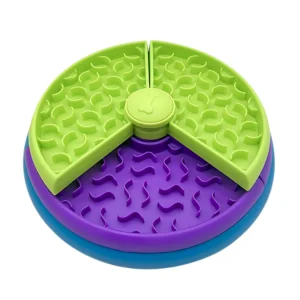
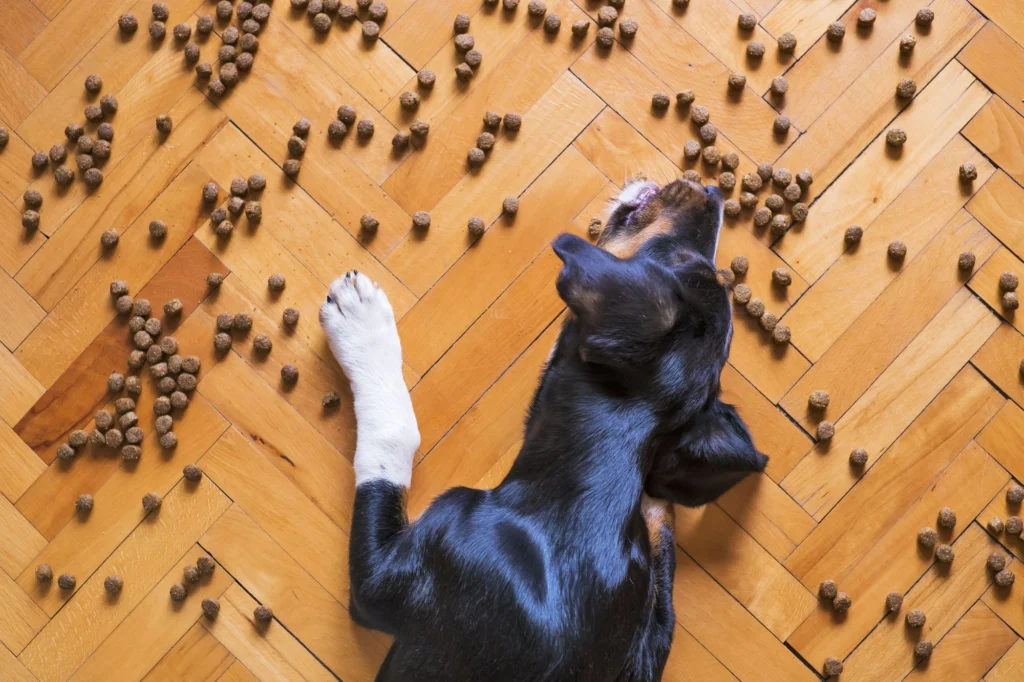
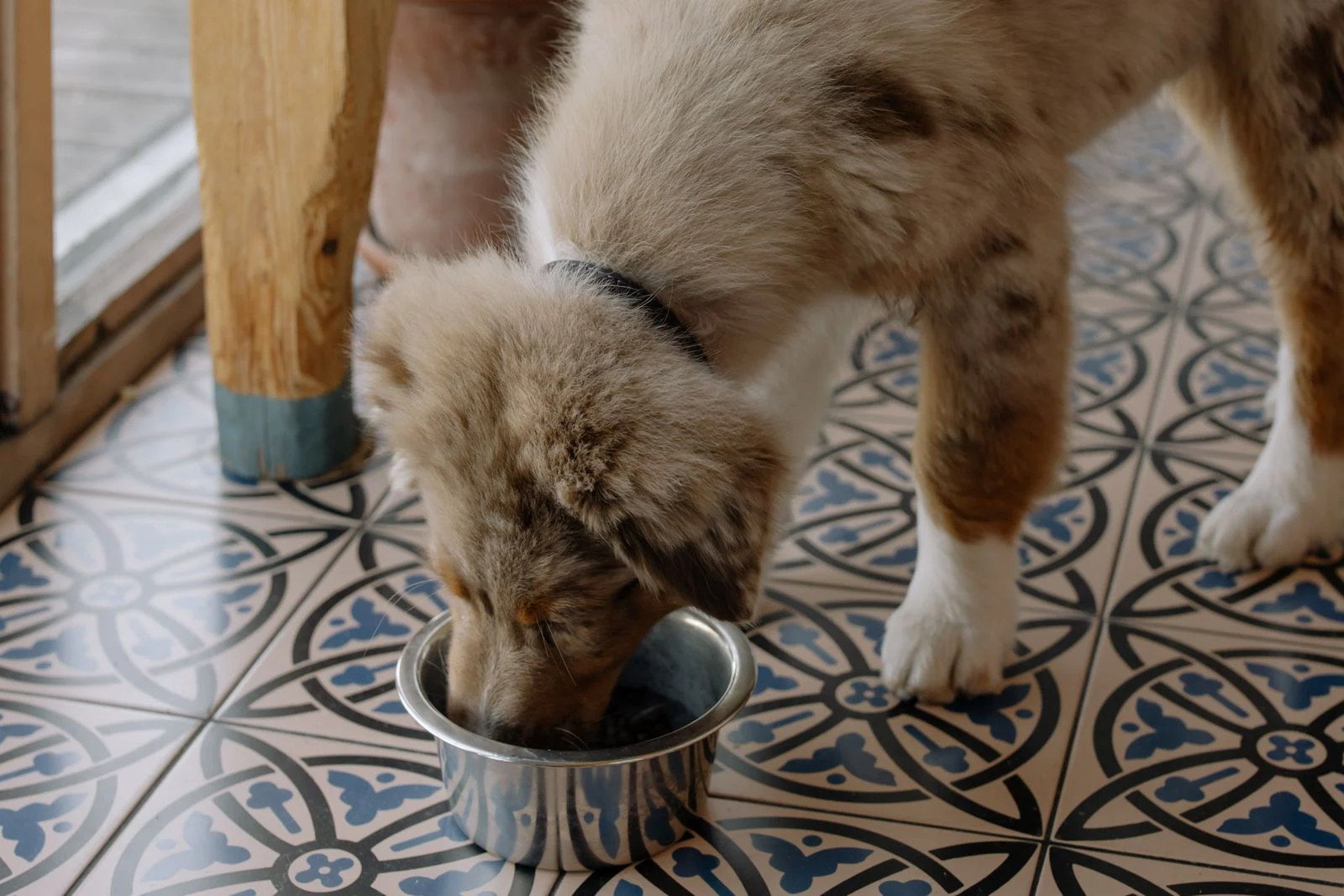
When a dog inhales its food, it swallows large amounts of air along with the meal. That extra air contributes to a distended, gas-filled stomach. By forcing your dog to eat slowly and take smaller bites, a slow feeder like the Triple Maze Feeder cuts down on swallowed air and gives the stomach a gentler, more manageable pace.
Think of it as one important layer in a larger prevention strategy, not a standalone shield. For at-risk breeds, reducing gulping is a sensible, low-cost step that many owners and veterinarians support. If you are still deciding whether your dog is a true speed eater, our list of signs your dog eats too fast will help.
A Complete Bloat Prevention Plan
Because bloat has multiple triggers, the best protection combines several habits. Use these alongside a slow feeder.
Feed Smaller, More Frequent Meals
Instead of one big daily meal, split the food into two or three smaller portions. This reduces the volume in the stomach at any one time and eases digestion.
Slow the Pace
A quality slow feeder is your main tool here. For big breeds, a wide, deep maze bowl works well, and our guide to the best slow feeders for large dogs can help you choose the right size.
Manage Activity Around Meals
Avoid vigorous exercise for about an hour before and after eating. Let your dog rest and digest, especially on hot summer days in states like Florida or Arizona when dogs may gulp water too.
Pace Water Intake
Keep fresh water available all day so your dog never arrives at the bowl desperately thirsty. After hard play, offer water in smaller amounts rather than letting your dog drain a full bowl at once.
Reduce Mealtime Stress
Feed in a calm, quiet spot. In multi-dog homes, competition can speed up eating, so separate bowls or rooms help. Our tips on feeding multiple dogs in one household make this easier.
A Bloat-Smart Daily Routine
Turning prevention into habit is easier when you have a simple routine to follow. Here is what a typical day can look like for a large, deep-chested dog.
Morning: start with a calm potty break and a gentle walk rather than a hard run. Wait until your dog has settled, then serve breakfast in a slow feeder in a quiet corner, away from other pets. Afterward, keep things low-key for about an hour. This is a good time for a nap or a quiet chew while you get ready for the day.
Midday: if you feed three meals, offer a small lunch the same way. Keep water topped up so your dog drinks steadily through the day instead of in big gulps.
Evening: save active play, fetch, and longer walks for well before dinner. Serve the evening meal in the slow feeder, then plan a relaxed evening. A short, slow stroll later is fine, but skip rough play for the next hour or two.
Before bed: take a quick look at your dog. A normal, soft belly and a relaxed, sleepy dog is what you want to see. Knowing what normal looks like makes it much easier to spot when something is wrong.
If anyone else feeds your dog, such as a partner, pet sitter, or boarding kennel, share this routine with them and make sure they know the warning signs and the emergency vet’s number.
Bloat Myths and Facts
There is a lot of confusing advice online. Here is how some common claims hold up.
Myth: Raised bowls always prevent bloat
Elevated feeders were once widely recommended for big dogs. However, a well-known Purdue University study of large and giant breeds found that raised food bowls were associated with a higher risk of GDV, not a lower one. Unless your vet recommends a raised bowl for another reason, such as arthritis or a swallowing disorder, feeding at floor level is a reasonable default for at-risk breeds.
Myth: Only giant breeds get bloat
Giant and deep-chested breeds carry the highest risk, but medium and even smaller dogs can develop bloat. Every owner should know the warning signs.
Fact: Stress and temperament matter
Anxious, fearful dogs appear to be at higher risk. Calm, predictable mealtimes are a genuine part of prevention, which is why a relaxing feeding routine is worth the effort.
Fact: A slow feeder addresses one piece of the puzzle
It reduces gulping and swallowed air. It does not change genetics, chest shape, or age, which is why it works best alongside the other habits in this guide.
What to Do in an Emergency
Preparation saves time when every minute counts. Save the number and address of your nearest 24-hour emergency vet in your phone today. If you suspect bloat, call ahead so the team can prepare, then drive there immediately. Do not give food, water, or home remedies, and do not try to make your dog vomit. Keep your dog as calm and still as possible on the way. Early treatment gives your dog the best chance of a full recovery.
When to Talk to Your Vet
If you own a high-risk breed, have a frank conversation with your veterinarian. Some owners of giant breeds choose a preventive surgical procedure called gastropexy, often done during spay or neuter, which tacks the stomach in place to prevent twisting. Your vet can advise whether that makes sense for your dog, and no feeding tool replaces that professional guidance.
How to Introduce a Slow Feeder Safely
If your at-risk dog has always eaten from a regular bowl, ease into the new routine so the change itself does not cause stress. Start by placing the usual portion into the slow feeder and letting your dog investigate at its own pace. Offer calm praise, and if your dog seems frustrated, scatter a few pieces on top to build confidence in the first few meals. Keep the feeder in the same quiet spot each day so mealtime feels predictable. Wash it regularly, since the grooves that pace your dog also trap food. Within a week, most dogs settle into slower, calmer eating that supports their long-term health. For a full plan, see our guide on how to introduce a slow feeder.
Get Your Free Slow Feeding Cheat Sheet
Everything in this article — plus portion charts, feeder comparisons and meal plans — in one printable PDF. A 15% discount code is included.
Frequently Asked Questions
Do slow feeders prevent bloat completely?
No. A slow feeder reduces one risk factor, rapid eating and air-gulping, but it cannot eliminate every cause of bloat. It works best as part of a broader prevention plan that includes portion timing and stress reduction.
Are slow feeders worth it for large breeds?
Yes. For deep-chested, at-risk dogs, slowing the meal is a simple and affordable precaution. Choose a large, sturdy bowl that suits your dog’s size and eating style.
What are the warning signs of bloat?
Watch for a swollen belly, repeated unproductive retching, restlessness, heavy drooling, and signs of pain or distress. Bloat is a medical emergency, so contact an emergency vet immediately if you notice them.
How long after eating can bloat happen?
Bloat often develops in the hours after a large meal, which is why rest after eating is recommended. It can, however, happen at other times too, so never rule it out based on timing alone.
Protect Your Dog With Calmer Meals
So, do slow feeders prevent bloat? They are not a magic fix, but they meaningfully reduce a known risk by keeping your dog from gulping air with every bite. Paired with smaller meals, calm feeding, and your vet’s advice, a slow feeder is a smart part of protecting your dog. Explore our range of large-breed slow feeders and enrichment tools in the Pets Sparkle shop and give your dog safer, more relaxed mealtimes today.
Sources
The veterinary and animal-welfare resources referenced in this guide:

Digital marketing specialist at BrightSeen Marketing Agency. Turns veterinary research into clear, practical feeding guides for pet parents.
Mahmoud works for BrightSeen Marketing Agency, which looks after our SEO and GEO and Meta ads.
View all articles by Mahmoud