 Written by
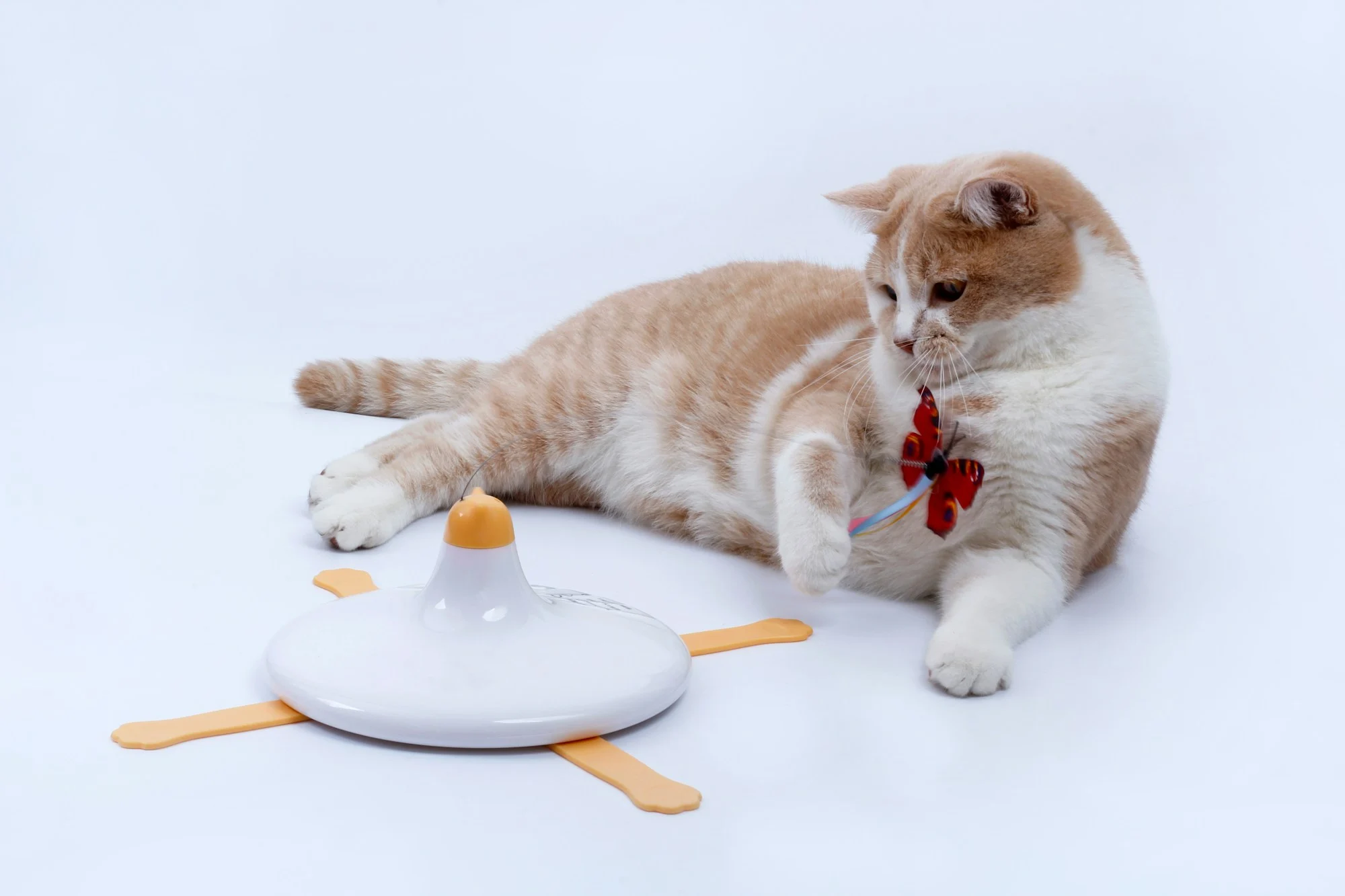
The best cat enrichment toys are the ones that let your cat do what it was built to do: search, stalk, chase, catch, and then eat. A good mix usually includes one toy you move (like a wand), one toy your cat moves alone (like a ball), and one toy that holds food (like a puzzle feeder or lick mat). Pick by your cat’s play style, rotate them, and put risky toys away after play.
This post is a buyer’s map rather than a single product pick. You will see seven types of cat enrichment toys side by side, how each one fits the hunting sequence, which ones are easiest to refill every day, and the safety checks worth doing before anything goes in the cart.
What Counts as Cat Enrichment Toys?
Cat enrichment toys are toys that give a cat a job: something to find, follow, catch, or work out before the reward arrives. A toy that just sits on the floor is decoration. A toy that moves like prey, hides food, or asks for a paw, a nose, or a tongue to solve it is enrichment.
The Cat Parent's Slow Feeding & Enrichment Handbook
Get our expert cheat sheet delivered to your inbox — plus an exclusive 15% discount code for your first order.
The Cornell Feline Health Center explains that toys encourage exercise and cognitive enrichment by motivating cats to stalk, pounce, and problem solve. Cornell also notes that skipping this kind of stimulation is linked to problems such as obesity, destructive scratching, and litter box issues.
Think of enrichment toys in two big groups:
- Play toys that copy the chase: wands, balls, kicker toys, and motorized movers.
- Food toys that copy the work of getting a meal: treat balls, puzzle feeders, lick mats, and foraging setups.
Most indoor cats do best with at least one from each group. If you want a deeper look at the difference between the two, our post on enrichment toys vs puzzle feeders breaks it down for dogs, and the same logic carries over to cats.
Match Toys to the Hunting Sequence
The quickest way to choose toys is to match each one to a step of the hunt. International Cat Care describes a set sequence: searching, locating prey, approaching, capturing, killing, manipulating, and consuming. Different toys cover different steps.
The same iCatCare article says a cat with no food from people can make as many as 10 to 20 kills a day, and that each hunting attempt has an estimated less than 50% chance of success. That is a lot of short bursts of effort, with plenty of misses. A toy session that ends with an easy catch every single time skips most of what makes hunting satisfying.
Here is how the steps line up with toy types:
- Search and locate: hidden treats, foraging boxes, a puzzle feeder placed somewhere new.
- Approach and stalk: a wand toy moved slowly along the floor or behind furniture.
- Capture: the moment your cat finally lands on the wand toy or traps a ball.
- Kill and manipulate: kicker toys to bunny kick, treat balls to bat and roll.
- Consume: food from a puzzle feeder or lick mat, so the hunt ends with a real reward.
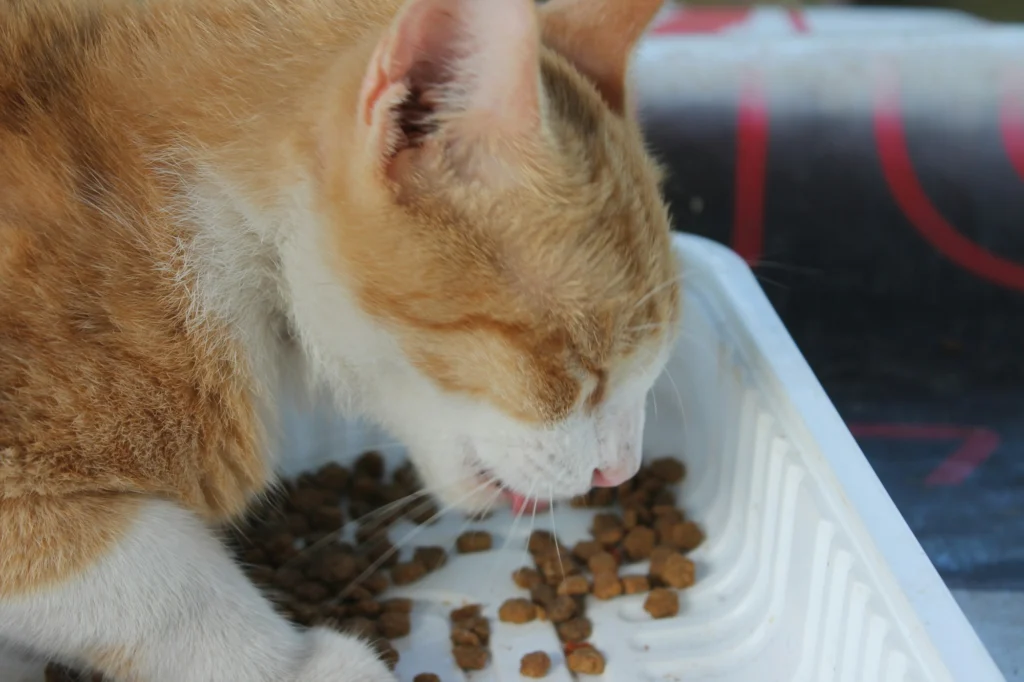
When a play session ends with food, the whole sequence feels complete. That is why many owners finish wand play with a small meal in a cat puzzle feeder instead of a plain bowl.
Seven Types of Cat Enrichment Toys Compared
No single toy covers every step of the hunt, so the smart move is a small, varied set. This table compares the seven most common types.
| Toy type | Hunting step | Needs you? | Best for |
|---|---|---|---|
| Wand or teaser toy | Stalk, chase, capture | Yes | Daily play and bonding |
| Small balls | Chase, manipulate | No | Solo batting between sessions |
| Motorized or wind-up chase toys | Chase | Partly | Cats that ignore still toys |
| Treat-dispensing balls | Manipulate, consume | No | Dry food and active eaters |
| Puzzle feeders | Search, manipulate, consume | Setup only | Meal time and fast eaters |
| Lick mats and lick bowls | Consume | Setup only | Wet food and calm moments |
| DIY foraging (boxes, egg cartons, ice cube trays) | Search, consume | Setup only | Low cost variety |
Wand and teaser toys
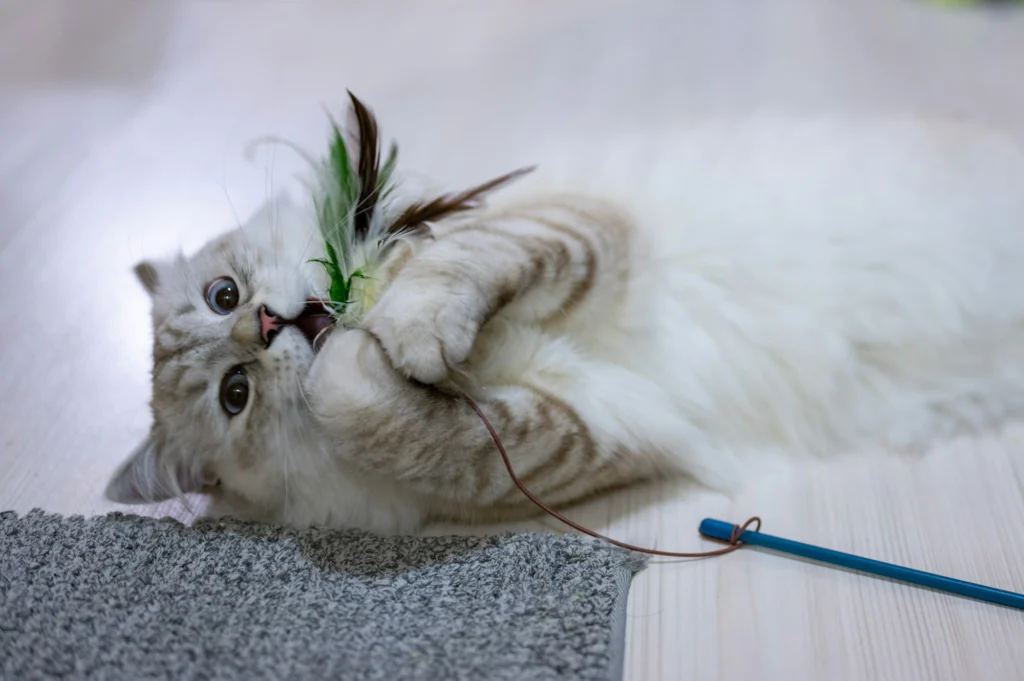
The RSPCA says fishing rod toys can encourage your cat to stalk, chase and grab, and that many cats like fast moving objects about the size of their natural prey. Move the toy away from your cat, not toward it, the way a mouse would.
Balls and kicker toys
Balls give your cat something to bat across the floor when you are busy. PDSA suggests choosing a ball that is cat safe and that your cat cannot chew up or swallow. Kicker toys suit cats that like to grab and bunny kick.
Motorized and wind-up chase toys
PDSA lists wind-up and motorized toys among chase toys that can turn even a lazy cat into a hunter. They work best in short bursts, with you nearby, rather than left running for hours.
Treat-dispensing balls
A treat ball releases dry food as your cat rolls it, which covers the manipulate and consume steps. A small, natural rubber option like the Pawzzle Feeder Ball suits cats and small dogs. For a full comparison of ball and bowl styles, see slow feeder ball vs slow feeder bowl.
Puzzle feeders
Puzzle feeders hold a meal and make your cat work it out with paws, nose, or tongue. iCatCare explains that they help meals last longer and increase physical activity while giving your cat a brain teaser.
Lick mats and lick bowls
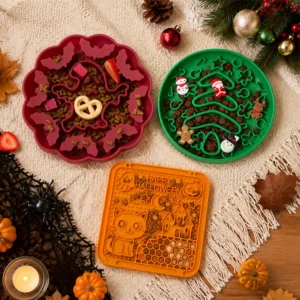
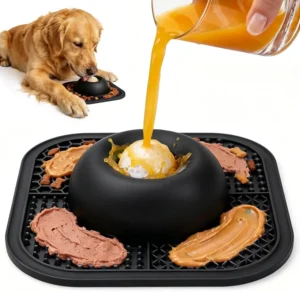
Lick toys are the calm end of the set. They suit wet food, help a gulper slow down, and give an anxious cat something soothing to focus on. Our guide to lick mats for cats covers safe toppings and how to introduce one.
DIY foraging toys
You do not need to spend much. Cornell notes that paper bags, cardboard boxes, and ping pong balls can be tremendously entertaining for cats, and iCatCare suggests dry food in an egg box or wet food in an ice cube tray as homemade puzzle feeders.
Pick Toys for Your Cat’s Play Style
The right toy depends far more on your cat than on the toy. PDSA points out that most cats have toy preferences, so start with a variety and watch which ones get used. A few common play styles:
- The ambusher hides and pounces. Give it wand toys moved behind furniture and boxes to hide in.
- The chaser loves speed. Balls, motorized toys, and toss games keep it busy.
- The grabber wraps up toys and kicks. Kicker toys and sturdy plush toys are its favorites.
- The forager is food driven. Puzzle feeders, treat balls, and hidden kibble beat any feather.
- The cautious cat gets overwhelmed easily. Start with a lick mat or a very easy puzzle feeder and quiet wand play.
Age matters too. Kittens may need easier food toys at first, while older cats may prefer slower wand play and flat lick toys that do not need much batting. For cats that seem hungry all the time, food toys can make meals feel bigger; our post on why a cat is always hungry covers when to check with your vet first.
Toys That Are Easy to Refill and Reuse Daily
If you want a treat-dispensing toy you will actually use every day, pick one that refills in seconds and cleans in a minute. A toy that is fiddly to load or impossible to wash ends up in a drawer.
Look for these features before you buy:
- A wide opening so you can pour kibble in without a funnel.
- Adjustable difficulty, such as holes you can open or close. iCatCare notes that many ball feeders let you change the size and number of holes.
- Few parts, so there is less to lose and less to scrub.
- Dishwasher safe or smooth silicone, which makes daily cleaning realistic.
- The right food type. iCatCare says wet food will not dispense well from puzzle feeding balls, but works in egg boxes, cardboard tubes, and activity boards.
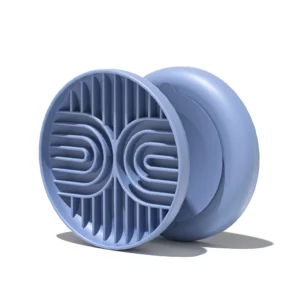
In practice, many owners find that a one-piece treat ball for dry food and a silicone mat for wet food cover most days. The Slow Licking Mat from Pets Sparkle spreads wet food into a textured surface, and the Interactive Licking Bowl adds a spinning center ball for cats that rush wet meals. Whichever you choose, wash food toys after every use; our step-by-step guide on how to clean a slow feeder and lick mat shows the fastest method.
A Simple Daily Enrichment Routine
A daily routine works better than a pile of toys. PDSA suggests two 15 to 20 minute play sessions each day as a good starting point for less active or indoor cats, building up as they get fitter, with rest in between.
PDSA also notes that cats are most active at the beginning and end of the day, so those are natural times to play. A simple day could look like this:
- Morning: a short wand session, then breakfast in a puzzle feeder.
- Daytime: one or two solo toys out, such as a ball and a treat ball with part of the daily food.
- Evening: a second wand session that ends with a catch, then dinner on a lick mat or in a slow feeder.
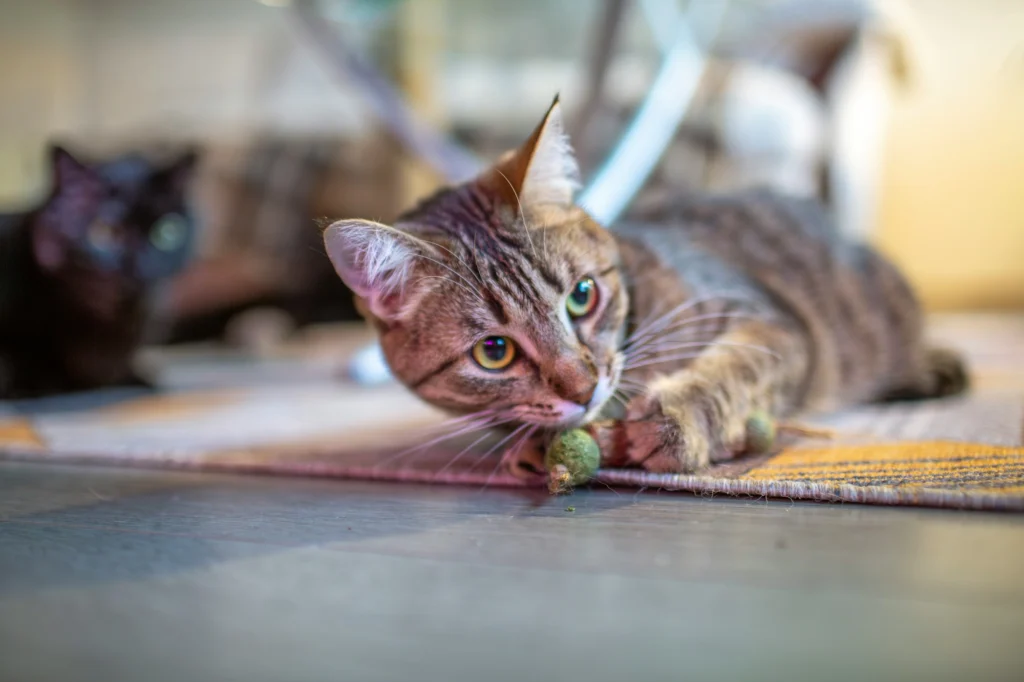
Use part of your cat’s daily food in the toys rather than adding extra treats, so play does not pile on calories. The RSPCA also suggests leaving toys and food devices out when your cat has to spend time alone, so the day is not empty until you come home. For more ideas built around indoor life, read our post on mealtime enrichment for indoor cats.
Rotate Toys to Keep Them New
Rotation is the cheapest way to make old toys feel new again. Cornell notes that rotating toys can help stop a cat from getting bored with them, and the RSPCA gives the same advice.
PDSA suggests a practical method: once you know which toys your cat likes, keep one or two out at a time and swap them every few days. Store the rest out of sight, ideally in a closed box.
For food toys, rotation means changing the challenge, not just the toy. iCatCare suggests hiding the puzzle feeder in new places around your home, switching between wet and dry food formats, and making holes smaller or fewer as your cat gets better. Raise the difficulty slowly. The goal is a challenge, not frustration.
Safety Checks Before You Buy
The safest cat enrichment toys are sturdy, sized so they cannot be swallowed, and free of loose strings. Cornell advises avoiding toys with small pieces or linear, strand-like parts such as feathers and string that may come off and be swallowed, and anything with an electrical cord your cat could chew.
Run through this quick checklist:
- Supervise wand toys. Play together, then put feather and string toys away where your cat cannot reach them.
- Check size. Balls and treat toys should be too big to swallow and tough enough not to be chewed apart.
- Inspect often. Throw away toys with loose parts, torn seams, or cracks.
- Clear the play area. Cornell suggests making sure nothing heavy can fall on your cat and there is nowhere to fall from during wild play.
- Keep hands out of it. PDSA warns against using fingers or toes as toys, since it teaches cats to grab and bite them.
If your cat swallows part of a toy, especially string or thread, or starts vomiting, gagging, or refusing food after play, call your vet right away. Do not pull on string you can see.
Start With Two Toys and Watch
You do not need a basket full of cat enrichment toys to make a difference. Start with one wand toy for daily play and one food toy for meals, watch which ones your cat loves, then add a third type. Rotate, keep sessions short, and end play with food. For more cat feeding ideas, browse our cat collection or read the best slow feeder for cats guide.

Get Your Free Slow Feeding Cheat Sheet
Everything in this article — plus portion charts, feeder comparisons and meal plans — in one printable PDF. A 15% discount code is included.
Frequently Asked Questions
What are the best enrichment toys for indoor cats?
Most indoor cats do well with a mix: a wand toy for daily play with you, a ball or kicker for solo play, and a food toy such as a puzzle feeder or lick mat. Together they cover chasing, catching, and eating, which is the full hunting sequence that indoor life often leaves out.
How many toys does a cat need?
There is no set number. PDSA suggests starting with a variety to learn what your cat likes, then keeping one or two out at a time and swapping them every few days. A small rotating set usually beats a big pile that is always on the floor.
Which treat-dispensing toys are easiest to refill and reuse every day?
Look for one-piece toys with a wide opening, adjustable holes, and smooth, washable surfaces. Treat balls work for dry food, while silicone lick mats and egg box style puzzles handle wet food, since iCatCare notes wet food does not dispense well from balls. Wash them after each use.
Are feather wand toys safe for cats?
They are a great play tool when you are holding the other end. Cornell warns that feathers and string can come loose and be swallowed, so supervise wand play and store the toy out of reach afterward. If you think your cat swallowed string, call your vet.
How long should I play with my cat each day?
PDSA suggests two 15 to 20 minute sessions a day as a starting point for less active or indoor cats, building up as they get fitter. Keep sessions short, let your cat rest between bursts, and stop if your cat loses interest.
Sources
The veterinary and welfare resources referenced in this post:

Digital marketing specialist at BrightSeen Marketing Agency. Turns veterinary research into clear, practical feeding guides for pet parents.
Mahmoud works for BrightSeen Marketing Agency, which looks after our SEO and GEO and Meta ads.
View all articles by Mahmoud