 Written by
A snuffle mat for cats is a soft fabric mat with strips or pockets where you hide dry food or treats, so your cat has to sniff, paw and nose through it to find each bite. It suits most curious indoor cats, especially fast eaters and bored cats, as long as you start easy, stick to dry food, and pick the mat up when the meal is over.
Cats are not dogs in small bodies, so a snuffle mat works a little differently for them. This post covers why foraging fits the way cats naturally eat, which cats get the most out of a mat, what to hide in it, a step-by-step way to teach a cat who has never seen one, and the fleece safety checks that matter more for cats than for dogs.
What Is a Snuffle Mat for Cats?
A snuffle mat for cats is a feeding mat covered in fleece or felt strips, petals or flaps that hide small pieces of food. Instead of eating from a bowl in one go, your cat searches the mat with its nose and paws and eats as it finds things.
The Cat Parent's Slow Feeding & Enrichment Handbook
Get our expert cheat sheet delivered to your inbox — plus an exclusive 15% discount code for your first order.
Most mats were first designed for dogs, which is why you see so many large, deep, shaggy versions. For a cat, the useful version is flatter and smaller, with shorter strips that a paw can lift and a whiskered face can push into without feeling boxed in. Some mats add pockets or flower-shaped flaps that make the search a little harder once your cat has the idea.
If you have read our guide to snuffle mats for dogs, the basic idea is the same. The big differences for cats are the amount of food (much smaller), the type of food (dry only), the pace of training (slower, because many cats need to feel safe before they will explore), and how closely you watch for chewing.
Why Cats Take to Sniffing Out Their Food
Cats take to sniffing out food because searching for many small meals is how their bodies and brains are built to eat. A bowl filled in the same spot every day skips almost all of that work.
International Cat Care explains that a cat without food from people may make as many as 10 to 20 kills a day to meet its energy needs, which is why cats are wired to eat small amounts often. The same charity notes that feral cats can spend 12 or more hours out of every 24 looking for and catching food, and that feeding from a bowl in the same place, with no effort needed, can leave a cat bored, frustrated or stressed, especially an indoor cat.
A snuffle mat cannot replace a real hunt, and it does not need to. What it gives back is the search part of the sequence: using the nose to locate food, using the paws to uncover it, and getting a small reward for the effort. For a lot of indoor cats, that short burst of searching is the most “wild” thing they do all day.
The RSPCA points out that life indoors can become predictable and boring, which can lead to stress, inactivity and weight gain. A mat is one simple way to add a little unpredictability to the day without buying a cupboard full of toys.
Which Cats Get the Most From a Snuffle Mat
The cats that get the most from a snuffle mat are indoor cats with spare energy, cats that gulp dry food, and food-motivated cats that pester you between meals. Calm, older cats can enjoy one too, as long as the search is easy.
Indoor cats with time on their paws
If your cat sleeps, eats, stares out the window and repeats, a few minutes of searching can break up the day. Put the mat down at a time your cat is usually restless, such as early morning or the hour before you get home.
Fast eaters
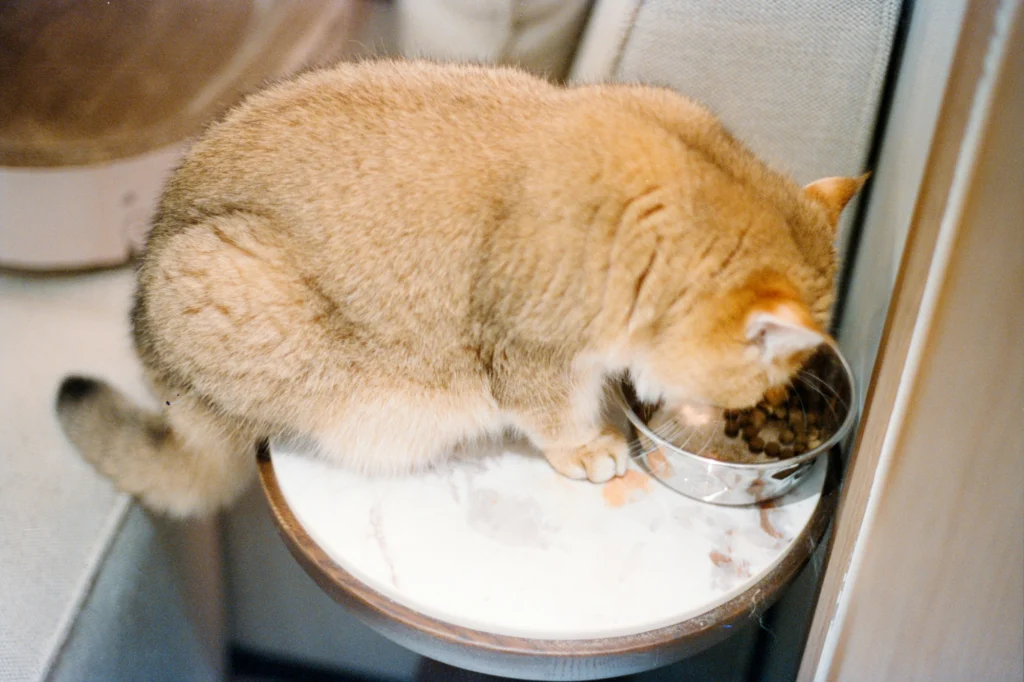
Cats that inhale kibble and then look around for more are good candidates, because the mat spreads each bite out. If your cat often brings food back up soon after eating, read our post on why cats throw up after eating and talk to your vet before assuming speed is the whole story.
Cats that always seem hungry
A mat will not change how much food your cat needs, but it can make a measured portion last longer and feel like more of an event. If constant begging is new, our post on why your cat is always hungry covers the medical causes worth ruling out first.
Cats that may need a different tool
Cats who chew or suck on fabric, cats who eat only wet food, and very nervous cats who freeze when something new appears may be better served by a lick mat or a simple puzzle feeder first. That is not a failure. It just means the snuffle mat comes later, or not at all.
What to Look for in a Cat-Sized Snuffle Mat
A good cat-sized snuffle mat is small, flat enough for a cat to see over, made of strips firmly attached to a sturdy base, and easy to wash. Size and strip length matter more than color or shape.
- Compact footprint. A cat only needs a small area to search. A very large mat spreads a tiny portion so thin that the game becomes a chore.
- Shorter, denser strips. Long shaggy strips bury kibble too deep for many cats. Short strips and flaps let a paw flip food into view.
- Strips that stay put. Tug a few strips before the first use. If they pull loose or shed fibers easily, that mat is a chewing risk for a cat.
- A non-slip or weighted base. Cats often paw hard at one corner. A mat that slides away can put a timid cat off on day one.
- Machine washable fabric. Crumbs and saliva build up in fleece, so you want a mat you can shake out daily and wash often.
The Foraging Snuffle Mat from Pets Sparkle is a soft fleece mat made for both dogs and cats, with strips and pockets for hiding kibble. If you want something your cat can bat around rather than search in place, the Snuffle Treat Ball hides treats inside fleece strips in a ball your cat can nudge and unroll. You can compare every style in our snuffle mat collection.
What to Hide in the Mat (and What to Keep Out)
Hide dry kibble or small dry treats taken from your cat’s normal daily amount. Keep wet food, pâté, broth and anything sticky out of the fleece, because it smears into the fabric, spoils and is hard to wash out.
The safest habit is to measure your cat’s daily food first, then take the mat portion out of that total. That way the game never adds hidden calories. International Cat Care suggests that, where possible, cats do best eating little and often, with the daily ration split into at least five portions through the day and night using timed and puzzle feeders. A snuffle mat can be one of those portions.
Good choices
- Your cat’s usual dry food, a small handful at a time
- Small, dry cat treats broken into pieces, counted as part of the day’s food
- A pinch of freeze-dried treat as a “jackpot” for the first sessions
Keep out of the mat
- Wet food, pâté, cream and soft toppings (use a lick mat instead)
- Large biscuits a cat cannot pick up easily
- Human food, especially anything seasoned
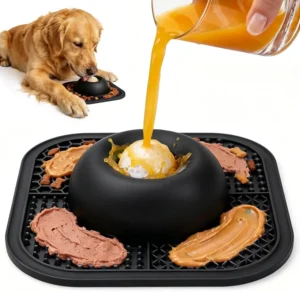
If your cat eats mostly wet food, a Slow Licking Mat is the better match, because its ridges hold soft food that would ruin fleece. Our post on lick mats for cats walks through cat-safe toppings and portion ideas.
How to Teach Your Cat to Use a Snuffle Mat
Teach a cat to use a snuffle mat by starting with food sitting on top of the strips, then hiding it a little deeper over several days. Let your cat set the pace and stop each session while it is still fun.
- Let your cat meet the mat with nothing on it. Put it on the floor near where your cat usually eats and let them sniff and walk past it. Some cats need a day to accept a new object.
- Scatter food on top. Drop a few pieces of kibble on the surface, where they are easy to see and grab. This teaches that the mat equals food.
- Tuck food just under the edges. Once your cat eats happily from the top, hide some pieces lightly between strips so a nose push or paw flick uncovers them.
- Bury some deeper. Over the next few sessions, mix easy and harder hiding spots. Keep a few pieces in plain sight so your cat always finds an early win.
- Try a new spot in the home. International Cat Care notes that a bowl in the same place every day asks no effort of a cat, so moving the mat keeps the search fresh. Try the hallway one day and near a window the next.
- Pick it up after the meal. When your cat walks away, shake out leftover crumbs and put the mat away. Leaving it out turns it into a bed or a chew toy.
Watch your cat’s body language as you go. Relaxed searching with an upright tail is the goal. Swatting the mat in frustration, walking off quickly, or crying at you means the search got too hard, so go back a step. Our post on cat puzzle feeders has more ideas for building difficulty slowly.
Snuffle Mat vs Other Cat Feeding Toys
A snuffle mat is best for nose work with dry food, a lick mat is best for wet food and calm licking, a puzzle feeder is best for paw skills, and a treat ball is best for cats who like to chase. Many cats enjoy a mix through the week.
| Toy | Best food | Main skill used | Good for | Watch out for |
|---|---|---|---|---|
| Snuffle mat | Dry kibble, small dry treats | Sniffing and pawing | Bored indoor cats, fast kibble eaters | Fabric chewing, crumbs in the fleece |
| Lick mat | Wet food, pâté | Licking | Wet food eaters, calm downtime | Cleaning the grooves well |
| Puzzle feeder | Dry food or treats | Paw scooping and problem solving | Clever, food-driven cats | Frustration if it starts too hard |
| Treat ball | Dry kibble | Chasing and batting | Playful, active cats | Needs open floor space |
If you are torn between the two mat types, our comparison of a lick mat vs a snuffle mat explains which food goes where. For a wider look at food toys and play toys together, see our guide to cat enrichment toys.
Fleece Safety: Supervision, Chewing and Cleaning
The main snuffle mat risk for cats is swallowing fabric, so supervise every session, check the strips often, and replace a mat once it starts to fray. Clean it regularly so crumbs do not go stale in the fleece.
International Cat Care lists fibers and stuffing from cat toys, string, thread and carpet fibers among the things cats commonly swallow, and string-like objects can make a cat very unwell and often need surgery to remove. That is why a mat with loose or shredding strips should go in the trash, not back on the floor.
PDSA warns that vomiting and pain are often the first signs of a gut blockage, and that you should contact your vet immediately if your cat swallows something that could block them. If you ever see a thread hanging from your cat’s mouth, do not pull it. Call your vet right away.
Simple safety habits
- Stay in the room while the mat is down, at least for the first few weeks.
- Pick the mat up as soon as the food is gone.
- Run your hand over the strips before each use and look for loose threads.
- Shake out crumbs after every session and wash the mat on a regular cycle, letting it dry fully before reuse.
- Store it out of reach so it does not become a chew toy between meals.
Our step-by-step post on how to clean a slow feeder and lick mat covers washing routines for the rest of your cat’s feeding gear.
Let Your Cat Hunt for Dinner
A snuffle mat for cats is a small change that brings back a big part of how cats are meant to eat: searching for small bits of food, one find at a time. Start with food on top, go slowly, use only dry food from the daily portion, and keep the session supervised.
If your cat loves it, you can rotate it with a lick mat or puzzle feeder through the week. If your cat ignores it after a fair try, that is useful information too, and another style of feeder may suit them better. Our guide to the best slow feeder for cats can help you pick a next step, or you can browse every feeder in our cat shop.
Get Your Free Slow Feeding Cheat Sheet
Everything in this article — plus portion charts, feeder comparisons and meal plans — in one printable PDF. A 15% discount code is included.
Frequently Asked Questions
Do cats use snuffle mats?
Many cats do, especially curious indoor cats and food-motivated cats, but most need an easy start. Begin with kibble scattered on top of the mat so your cat links it with food, then hide pieces deeper over several days. Some cats prefer lick mats or puzzle feeders, and that is fine.
Can I put wet food in a snuffle mat for cats?
No. Wet food smears into the fleece, goes off quickly and is very hard to wash out. Use a snuffle mat only for dry kibble and small dry treats. For wet food, a silicone lick mat or a shallow slow feeder is a cleaner and safer choice.
Do cats need puzzle toys?
Cats do not strictly need them, but they benefit from having to search for food. International Cat Care notes that feeding from a bowl with no effort can lead to boredom and stress, especially for indoor cats. A snuffle mat, puzzle feeder or treat ball gives back some of that natural searching.
Is a snuffle mat safe for kittens?
It can be, with close supervision. Kittens chew and tug more than adult cats, so check the strips before every use, keep sessions short, and pick the mat up straight after. If your kitten starts chewing the fabric, switch to a hard puzzle feeder and ask your vet for advice.
Can a snuffle mat help a cat that eats too fast?
Yes, for dry food it spreads each bite out, because your cat has to find pieces one at a time. Measure the portion from the daily amount so it adds no extra food. If your cat often vomits after meals, call your vet, since speed is only one possible cause.
Sources

Digital marketing specialist at BrightSeen Marketing Agency. Turns veterinary research into clear, practical feeding guides for pet parents.
Mahmoud works for BrightSeen Marketing Agency, which looks after our SEO and GEO and Meta ads.
View all articles by Mahmoud