 Written by
A new puppy changes fast. The tiny ball of fur who needs four small meals today will be ready for two bigger ones in a few months, and the right amount of food keeps shifting as they grow. If you have been staring at the back of a food bag wondering whether you are feeding too much, too little, or too often, you are not alone.
This guide gives you a clear puppy feeding schedule by age, a simple chart, practical portion guidance, and a sample daily timetable. You will also learn how to handle treats, switch foods gently, slow down a gulper, and spot the signs that it is time to call your veterinarian.
Why a Feeding Schedule Matters for Puppies
Puppies grow rapidly, and their small stomachs cannot comfortably hold a full day’s food at once. VCA Animal Hospitals recommends feeding puppies measured amounts at regular times rather than leaving food available all day.
Slow Feeding for Puppies & Kittens: Starting Right
Get our expert guide delivered to your inbox — plus an exclusive 15% discount code for your first order.
A predictable schedule helps with everything else you are teaching. Consistent mealtimes make bathroom breaks more predictable, which smooths house training, and they help you notice quickly if your puppy skips a meal or suddenly seems ravenous.
VCA also stresses that the goal is optimal growth, not maximum growth. Puppies pushed to grow as fast as possible face a higher risk of skeletal problems, obesity, and a shorter life expectancy.
How Many Meals a Day Does a Puppy Need?
Meal frequency drops as your puppy’s stomach grows. The American Kennel Club offers a straightforward timeline:
8 to 12 weeks: four meals a day
The AKC notes that four feedings a day are usually enough to meet a young puppy’s nutritional needs. Space them evenly across the day.
3 to 6 months: three meals a day
Somewhere in this window, drop from four meals to three. You are dividing the daily total into fewer portions, not cutting it.
6 to 12 months: two meals a day
Around six months, most puppies can move to morning and evening meals, the same pattern most adult dogs keep for life.
These are guidelines rather than hard rules. Toy breeds and very small puppies may do better with smaller, more frequent meals for longer, so ask your vet what suits your puppy.
Puppy Feeding Schedule Chart by Age
Here is the whole timeline at a glance. Use it as a starting framework and adjust with your veterinarian’s input.
| Age | Meals per day | What to keep in mind |
|---|---|---|
| 8 to 12 weeks | 4 | Small, evenly spaced meals of a complete puppy food |
| 3 to 6 months | 3 | Same daily total split into fewer, larger meals |
| 6 to 12 months | 2 | Morning and evening meals; small breeds may approach adult food |
| 12 months and older | 2 | Large and giant breeds may still need a growth food |
Whatever the age, choose a food made for growth. Tufts University’s Petfoodology team advises checking the label for a statement that it meets AAFCO nutrient profiles for growth or for all life stages.
Small vs Large Breed Puppies: When to Switch to Adult Food
Size changes the timeline. VCA explains that small and medium breeds are generally mature by 10 to 12 months, while large and giant breeds can keep growing until 18 to 24 months.
Small and medium breeds
The AKC suggests small breeds can often switch to adult food at around 7 to 9 months, while Tufts offers about one year as a rule of thumb. Your vet can help you pick the right moment.
Large and giant breeds
For puppies expected to weigh more than 50 pounds as adults, Tufts recommends a large-breed puppy food, which has lower calcium and usually fewer calories than standard puppy food. The AKC notes large breeds may stay on puppy food until 12 to 14 months, and Tufts says giant breeds such as Great Danes may keep growing through 18 months. As the AKC puts it, it is better to stay on puppy food a little too long than not long enough.
VCA also cautions against adding vitamin or mineral supplements to a growing puppy’s diet without checking with your veterinarian first.
How Much Should You Feed Your Puppy?
There is no single correct cup size for every puppy. Tufts suggests starting with the feeding directions on the label, but expect to adjust, especially during growth spurts, because activity level and metabolism vary.
The AKC sums it up neatly: watch the dog, not the dish. Body condition, not how much food is left in the bowl, should guide portions. Tufts recommends keeping growing puppies trim, at a body condition score of 4 to 5 on a 9-point scale. Ask your vet to show you how to check your puppy’s ribs and waistline at home.
- Use a measuring cup or, better yet, a kitchen scale for consistent amounts.
- Divide the daily total by the number of meals instead of portioning by eye.
- Weigh your puppy regularly; VCA recommends routine weigh-ins and body condition checks.
For more on measuring and adjusting amounts, read our guide to portion control for dogs.
Free-Feeding vs Scheduled Meals
Free-feeding means leaving food out all day. It sounds convenient, but VCA notes that free-choice feeding can increase the risk of excess body fat, obesity, and, in large breeds, skeletal abnormalities. Portion feeding keeps you in control of exactly how much your puppy eats.
The AKC recommends feeding at regular times in regular amounts and not leaving food down for more than 15 minutes. If your puppy walks away, pick up the bowl and offer the next meal at the usual time. An occasional skipped meal is not unusual, but repeated refusals deserve a vet visit.
A Sample Daily Puppy Feeding Timetable
Treat these times as a template. The key is consistency: feed at roughly the same times daily and take your puppy outside shortly after eating.
Four meals (8 to 12 weeks)
- 7:00 a.m. breakfast
- 11:00 a.m. late-morning meal
- 3:00 p.m. afternoon meal
- 7:00 p.m. dinner
Three meals (3 to 6 months)
- 7:00 a.m. breakfast
- 12:00 p.m. lunch
- 5:30 p.m. dinner
Two meals (6 months and up)
- 7:00 a.m. breakfast
- 6:00 p.m. dinner
A gap of a few hours between dinner and bedtime leaves room for a final bathroom break. Keep fresh water available throughout the day.
Treats and the 10 Percent Rule
Treats are a great training tool, but they add up quickly. VCA advises that no more than 10 percent of your puppy’s daily calories should come from treats or snacks, with the rest coming from complete and balanced puppy food.
- Keep training treats as small as possible, as the AKC recommends.
- Use pieces of your puppy’s regular kibble as rewards.
- On heavy training days, trim mealtime portions to balance the extras.
How to Transition Your Puppy to a New Food
Whether you are moving away from the breeder’s food or switching to adult food, change gradually. The AKC warns that a sudden switch can upset your puppy’s stomach and suggests about five to seven days:
- Days 1 to 3: about three-quarters old food, one-quarter new food.
- Days 4 to 6: half old food, half new food.
- Day 7 onward: about three-quarters new food, then fully on the new food.
Slow down if you notice loose stools. If your puppy is vomiting, seems unwell, or stops eating, the AKC advises calling your veterinarian.
Slowing Down a Puppy Who Eats Too Fast
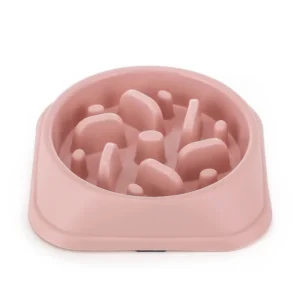
Plenty of puppies inhale their food in seconds, then look for more. A slow feeder bowl uses ridges or a maze pattern so your puppy has to work around obstacles to reach each bite, which stretches mealtime out and adds a little mental exercise.
Choose a bowl sized for your puppy’s muzzle. Our guides to slow feeders for small dogs and puppies and slow feeders for large dogs cover sizing, and slow feeders for puppies explains how to start young. For a true speed eater, our week-by-week plan for feeding a fast-eating puppy walks you through it.
Signs Your Puppy’s Portions Are Off
Portions that were right last month may not be right today. Watch for these clues:
Possible signs of overfeeding
- Your puppy is getting rounder and the waist is harder to see.
- Ribs are getting harder to feel under the coat.
- Stools are frequent, large, or soft.
Possible signs of underfeeding
- Ribs, hip bones, or spine look prominent.
- Your puppy seems constantly hungry and low on energy.
- Weight gain has stalled between weigh-ins.
Adjust portions slightly and recheck in a week or two, or ask your vet to score your puppy’s body condition.
When to Call Your Vet
A feeding schedule is a guide, not a substitute for professional care. Contact your veterinarian if your puppy:
- Refuses several meals or stops eating entirely.
- Has repeated vomiting or diarrhea, or seems lethargic or unwell.
- Is gaining weight much faster or slower than expected.
- Is a large or giant breed and you are unsure which food or how much to feed.
- Needs supplements or a special diet.
Get Your Free Slow Feeding Guide
Everything in this article — plus portion charts, feeder comparisons and meal plans — in one printable PDF. A 15% discount code is included.
Frequently Asked Questions
Can I feed my puppy once a day?
Once-a-day feeding is not recommended for puppies. Their small stomachs are better served by several measured meals, starting at about four a day and dropping to two by around six months.
Should I leave food out for my puppy all day?
No. Veterinary guidance links free-feeding to excess body fat and, in large breeds, skeletal problems. Offer meals at set times and pick up the bowl after about 15 minutes.
Why does my puppy act hungry all the time?
Many puppies are enthusiastic eaters, so hunger alone does not mean they need more food. Check body condition and weight trends with your vet, and try a slow feeder to make meals last longer.
When should my puppy switch to adult food?
Small breeds often switch somewhere between about 7 and 12 months. Large breeds may stay on puppy food until 12 to 14 months, and giant breeds may need a growth food even longer.
Is it okay to give my puppy treats every day?
Yes, as long as treats stay under 10 percent of daily calories. Use tiny pieces and trim meal portions on heavy training days.
Build a Calm Mealtime Routine Your Puppy Can Count On
A good puppy feeding schedule comes down to a few habits: the right number of meals for your puppy’s age, measured portions guided by body condition, limited treats, gradual food changes, and regular vet check-ins. Keep mealtimes consistent and your puppy will quickly learn what to expect.
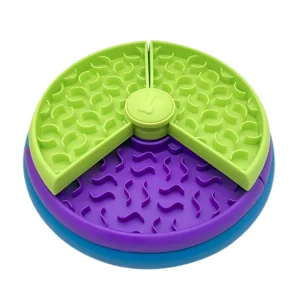
If your puppy gulps every meal, a slow feeder can make mealtime calmer and more engaging. Browse our slow feeder bowls, or try the Triple Maze Feeder, a maze-style slow feeder bowl for dogs.
Sources
The veterinary and animal-welfare resources referenced in this guide:

Mahmoud Mohamed Samir is an SEO/GEO Specialist who turns veterinary research into clear, practical feeding guides, built so pet parents get straight answers whether they search on Google or ask an AI assistant.
View all articles by Mahmoud