 Written by
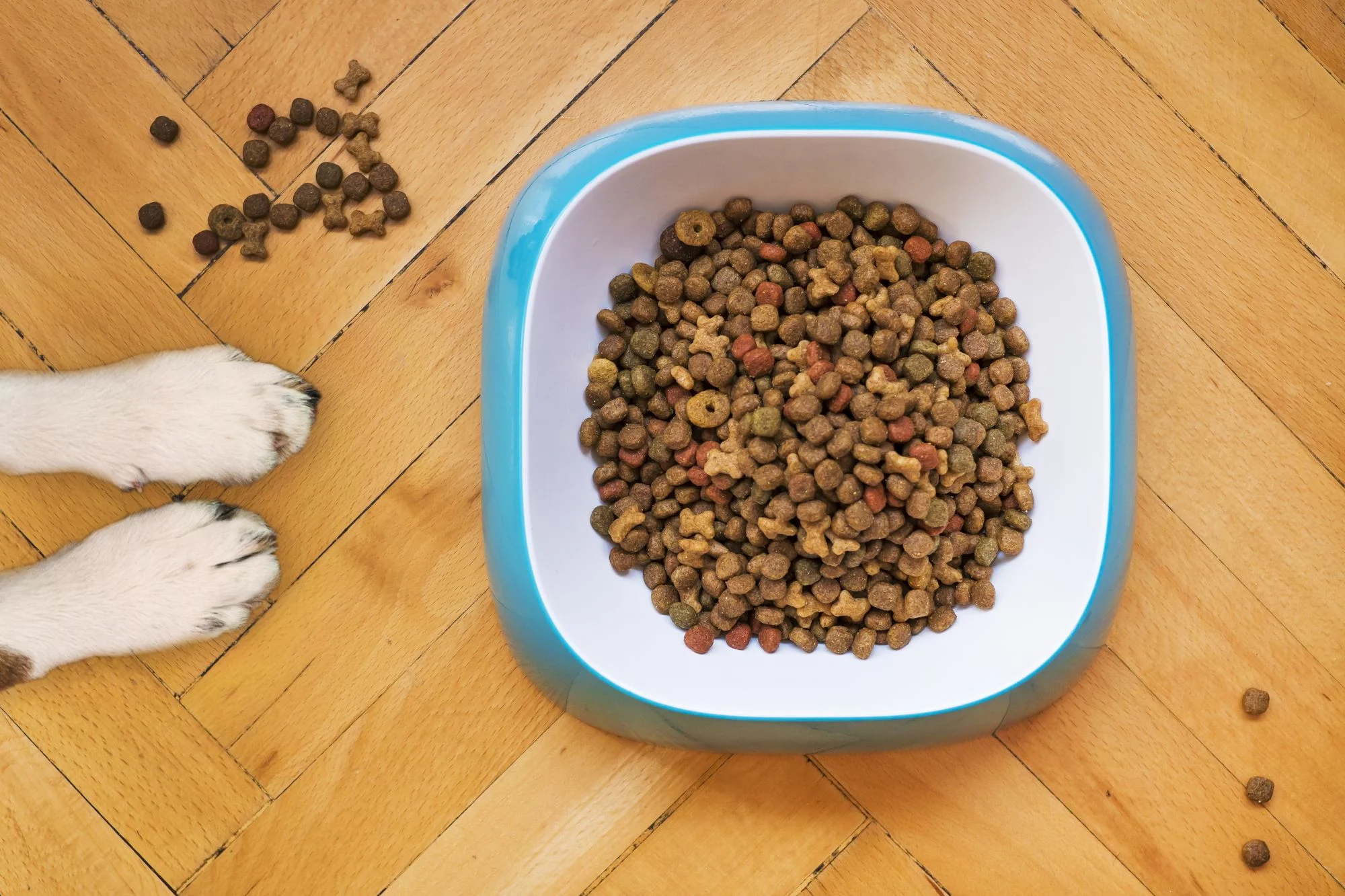
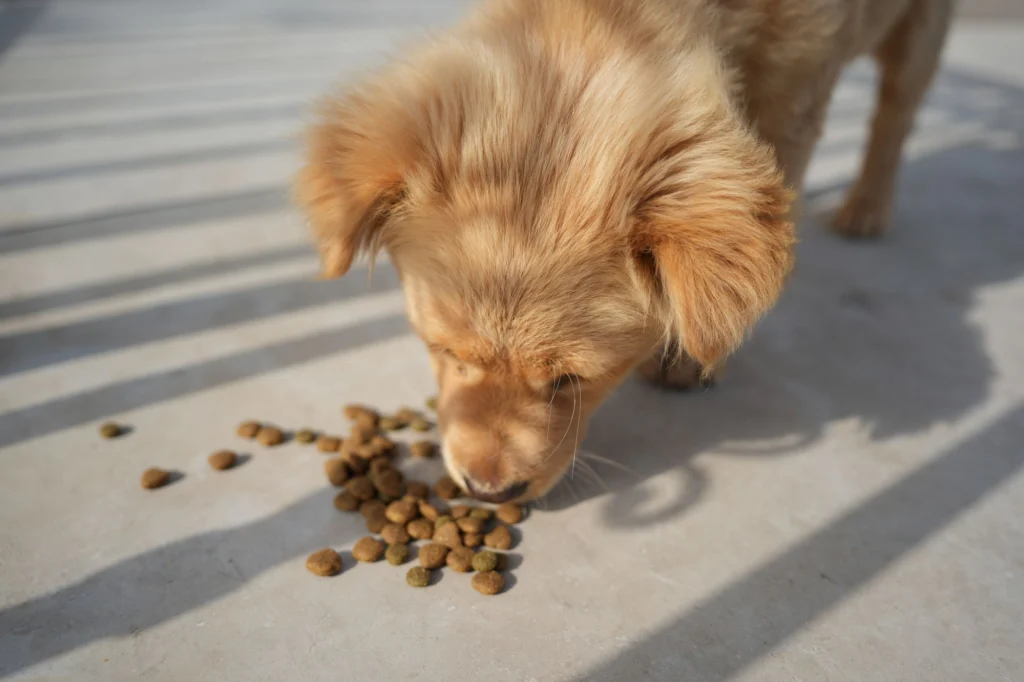
If your dog’s bowl is empty before you have even put the food bag away, you have probably wondered how long should a dog take to eat a meal. The honest answer is that no veterinary group publishes a set number of minutes, so the better test is how your dog eats: chewing, breathing, and keeping the meal down.
This post shows you how to time your dog’s meals at home, what normally changes eating speed, which signs mean the pace has become a health concern, and simple ways to make each meal last longer without changing the food.
Think of it as a pace check rather than a race against the clock. Once you know your dog’s normal, you can tell quickly when something changes.
The Complete Slow Feeding Starter Kit
Get our expert cheat sheet delivered to your inbox — plus an exclusive 15% discount code for your first order.
How Long Should a Dog Take to Eat? The Honest Answer
A healthy meal pace is one where your dog chews at least some of the food, breathes normally, and keeps the meal down afterward. That matters more than any stopwatch figure, because a healthy pace for a toy breed eating half a cup looks very different from a giant breed eating four cups.
The American Kennel Club describes the classic fast eater as a dog that finishes the meal so quickly you can barely blink, and notes that some dogs seem to swallow their food whole. Neither the AKC nor VCA Animal Hospitals sets an official minute count. Instead, both focus on what fast eating can lead to and how to slow it down.
So the useful question is not “Is my dog under or over X minutes?” It is “Does my dog eat in a way that is safe and comfortable?” If the answer is no, a longer, calmer meal is the goal, and you can measure progress against your own dog’s starting time.
Why Eating Speed Matters More Than You Think
Eating speed matters because gulping raises the risk of choking, vomiting, and bloat. The AKC explains that dogs who eat too quickly may choke, may vomit or feel uncomfortable, and swallow extra air along with the food.
The bigger worry is gastric dilatation volvulus (GDV), often called bloat, where the stomach fills with gas and can twist. In its guide to bloat in dogs, the AKC reports that fast eaters have five times the risk of slow eaters, and that dogs fed one meal a day are twice as likely to bloat as dogs fed two meals a day. VCA Animal Hospitals adds that eating too fast can also lead to aspiration, which means breathing food into the airway.
None of this means every quick eater will get sick. It means pace is one of the few bloat and choking risk factors you can change at home, along with how many meals you serve. For the full picture on that question, see our article on whether slow feeders really prevent bloat.
How to Time Your Dog’s Meal at Home
Timing your dog’s meal takes one phone timer and about a week of notes. A single meal can be misleading, so track several before you decide anything.
- Use the same setup each time. Same bowl, same spot, same amount of the usual food. Changing two things at once makes the numbers meaningless.
- Start the timer when the bowl touches the floor. Stop it when your dog walks away or starts licking an empty bowl.
- Watch, do not just time. Note whether your dog chews, swallows whole pieces, coughs, gags, or pauses to breathe.
- Record what happens after the meal. Burping, regurgitating undigested kibble, or a restless, uncomfortable dog are all worth writing down.
- Repeat for about a week of meals. Average the times. That average is your dog’s baseline.
Once you have a baseline, you have something real to compare against. If you add a slow feeder later, you can see how much longer meals take and whether the coughing or vomiting stops. That is far more useful than comparing your dog to a number from the internet.
What Changes How Fast a Dog Eats
Several everyday factors change how fast a dog eats, and most of them have nothing to do with hunger. Knowing which one applies to your dog points you toward the right fix.
| Factor | What it can look like | What to try |
|---|---|---|
| Competition from other pets | Eating faster when another dog or cat is nearby, guarding the bowl | Separate feeding spots or rooms; see our guide to feeding multiple dogs in one household |
| Puppy enthusiasm | Diving into every meal at full speed | Smaller, more frequent meals and food puzzles, as VCA suggests for puppies |
| One large daily meal | A very hungry dog at a single big feeding | Split the daily amount into two or three meals |
| Food format | Small, uniform kibble that is easy to inhale | Spread food out or use a bowl with ridges that slow each bite |
| Possible medical cause | A sudden increase in hunger or eating speed | Talk to your vet before changing the routine |
VCA Animal Hospitals notes that certain conditions can increase a dog’s hunger level, so a change in pace deserves attention, especially in an older dog. A lifelong fast eater is a habit to manage. A dog who suddenly starts eating much faster is a question for your vet.
Signs the Pace Is a Problem, Not Just a Habit
The pace becomes a problem when it causes symptoms, not when it simply looks fast. A dog who eats quickly but chews, breathes calmly, and never brings food back up is in a very different place from a dog who gags at every meal.
Watch for these signs during and after meals:
- Coughing, gagging, or choking sounds while eating
- Regurgitating whole, undigested kibble shortly after the meal
- Frequent burping or a gassy, uncomfortable dog after eating
- Swallowing pieces without any visible chewing
- Bowl guarding or anxiety around food
We go through each of these in more detail, with a matching fix, in 5 signs your dog eats too fast. If vomiting after meals is your main concern, our article on why a dog throws up after eating covers the common causes.
Emergency Signs That Cannot Wait
Some signs are not about pace at all; they are emergencies. Blue Cross lists the warning signs of bloat as a swollen, hard belly, retching without bringing anything up, drooling, pain when the belly is touched, and distress such as panting and restlessness. Blue Cross describes bloat as a veterinary emergency where minutes can make a difference. If you see these signs, or your dog is choking and cannot breathe, call your vet or the nearest emergency clinic right away. Our page on dog bloat symptoms explains the warning signs in more depth.
How to Stretch Mealtime Without Changing the Food
You can make a meal last longer by changing how the food is served, not what it is. The AKC and VCA both recommend the same handful of approaches, and most of them cost little or nothing.
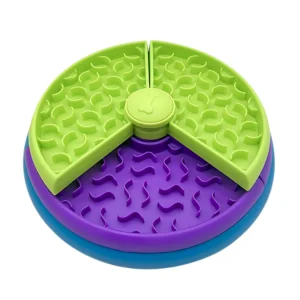
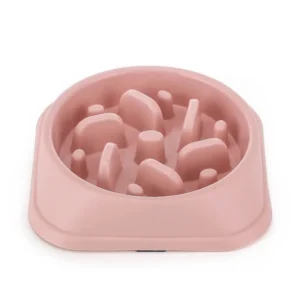
- A slow feeder bowl. Ridges and channels break the meal into small pockets, so your dog has to work around obstacles for each bite. A design like the Triple Maze Feeder spreads kibble across three separate tracks.
- A cookie sheet or muffin pan. Spreading food thin or dividing it into small cups makes big gulps difficult.
- Food puzzles and treat balls. A rolling feeder like the Pawzzle Feeder Ball releases a few pieces at a time as your dog nudges it.
- Hand feeding during training. Use part of the meal as rewards for sits, downs, and recalls.
- Hide and seek. VCA suggests dividing dinner into portions and hiding them around the house so your dog has to search.
- Smaller, more frequent meals. The AKC suggests feeding smaller amounts two to three times a day to help reduce bloat risk.
If you are new to slow feeders, our explainer on how slow feeder bowls actually work covers the different designs. A sudden switch can frustrate some dogs, so follow our step-by-step guide to introducing your dog to a slow feeder. You can also compare shapes and sizes in the Pets Sparkle slow feeder bowl collection.
For a complete plan that combines these tools into a routine, read our guide on how to stop a dog from eating too fast.
Setting a Realistic Goal for Your Dog
A realistic goal is a meal that is noticeably longer than your dog’s baseline and free of coughing, gagging, or regurgitation. It is not a fixed number of minutes copied from another dog.
Start with one change at a time. If you swap in a slow feeder, keep the food, amount, and feeding spot the same for a week, then time the meals again. Compare the new average with your baseline. If the time has gone up and the symptoms have gone down, the change is working.
Some dogs need more than one tool. A determined eater might clear an easy slow feeder quickly but slow right down with a harder puzzle. Others do best with a mix: breakfast in a maze-style bowl, dinner split between a bowl and a short training session. Rotate options if your dog figures one out too fast.
Keep the experience positive. A feeder that is too hard can lead to frustration, chewing on the bowl, or a dog who walks away hungry. Choose a level your dog can solve, and make it harder only once the easier version stops slowing them down.
When to Call Your Vet
Call your vet if your dog’s eating pace changes suddenly or comes with physical symptoms. VCA Animal Hospitals advises contacting your veterinarian if a puppy seems unusually ravenous or is losing weight, because excessive hunger can be a sign of an underlying disease. The same logic applies to adult dogs.
Talk to your vet when:
- Your dog vomits or regurgitates after meals more than occasionally
- Your dog seems hungry all the time or starts stealing food
- Your dog is losing weight while eating normally
- A previously slow eater suddenly starts gulping
- Your dog is a large, deep-chested breed and you want advice on bloat prevention
For choking, signs of bloat, or a dog who is retching without bringing anything up, do not wait for a routine appointment. Call your vet or an emergency clinic right away. Our post on dog choking on food explains what to look for.
Make Every Meal a Little Slower
How long should a dog take to eat? Long enough to chew, breathe, and keep the meal down. Time a week of meals, watch for the warning signs, and use slow feeders, puzzles, or smaller meals to stretch the pace. Then compare against your own baseline instead of a number from someone else’s dog.
If you see signs of choking, bloat, or repeated vomiting, call your vet right away. For everything else, small changes to how you serve the food can turn a gulped meal into a calmer, safer one.
Get Your Free Slow Feeding Cheat Sheet
Everything in this article — plus portion charts, feeder comparisons and meal plans — in one printable PDF. A 15% discount code is included.
Frequently Asked Questions
How long should a dog take to eat a bowl of food?
There is no official number of minutes from veterinary groups. A good meal pace is one where your dog chews some of the food, breathes normally, and keeps the meal down. Time about a week of meals to find your dog’s baseline, then aim to lengthen it if you see coughing, gagging, or vomiting.
Is it bad if my dog eats really fast?
It can be. The AKC links fast eating to choking, vomiting, and swallowing air, and reports that fast eaters have a higher risk of bloat than slow eaters. Not every fast eater gets sick, but slowing meals down is a simple way to reduce those risks at home.
Why does my dog eat so fast?
Common reasons include competition from other pets, puppy enthusiasm, one large daily meal, and food that is easy to inhale. VCA notes that some medical conditions can increase hunger, so a sudden change in eating speed is worth discussing with your vet.
Do slow feeders really make dogs eat slower?
Both the AKC and VCA recommend slow feeder bowls and food puzzles as ways to slow eating, because the obstacles stop a dog from taking large mouthfuls. Time a week of meals before and after the switch to see how much difference it makes for your own dog.
Should I take the bowl away if my dog does not finish?
Many owners pick up uneaten food after a set mealtime to keep a routine. If your dog regularly leaves food, eats much less than usual, or seems uninterested, talk to your vet, because a change in appetite can have a medical cause.
Sources
The veterinary and animal welfare resources referenced in this post:

Digital marketing specialist at BrightSeen Marketing Agency. Turns veterinary research into clear, practical feeding guides for pet parents.
Mahmoud works for BrightSeen Marketing Agency, which looks after our SEO and GEO and Meta ads.
View all articles by Mahmoud