 Written by
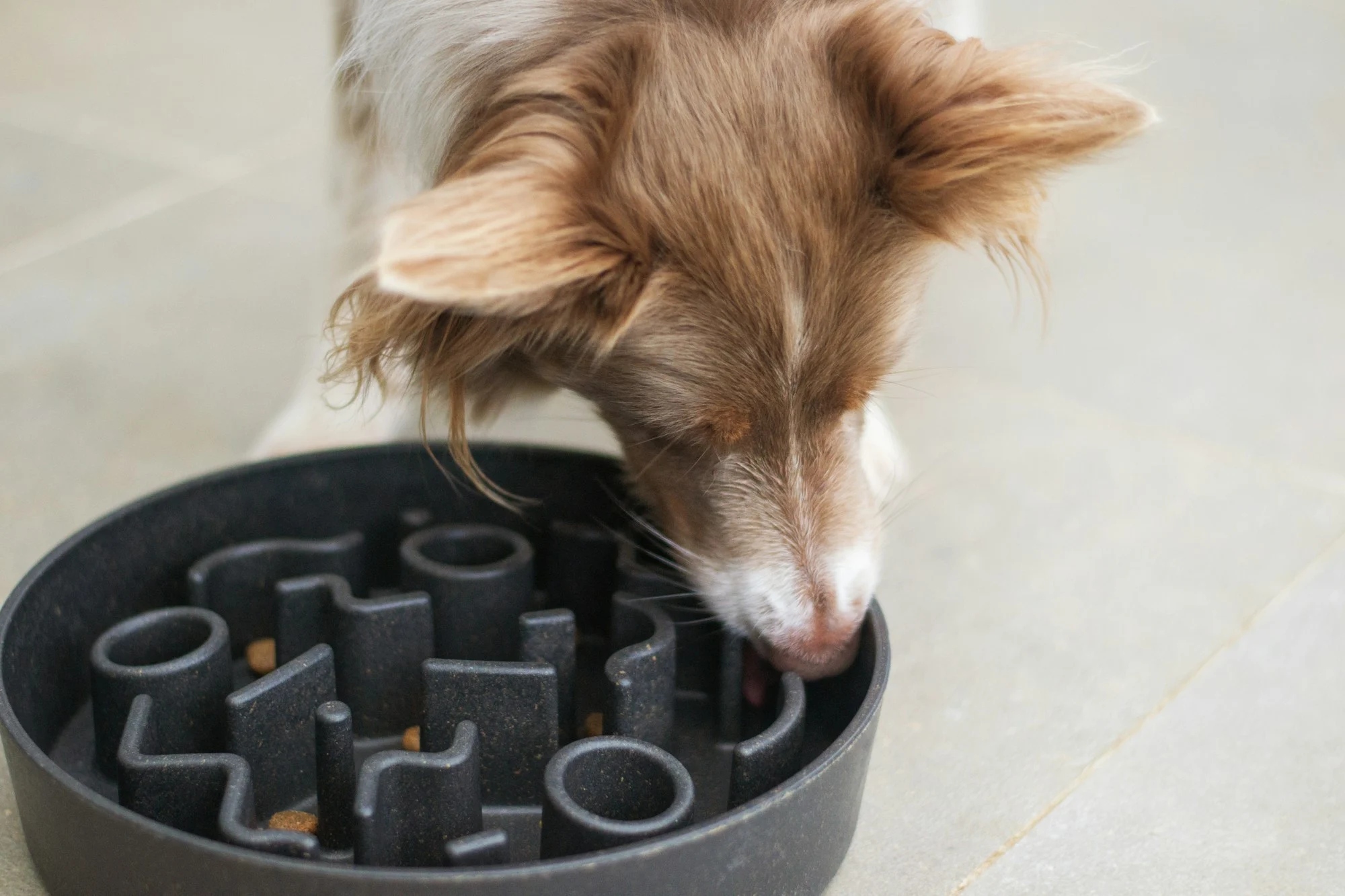
Picking what size slow feeder your dog needs comes down to one meal, not one breed label. The right bowl holds a single measured meal without heaping, sits wide enough for your dog’s muzzle to reach the channels, and has ridges shallow enough for their face shape.
Too small, and food spills over the top so your dog just eats it off the floor. Too big or too deep, and a small or flat-faced dog gives up in frustration. This guide walks through a simple three-step check, a sizing table for the feeders we carry, and what to do if you have a big dog that eats more than one bowl can hold.
What Size Slow Feeder Does My Dog Need? The Quick Answer
Your dog needs a slow feeder that holds one full meal level with the top of the ridges, with a footprint wider than their muzzle and channels they can reach without pressing their face flat. Breed and weight help you narrow the range, but meal volume is what actually decides it.
How to Pick the Right Slow Feeder for Your Pet
Get our expert cheat sheet delivered to your inbox — plus an exclusive 15% discount code for your first order.
Here is the short version of the check:
- Measure one meal in a real measuring cup.
- Compare it with the bowl’s capacity. If the listing does not give a capacity, compare the bowl’s width and depth with a bowl you already use.
- Look at your dog’s face. Long noses handle deep, narrow mazes. Short noses do better with wide, shallow patterns.
If the meal fits, the muzzle fits, and the pattern suits the face, you have the right size. The rest of this guide explains each step in more detail.
Step 1: Measure One Meal, Not the Whole Day
Size a slow feeder for a single meal, because that is what goes in the bowl at one time. Many owners look at the daily amount on the food bag and assume they need a huge bowl, when the daily amount is split across two or more meals.
Work it out like this:
- Find your dog’s daily amount from your vet or our guide to how much to feed a dog by weight.
- Divide it by the number of meals you serve.
- Scoop that amount with a proper measuring cup, not a mug, and pour it into the bowl you are considering, or a bowl of similar size.
Food type changes the answer. Tufts University’s Petfoodology team explains that pet food labels list calories per kilogram and calories per cup, and suggests foods around 300 kcal per cup or less for dogs that need more volume for the same calories. A lower-calorie food means more cups per meal, so your dog may need a roomier slow feeder after a food change even though their weight has not moved.
Splitting the day into more meals also shrinks the bowl you need. The American Kennel Club suggests feeding smaller amounts two to three times a day to help slow fast eaters, which has the side benefit of making each meal easier to fit. For help with the math, see our portion control guide for dogs.
Step 2: Check the Bowl Footprint Against Your Dog’s Muzzle
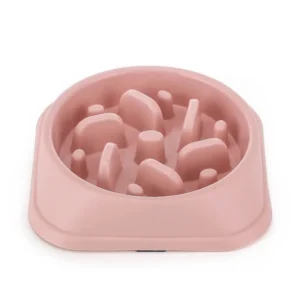
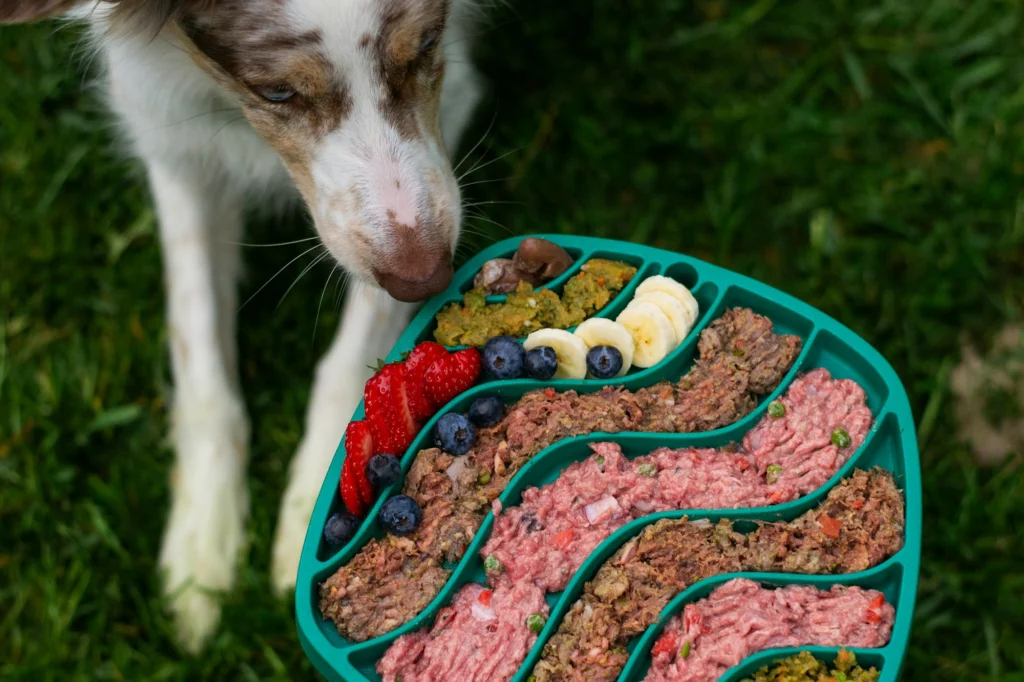
The bowl’s footprint should be wide enough that your dog can move their muzzle around the pattern without bumping the outer rim on every bite. A slow feeder that is too narrow for a long-nosed dog turns into a regular bowl, because they can scoop straight down the middle.
Two quick checks help:
- Muzzle width. Measure across the widest part of your dog’s muzzle. The gaps between ridges should be narrow enough to block a full mouthful but wide enough for the tongue and nose to reach in.
- Standing height. Watch where your dog’s head sits when they eat from their current bowl. A very small dog eating from a tall rim has to stretch up and over; a wide, low bowl is easier.
Small dogs and puppies usually do best with compact, low-profile feeders. Our roundup of slow feeders for small dogs and puppies covers the details, and our guide to the best slow feeder for small dogs compares options side by side.
Step 3: Pick a Pattern Depth That Fits the Face
Pattern depth matters as much as bowl size, especially for flat-faced breeds. Deep, tight mazes work well for long-nosed dogs, but they can be hard work for dogs with short muzzles.
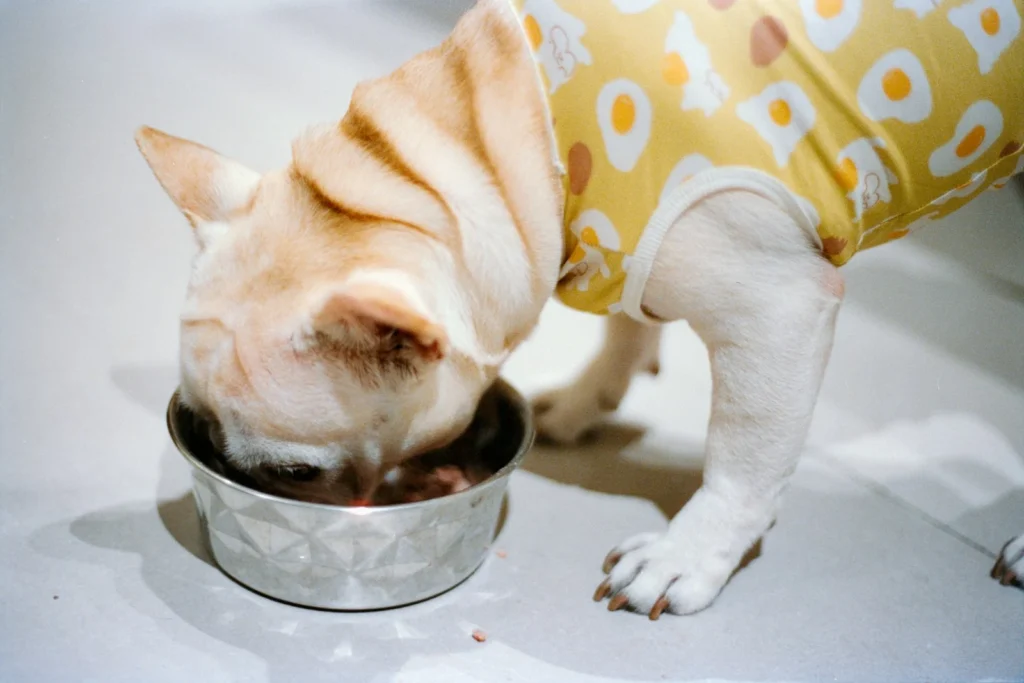
The PDSA lists Pugs, Pekingese, French Bulldogs, British Bulldogs, Shih Tzus, and Boston Terriers among the breeds affected by brachycephalic obstructive airway syndrome (BOAS), and notes that difficulty eating and regurgitation can be signs of the condition. For these dogs, choose wide, shallow channels they can lick from without pressing their face into the bowl. If your flat-faced dog struggles to eat or regurgitates often, talk to your vet before adding any feeding challenge.
Our article on the best slow feeder bowls for flat-faced dogs goes deeper into shapes that work for Pugs, Bulldogs, and Frenchies.
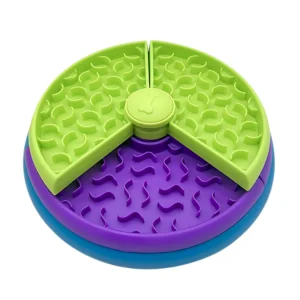
For long-nosed and determined eaters, a layered design gives you room to grow. The Triple Maze Feeder has three maze depths in one bowl, so you can start your dog on the easier section and work up.
Sizing Table for Pets Sparkle Feeders
This table lists the size and intended fit for each Pets Sparkle feeder, taken from its product page. Use it alongside your one-meal measurement from Step 1.
| Feeder | Size | Listed fit | Best used for |
|---|---|---|---|
| Triple Maze Feeder | 10.35 x 10.35 x 3.07 in; holds up to 1.5 cups | Small to medium dogs and cats | Main meals, adjustable difficulty |
| Puzzle Bites Feeder | 10 x 10 x 1.2 in | Small to medium dogs and cats | Flat, ridged meals; shallow pattern |
| Brainy Puzzle Feeder | 24 cm (about 9.45 in) across | Small to medium dogs and curious cats | Puzzle meals with sliding and lifting pieces |
| Treat Maze Bowl | 20 x 20 x 4 cm (7.87 x 7.87 x 1.57 in) | Dogs and cats | Smaller meals and portions |
| Interactive Licking Bowl | 15.3 x 15.3 x 6.5 cm (6.02 x 6.02 x 2.56 in) | Small to medium dogs and cats | Small portions, wet or dry food |
If your dog’s single meal is more than the Triple Maze Feeder’s 1.5 cups, see the section on large dogs below. You can compare every option in the slow feeder bowl collection, and our guide to the best slow feeder for dogs explains how each type works.
Treat Balls and Puzzle Toys Follow a Different Size Rule
For balls and other toys your dog carries in their mouth, the rule flips: the toy must be too big to swallow. A bowl can be on the small side and still be safe, but a ball that fits entirely inside your dog’s mouth is a choking risk.
The PDSA advises choosing a ball that is larger than your dog’s mouth, warning that balls that are too small may lodge in the throat. The AKC gives similar advice, saying toys should be a good size in comparison to the dog’s body and that heavy chewers need toys that will not break into small pieces.
That is why we size our Pawzzle Feeder Ball carefully. At 1.85 x 1.85 x 1.73 inches (4.7 x 4.7 x 4.4 cm) it is a small ball, best matched to small dogs and cats whose mouths cannot close around it. For a medium or large dog, choose a bigger treat toy or a bowl-style feeder instead, and supervise any toy until you know how your dog uses it.
Large and Giant Dogs: When One Bowl Is Not Enough
If your dog’s meal is bigger than one slow feeder can hold, split it rather than heaping it. An overfilled slow feeder lets the top layer of food sit above the ridges, where your dog can gulp it as fast as from a plain bowl.
Practical options for big eaters:
- Two feeders per meal. Divide the meal between two slow feeders and offer them one after the other, or in two spots.
- More meals per day. Moving from two meals to three makes each one smaller, in line with the AKC’s advice on smaller, more frequent feedings.
- Spread it out. The AKC also suggests spreading food across a cookie sheet, which works at any meal size.
- Mix tools. Serve part of the meal in a slow feeder and use the rest as training rewards.
Our feeders are listed for small to medium dogs, so for big breeds we would rather point you to the right approach than oversell a bowl. Our guide to the best slow feeders for large dogs covers what to look for in a big-dog bowl, including size, weight, and stability.
Signs You Picked the Wrong Size
Your dog’s behavior over the first week tells you whether the size is right. Watch for these signs:
- Food spilling over the ridges or onto the floor: the bowl is too small for the meal.
- Meal time barely changes: the pattern is too easy or too wide for your dog’s muzzle.
- Pushing the bowl around the room: it may be too light or too small for your dog’s size; a non-slip base or larger feeder helps.
- Walking away with food left: the pattern may be too deep or too hard, especially for flat-faced dogs and puppies.
- Chewing the ridges: frustration or boredom; try an easier pattern and supervise.
Introduce any new feeder gradually. Our step-by-step guide to introducing your dog to a slow feeder shows how to start with part of the meal so your dog builds confidence. If you are weighing materials as well as size, see silicone vs plastic vs stainless steel feeders.
Pick the Size for the Meal, Then the Dog
When you are deciding what size slow feeder to buy, start with one measured meal, then check the muzzle and the face shape. A bowl that holds the meal level with the ridges, fits the muzzle, and matches the pattern depth to the face will slow your dog down without frustrating them.
For small and medium dogs, a feeder like the Triple Maze Feeder or Puzzle Bites Feeder covers most meals. For bigger eaters, split the meal or add more feedings so every bite still has to work its way through the pattern.
Get Your Free Slow Feeding Cheat Sheet
Everything in this article — plus portion charts, feeder comparisons and meal plans — in one printable PDF. A 15% discount code is included.
Frequently Asked Questions
How do I know what size slow feeder to get?
Measure one meal in a measuring cup and choose a slow feeder that holds it level with the top of the ridges. Then check that the bowl is wide enough for your dog’s muzzle and that the pattern depth suits their face. Meal volume matters more than breed or weight alone.
Can a slow feeder be too big for my dog?
Yes. A very large or deep feeder can be hard for a small dog or puppy to reach into, and a meal that only fills part of a big bowl leaves wide gaps that make the pattern easier. Pick a size that the meal fills, and choose a shallow pattern for small or flat-faced dogs.
What size slow feeder for a large dog?
Choose a feeder that holds one full meal without heaping. If your large dog eats more than one bowl can hold, split the meal across two feeders or serve more meals per day. Our feeders are listed for small to medium dogs, so check our large-dog guide for big-breed options.
Should a treat ball be bigger than my dog’s mouth?
Yes. The PDSA advises choosing a ball larger than your dog’s mouth so it cannot be swallowed or lodge in the throat. Small treat balls suit small dogs and cats; medium and large dogs need a bigger toy. Supervise play until you know how your dog uses it.
Do flat-faced dogs need a special slow feeder?
Flat-faced dogs usually do best with wide, shallow patterns they can lick from without pushing their face into the bowl. The PDSA notes that difficulty eating and regurgitation can be signs of BOAS, so talk to your vet if your dog struggles at mealtimes.
Sources
The veterinary and animal welfare resources referenced in this post:

Digital marketing specialist at BrightSeen Marketing Agency. Turns veterinary research into clear, practical feeding guides for pet parents.
Mahmoud works for BrightSeen Marketing Agency, which looks after our SEO and GEO and Meta ads.
View all articles by Mahmoud