 Written by
If you are comparing a slow feeder ball vs bowl, the short answer is that they do different jobs. A slow feeder bowl is built to serve a whole meal more slowly, while a slow feeder ball turns a small portion of kibble into a game your pet has to chase, nudge, and roll. Most fast eaters do best with a bowl for main meals and a ball for a little extra play.
This post explains how each one works, how they compare on size, speed, mess, and safety, and how to choose the right one for your dog or cat. You will also find a simple daily routine that uses both.
Along the way, we will point out where each tool fits best and when a gulping problem needs a vet rather than a new feeder.
Puzzle Feeders & Enrichment: Beyond the Bowl
Get our expert cheat sheet delivered to your inbox — plus an exclusive 15% discount code for your first order.
Slow Feeder Ball vs Bowl: The Quick Answer
A slow feeder bowl is the better choice for serving full meals, and a slow feeder ball is the better choice for active play with a small amount of food. The bowl stays in one place and uses ridges or a maze to break up each bite. The ball moves, and food only comes out when your pet works it across the floor.
The American Kennel Club describes slow-feed bowls as bowls with raised ridges that provide a challenge for dogs as they eat and prevent dogs from eating too quickly. Rolling food toys are a different idea. VCA Animal Hospitals suggests an interactive food toy that releases a few kibbles at a time as the dog moves it around, which is exactly how a treat ball works.
So the real question is not which one is better overall. It is which job you need done: slowing down the main meal, or adding movement and problem solving to part of the day’s food.
How a Slow Feeder Bowl Works
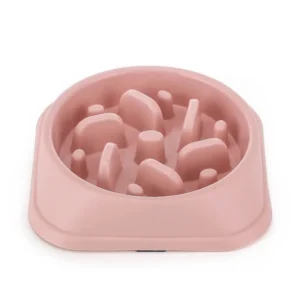
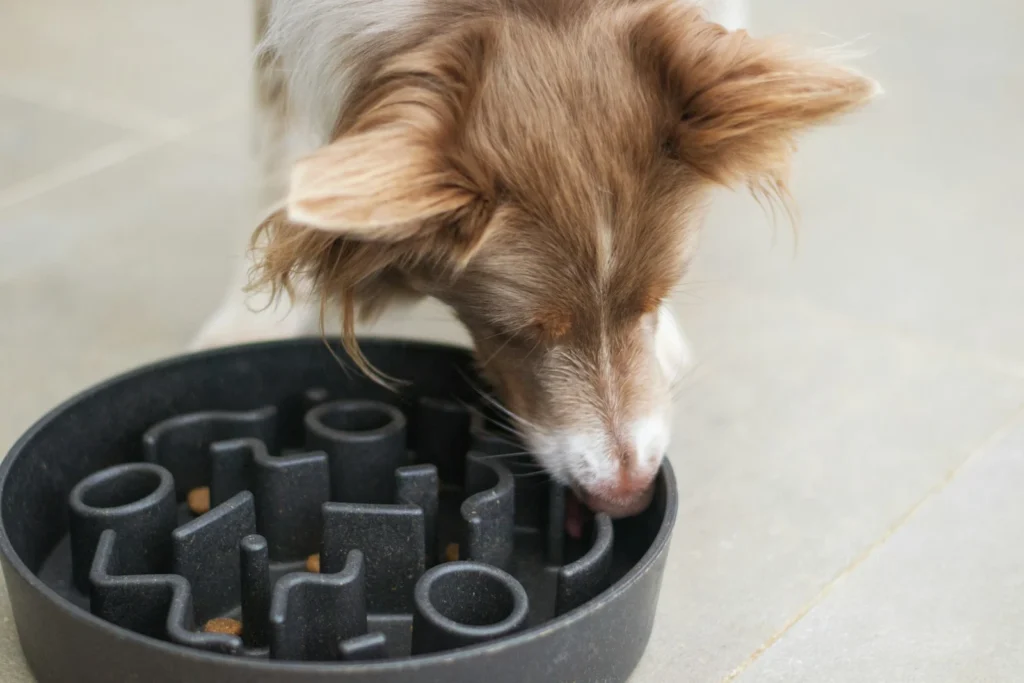
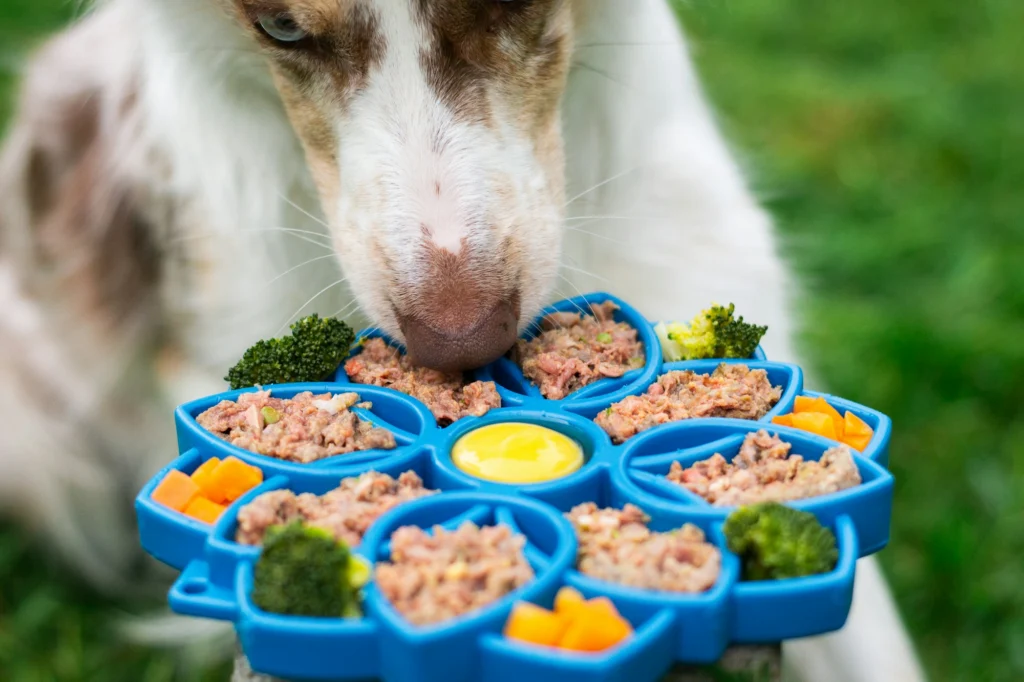
A slow feeder bowl works by spreading food between ridges, channels, or maze walls so your pet can only reach a few pieces at a time. Instead of scooping up a big mouthful, your pet has to lick, nose, and pick each bite out of the pattern. If you want the full explanation, our post on how slow feeder bowls actually work goes deeper.
What a bowl does well
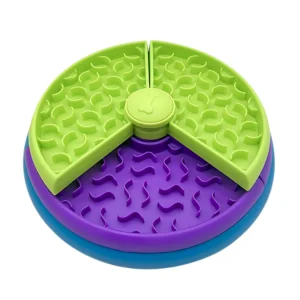
- It holds a full meal. A bowl is sized to serve breakfast or dinner in one go. The Pets Sparkle Triple Maze Feeder, for example, holds up to 1.5 cups of food, according to its product page.
- It stays put. Non-slip feet or pads keep the bowl from sliding, so mealtime happens in one spot.
- It works with wet and dry food. Kibble, wet food, and mixed meals all fit between the ridges.
- It is easy to start. Most pets figure out a shallow maze within a few meals.
Where a bowl falls short
A bowl is a steady, predictable tool. It slows eating, but it does not ask your pet to move much. Some dogs also learn a pattern quickly and speed up again. If your dog finishes even a maze bowl in a hurry, a deeper pattern or a puzzle can add more challenge. Our comparison of a slow feeder vs a puzzle feeder explains when to move up a level.
How a Slow Feeder Ball Works
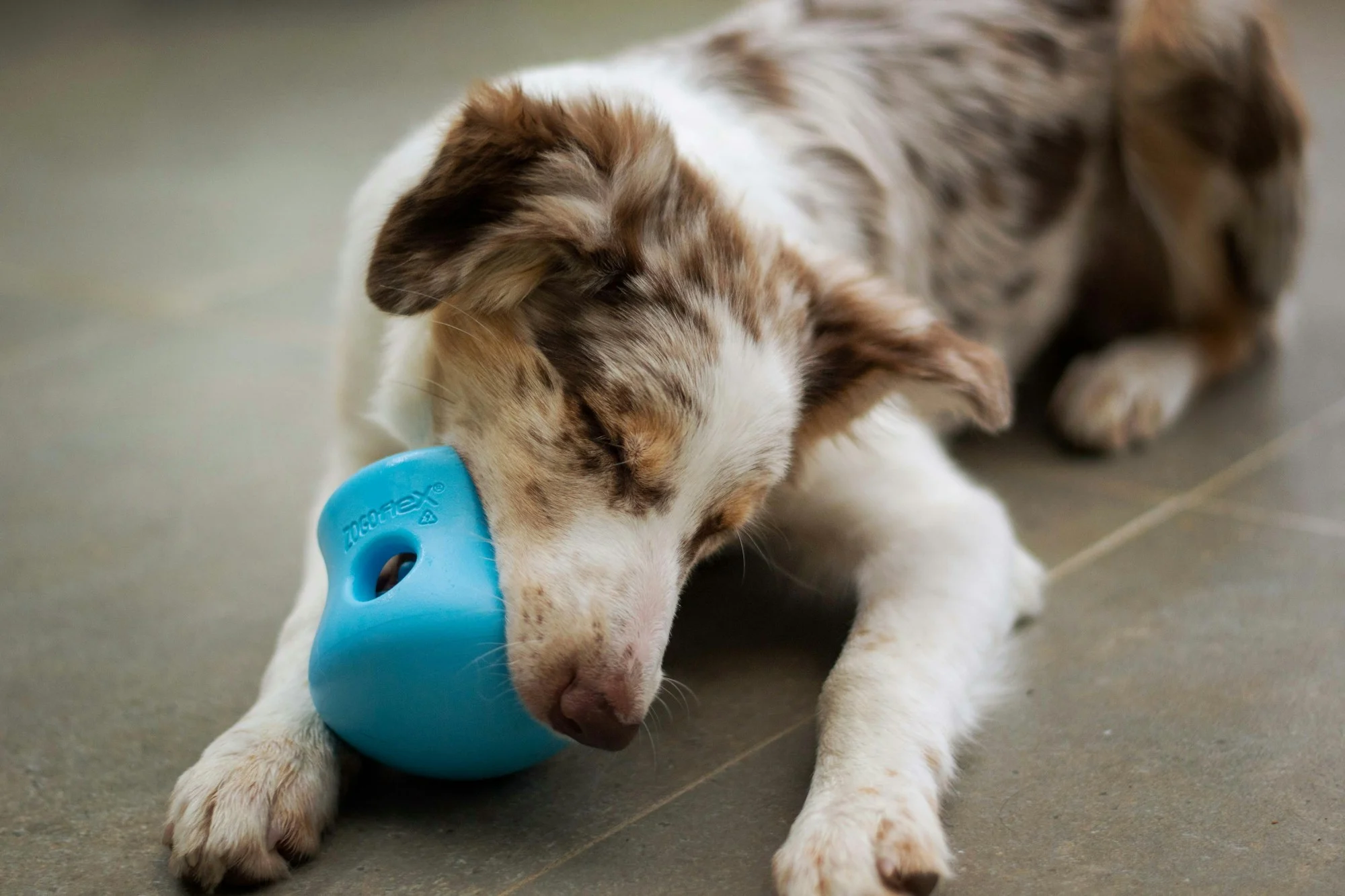
A slow feeder ball works by hiding kibble inside a hollow toy that only releases food when your pet rolls, bats, or nudges it. Every few pushes, a piece or two drops out. Your pet has to follow the ball, push it again, and search for the food that fell out, which turns eating into foraging.
VCA Animal Hospitals recommends showing your pet how this works the first time by rolling the toy yourself, so they see that food comes out when the container moves. That first demonstration matters, because a pet who does not get the idea may simply walk away.
What a ball does well
- It adds movement. Your pet walks, chases, and pushes instead of standing still over a bowl.
- It adds a puzzle. The AKC notes that treat-dispensing toys are a good fit for dogs who are especially motivated by treats and rewards, and that some challenging toys require a dog to work to get to the treats.
- It suits cats too. Many cats enjoy batting a small ball around, and it gives indoor cats a hunting-style task. See our guide to cat puzzle feeders for more ideas.
Where a ball falls short
A ball holds only a small amount of food, so it adds to a meal rather than replacing it. It works best with dry kibble or small dry treats, not wet food. It also needs floor space and some supervision. A ball that rolls under the couch is a frustrating end to the game, and a ball that is too small for your pet can be a safety risk, which we cover below.
Side-by-Side Comparison
The clearest difference is that a bowl manages the whole meal, while a ball turns part of the food into play. Here is how they compare on the points that matter most to owners.
| Feature | Slow feeder bowl | Slow feeder ball |
|---|---|---|
| Main job | Slows down a full meal | Turns a small portion into play |
| Food types | Kibble, wet food, mixed meals | Dry kibble and small dry treats |
| How much it holds | A full meal | A small amount at a time |
| Activity level | Low: your pet stays in one spot | High: your pet chases and nudges |
| Learning curve | Easy for most pets | Needs a short demonstration |
| Mess | Stays in one place | Kibble can scatter across the floor |
| Supervision | Check in during meals | Watch every session |
| Best for | Daily meals for fast eaters | Enrichment, rainy days, snack time |
If you only buy one tool for a dog who gulps every meal, start with a bowl. If your pet already eats at a reasonable pace but seems bored, a ball is the more interesting addition. You can browse both styles in our slow feeder bowls collection.
Which One Fits Your Pet’s Size?
Size is the first thing to check, because a ball has to be too big to swallow and a bowl has to fit your pet’s face. Getting this wrong matters more with a ball than with a bowl.
Choosing a ball by size
The AKC advises choosing a ball for a small dog that is not so small that they could swallow it, and making sure balls for large and giant breeds are big enough that the dog cannot choke on or swallow them by accident. VCA Animal Hospitals gives the same advice for activity toys: pick a size-appropriate toy that cannot be accidentally swallowed.
The Pets Sparkle Pawzzle Feeder Ball measures 1.85 x 1.85 x 1.73 inches, according to its product page. That makes it a toy for small dogs and cats only. Do not give a ball this size to a medium or large dog. Our treat ball guide for small dogs and cats covers what to look for in more detail.
Choosing a bowl by size
The AKC says a bowl should be appropriately sized and shaped to your dog’s face, with a wider opening for dogs with large faces. For a slow feeder, that also means the maze channels should be deep enough to slow your pet down without being so tight that they cannot reach the food. Our post on what size slow feeder your dog needs walks through it step by step. Pets Sparkle bowls are designed for small to medium dogs and cats.
Which One Fits Your Pet’s Eating Style?
Your pet’s eating style is the second deciding factor: gulpers need a bowl first, and bored grazers often enjoy a ball more. Watch a few meals and see which description sounds most like your pet.
The gulper
A dog who finishes a full bowl in seconds, coughs, or brings food back up needs the main meal slowed down. AAHA explains that for dogs prone to gobbling their food, implementing strategies to slow their eating is highly beneficial, including slow-feeder bowls and food puzzle feeders. A bowl handles every meal, so it is the right first step. Our list of signs your dog eats too fast can help you confirm the pattern.
The bored or restless eater
A pet who eats at a normal pace but paces, chews things, or begs between meals may need more to do rather than a slower bowl. A ball adds activity and a reason to forage. The AKC notes that play helps dogs relieve stress, get rid of pent-up energy, and stay mentally stimulated.
The strong chewer
Some dogs see any toy as something to destroy. VCA Animal Hospitals warns that some dogs may grow impatient and simply destroy a food dispenser. If your dog chews through toys, use a sturdy bowl for meals and only offer a ball while you are watching.
The cat
Cats often take to a small ball quickly because batting and chasing match their natural hunting style. VCA notes that cats are natural hunters, so their toys are most interesting when they match the size and texture of prey. A ball can make a snack feel like a hunt, while a shallow bowl handles the main meal without bothering their whiskers.
Using Both in One Daily Routine
You do not have to choose only one: the simplest plan uses a bowl for meals and a ball for a small, measured share of the day’s food. Here is an easy way to set it up.
- Measure the full day’s food first. Use a measuring cup or scale so the bowl and the ball together never add up to more than your pet’s daily amount.
- Split meals into two or more servings. AAHA suggests dividing a dog’s total food allowance into two or more smaller meals instead of one large meal.
- Serve the main meals in the slow feeder bowl. Breakfast and dinner go in the maze, where your pet eats at a steadier pace.
- Set aside a small amount for the ball. A few pieces of kibble from the daily portion are enough for a play session.
- Pick a calm time for ball play. AAHA advises avoiding rigorous exercise, strenuous play, and highly exciting activities for at least one hour before and after eating. Gentle nudging is fine, but save energetic chasing for well away from big meals.
- Put the ball away afterward. Storing it between sessions keeps it special and lets you check it for damage.
If your pet is new to slow feeding, introduce one tool at a time. Our step-by-step guide on how to introduce a slow feeder keeps the change stress-free.
Safety, Supervision, and Cleaning
Both tools are safe for most pets when they are the right size, in good condition, and used with supervision. The rules are a little stricter for a ball because it is a toy that moves and can be chewed.
Supervision
VCA Animal Hospitals says pets should be monitored and supervised with all toys, at least at first. Stay in the room during ball sessions, and take the ball away if your pet starts chewing it apart rather than rolling it.
Check for wear
Look over both tools often. Replace a ball that is torn or cracked, and replace a bowl with deep scratches or chewed edges, since damaged surfaces are harder to keep clean.
Clean after every use
Food oils and crumbs collect inside a ball and in the grooves of a maze. Wash both with warm, soapy water and let them dry fully before the next use. Our guide on how to clean a slow feeder and lick mat covers the tricky corners.
Know when to call your vet
No feeder is a medical treatment. If your pet vomits after meals, chokes on food, or has a swollen belly and is retching without bringing anything up, call your vet or an emergency clinic right away. AAHA describes bloat as a medical emergency and lists eating too quickly as a potential risk factor. Our post on whether slow feeders prevent bloat explains what a bowl can and cannot do.
Pick the Feeder That Matches the Meal
When you weigh a slow feeder ball vs bowl, think about the job. A bowl is the everyday tool for slowing down full meals, especially for gulpers. A ball is the fun extra that turns a few pieces of kibble into exercise and problem solving, as long as it is the right size and you are watching.
Many households end up using both. Start with the tool that solves your pet’s biggest problem, then add the other once mealtime feels calm. For more ways to make food time engaging, see our dog puzzle feeders guide and our post on enrichment toys vs puzzle feeders.
Get Your Free Slow Feeding Cheat Sheet
Everything in this article — plus portion charts, feeder comparisons and meal plans — in one printable PDF. A 15% discount code is included.
Frequently Asked Questions
Is a slow feeder ball better than a slow feeder bowl?
Neither is better in every case, because they do different jobs. A slow feeder bowl is the better choice for serving full meals to a dog that gulps. A slow feeder ball is better for adding play and foraging with a small amount of kibble. Many owners use a bowl for meals and a ball for enrichment between them.
Can I feed my dog a whole meal in a treat ball?
Usually not. A treat ball holds only a small amount of dry food, so it works best as an addition to a meal rather than a replacement. Measure the day’s food first and set aside a small portion for the ball, so the total stays the same. Serve the rest of the meal in a slow feeder bowl.
Are slow feeder balls safe for dogs?
They can be safe when the ball is the right size and you supervise. The AKC advises choosing balls that are big enough that your dog cannot choke on or swallow them. VCA Animal Hospitals recommends supervising pets with all toys, at least at first. Replace any ball that is cracked or chewed.
Can cats use a slow feeder ball?
Yes. Many cats enjoy batting a small treat ball around, and it gives them a hunting-style task. Use dry kibble or small dry treats from their daily portion, start with an easy setting, and roll it for them the first time. A shallow, wide slow feeder bowl is still the better choice for their main meals.
Can I put wet food in a slow feeder ball?
It is best not to. Wet food sticks inside a ball, does not roll out, and is hard to clean out of the hollow center. Use dry kibble or small dry treats in the ball. For wet food or mixed meals, a slow feeder bowl or a lick mat is a much better fit and is easier to wash afterward.
Sources
The veterinary and expert resources referenced in this post:
- American Kennel Club: Finding the Right Dog Bowl for Your Dog
- American Kennel Club: Which Dog Toys Are Right for Your Dog?
- AAHA: Understanding Canine Bloat (GDV): A Medical Emergency
- VCA Animal Hospitals: Feeding a Dog Who is a Glutton
- VCA Animal Hospitals: Behavior Management, Enrichment and Activity Toys

Digital marketing specialist at BrightSeen Marketing Agency. Turns veterinary research into clear, practical feeding guides for pet parents.
Mahmoud works for BrightSeen Marketing Agency, which looks after our SEO and GEO and Meta ads.
View all articles by Mahmoud