 Written by
Dog puzzle feeder levels tell you how much thinking a puzzle asks for: an easy level shows the food and lets your dog get it with a nudge, while harder levels hide it behind sliders, lids and steps that must happen in order. The trick is not picking the hardest puzzle you can find. It is moving up one small step at a time, only when your dog is clearly winning at the current level.
This post is a practical progression plan. You will learn how to find your dog’s starting point, a sample four week plan for moving up, the signs that say “ready for more” or “too hard”, and simple ways to change the difficulty of a puzzle you already own. If you are brand new to puzzle feeding, our dog puzzle feeders guide covers the basic types first.
Dog Puzzle Feeder Levels: What Each Stage Asks of Your Dog
Most puzzle feeders fall into three broad stages: easy puzzles that need one simple action, middle puzzles that need a choice or a specific movement, and hard puzzles that need several actions in the right order. Brands label their toys in different ways, so use the description of the action rather than the number on the box.
Puzzle Feeders & Enrichment: Beyond the Bowl
Get our expert cheat sheet delivered to your inbox — plus an exclusive 15% discount code for your first order.
Stage 1: one simple action
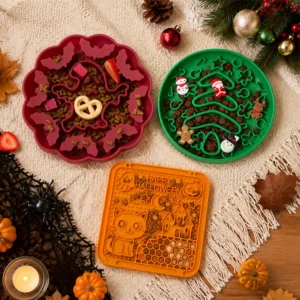
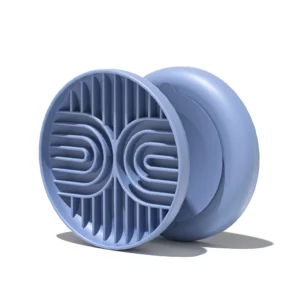
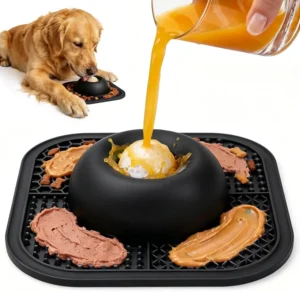
Food sits in open grooves, shallow pockets or a loose ball your dog only has to push. Flat ridged bowls, lick mats and wobbly treat balls belong here. Your dog sees or smells the reward right away and gets it with a lick, a nudge or a paw.
Stage 2: one decision or movement
The food is covered, but by one thing at a time. Your dog lifts a cap, slides a single piece, or presses a lever to release kibble. The dog has to learn that a specific action makes food appear, which is a real step up in thinking.
Stage 3: steps in order
Here a piece has to slide before a lid can lift, or a block must move out of the way before another opens. These puzzles reward patience and memory. They are great for confident, experienced dogs and frustrating for beginners.
Think of these stages as a ladder, not a test. A dog that loves stage 1 for life is still getting a good enrichment meal.
Benefits of Puzzle Feeders for Dogs, and Why the Right Level Matters
Puzzle feeders slow eating and give your dog a job to do, but those benefits only show up when the level fits your dog. According to the ASPCA, food puzzles are a great way to slow down your dog’s eating and provide mental stimulation, and every meal is an opportunity for enrichment.
The American Kennel Club describes food puzzle toys as working much like slow feeders: nooks and crannies make it impossible to take large gulps. It also notes there are many types, from puzzles that lie flat to toys that dispense food during play, and that all are viable options.
Blue Cross explains that enrichment helps dogs carry out natural behaviors, can improve confidence, and can help reduce some problem behaviors. It adds an important warning: food should not be too easy or too hard to reach, because either can cause frustration. That single line is the reason levels matter.
- Too easy: the meal is over before the brain gets going, and some dogs lose interest.
- Too hard: the dog gives up, gets pushy with the toy, or starts chewing it instead of solving it.
- Just right: the dog works steadily, makes progress, and finishes calm rather than wound up.
How to Pick Your Dog’s Starting Level
When working through dog puzzle feeder levels, start one level below where you think your dog belongs, because early wins build the habit of trying. A dog that succeeds in the first session will happily come back for the second.
Use these questions to place your dog:
- Has your dog used any food toy before? If not, start at stage 1, even with a clever breed.
- How does your dog react when food is out of reach? Dogs that keep trying calmly can move faster. Dogs that bark, whine or walk away should stay easy for longer.
- Does your dog use its paws or mostly its nose? Nose first dogs often enjoy snuffle style and sniffing puzzles. Paw users take to sliders sooner.
- How old is your dog? Puppies have short attention spans, and seniors may have stiff joints or weaker eyesight. Our post on feeding enrichment for senior dogs has gentle ideas for older pets.
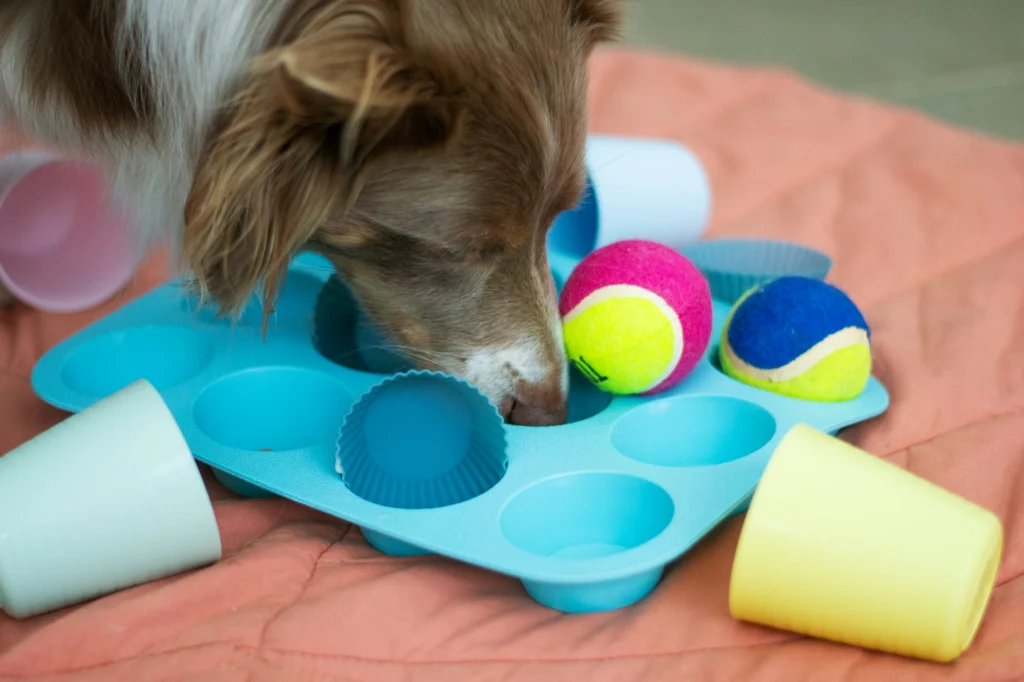
A simple home test helps too. The ASPCA describes a muffin tin puzzle: kibble in the cups with toys placed on top. If your dog figures out how to remove the toys quickly, it is probably ready for stage 2 puzzles. If it ignores the tin or only sniffs it, stay at stage 1.
A Sample Four Week Plan to Level Up
A good level up plan changes one thing at a time and only moves on after a few easy successes. The table below is a sample, not a rule. Some dogs move faster and some need twice as long, and both are fine.
| Week | Puzzle setup | Your goal | Move on when |
|---|---|---|---|
| Week 1 | Stage 1 flat puzzle or treat ball, extra food loaded, very loose | Your dog links the toy with food | Your dog finishes eagerly without help |
| Week 2 | Same toy, less food sticking out, a little more packed in | Your dog keeps working for longer | Your dog stays engaged until the end |
| Week 3 | Stage 2 puzzle with every cover left open or half open | Your dog learns the new action | Your dog opens covers on its own |
| Week 4 | Stage 2 puzzle fully closed for part of the meal | Your dog solves the new puzzle calmly | Your dog solves it easily on several days in a row |
A few habits make the plan work:
- Use part of the normal meal. AAHA advises using part of your dog’s normal daily food whenever possible so extra calories do not add up. Our portion control guide explains how to measure the daily amount.
- Keep sessions short at first. End while your dog is still keen, then serve the rest of the meal in a normal bowl if needed.
- Show, then step back. Open one compartment yourself the first time so your dog sees food appear, then let your dog take over.
Signs Your Dog Is Ready for a Harder Puzzle
Your dog is ready to move up when the current puzzle has become routine: it works quickly, finishes every time, and shows no stress along the way. At that point the puzzle is still slowing the meal, but it is no longer much of a brain workout.
Look for several of these signs together over a few days, not just one good session:
- Your dog solves the puzzle the same way every time, without trial and error.
- The meal is finished noticeably faster than in the first week.
- Your dog wanders off afterward looking for something else to do.
- Your dog starts trying to flip, carry or chew the puzzle out of boredom.
- Your dog stays relaxed when the food is briefly out of reach.
When you see this pattern, change one thing only: either a harder puzzle with the covers open, or the same puzzle with a tougher setup. Changing the toy, the food and the room all at once makes it hard to tell what helped.
Signs the Puzzle Is Too Hard, and How to Step Back
A puzzle is too hard when your dog stops problem solving and starts showing frustration. Stepping back for a few days is not failure; it protects your dog’s enjoyment of the whole activity.
Common warning signs include:
- Barking, whining or pawing at you instead of the puzzle.
- Walking away early and refusing to return.
- Biting or chewing the pieces rather than moving them.
- Pushing the puzzle across the floor with growing force.
- Seeming restless or wound up after the meal instead of settled.
To step back, open a few compartments, add easier pieces of food, or return to the last level your dog enjoyed. Then plan a smaller step forward. Our post on whether a slow feeder is frustrating for dogs covers more of these signals in detail.
If your dog vomits, gags, chokes or seems to have a swollen belly at any point during or after a meal, stop and call your vet straight away.
Five Ways to Make the Same Puzzle Harder or Easier
You can change the difficulty of most puzzles without buying a new one, simply by changing what goes inside and how it is packed. This lets you fine tune the challenge between full levels.
- Change the food size. Larger kibble pieces tend to stay put in grooves, while small pieces fall out faster. Swapping between them changes the pace.
- Change how tightly you pack it. Loose food falls out easily. Food packed or mixed with a little wet food takes more work.
- Open or close compartments. On slider and lift puzzles, leave some covers open to make it easier, then close one more each session.
- Freeze it. AAHA notes that freezing a stuffed food toy can turn part of a meal into a longer lasting activity. A frozen filling is a stage up from the same food served fresh.
- Use the built in settings. Some toys include adjustable parts. The Duck Treat Dispenser from Pets Sparkle, for example, comes with three challenge lids, so you can raise the difficulty as your dog learns.
Rotation also changes difficulty in a gentle way. AAHA suggests dividing toys into small groups and rotating them every few days, and the AKC notes that even an old toy seems new and exciting when your dog has not seen it for days. A familiar puzzle returning after a break can feel fresh without being harder.
When Your Dog Is Anxious, Keep the Level Easy
For nervous or anxious dogs, an easy puzzle is usually the better choice, because the goal is a calm, successful activity rather than a mental challenge. Repetitive actions like licking and sniffing can help many dogs settle, while a hard puzzle can add stress.
Good options for anxious dogs include lick mats, snuffle style puzzles and flat feeders with open grooves. Our snuffle mats for dogs post explains how sniffing games work, and our tips on calming an anxious dog at mealtimes cover the bigger routine.
Keep these points in mind:
- Offer the puzzle in a quiet spot, away from other pets who might compete for food.
- Save level ups for calm days, not days with visitors, storms or vet trips.
- If your dog seems anxious most of the time, or the anxiety is getting worse, talk with your vet. Puzzles help with boredom, but they do not treat anxiety on their own.
Keeping Puzzle Play Safe at Every Level
Safety rules stay the same no matter which level your dog has reached: the right size, supervision with anything new, and regular checks for damage. A harder puzzle often has more small moving parts, so these checks matter even more as you level up.
- Choose the right size. AAHA recommends correctly sized toys that cannot fit into the back of your dog’s mouth. Small treat balls are fine for small dogs but not for big chewers.
- Supervise new puzzles. AAHA advises supervising your dog with any new enrichment item. Stay nearby until you know how your dog treats it.
- Inspect often. Check sliders, lids and rubber for bite marks, cracks or loose parts, and throw away anything damaged enough to become a choking or swallowing hazard.
- Clean after every meal. Food left in grooves and hinges can go stale. Our cleaning guide for slow feeders and lick mats works for most puzzle feeders too.
- Know when a puzzle is not the right tool. For a dog that destroys toys, a sturdy flat feeder may be safer than a puzzle with removable pieces.
When you are ready to choose your next step, browse our puzzle feeders collection. The Puzzle Bites Feeder is a flat, ridged option that suits early levels, while the Brainy Puzzle Feeder uses slide and lift pieces for dogs ready for more. Both are designed for small to medium dogs.
Level Up Slowly and Keep It Fun
Dog puzzle feeder levels are a guide, not a finish line. The best puzzle level is the one your dog can solve with steady effort and a happy finish. Start a little easier than you think, change one thing at a time, and watch your dog’s body language more than the calendar. When it gets easy, nudge the challenge up. When it gets frustrating, step back. For a wider look at why puzzles help, read our post on how puzzle feeders beat boredom, or compare options in slow feeder vs puzzle feeder.
Get Your Free Slow Feeding Cheat Sheet
Everything in this article — plus portion charts, feeder comparisons and meal plans — in one printable PDF. A 15% discount code is included.
Frequently Asked Questions
What level puzzle feeder should I start my dog with?
Start with an easy, one step puzzle such as a flat ridged feeder or a treat ball, even if your dog is a clever breed. Early success teaches your dog that trying pays off. Move up only after your dog finishes the easy puzzle calmly and eagerly over several days.
How do I know when my dog is ready for a harder puzzle?
Your dog is ready when it solves the current puzzle the same way every time, finishes quickly, and stays relaxed. Some dogs also start trying to flip or chew an easy puzzle out of boredom. Change one thing at a time when you move up, so you can see what works.
What are the benefits of puzzle feeders for dogs?
Puzzle feeders slow eating and add mental stimulation to meals, as the ASPCA and AKC both describe. Blue Cross notes that enrichment can also build confidence and help reduce some problem behaviors. The benefits depend on the level being right, since a puzzle that is too easy or too hard can cause frustration.
Are puzzle feeders good for dogs with anxiety?
Easy puzzles such as lick mats, snuffle style toys and open groove feeders can give anxious dogs a calm, rewarding activity. Keep the level low and the setting quiet, and avoid moving up on stressful days. If your dog’s anxiety is frequent or getting worse, speak with your vet.
Can a puzzle feeder be too hard for a dog?
Yes. Blue Cross warns that food should not be too easy or too hard to reach, as both can cause frustration. Signs include barking, giving up, or chewing the puzzle instead of solving it. Make the puzzle easier by opening compartments or loosening the food, then progress in smaller steps.
Sources

Digital marketing specialist at BrightSeen Marketing Agency. Turns veterinary research into clear, practical feeding guides for pet parents.
Mahmoud works for BrightSeen Marketing Agency, which looks after our SEO and GEO and Meta ads.
View all articles by Mahmoud