 Written by
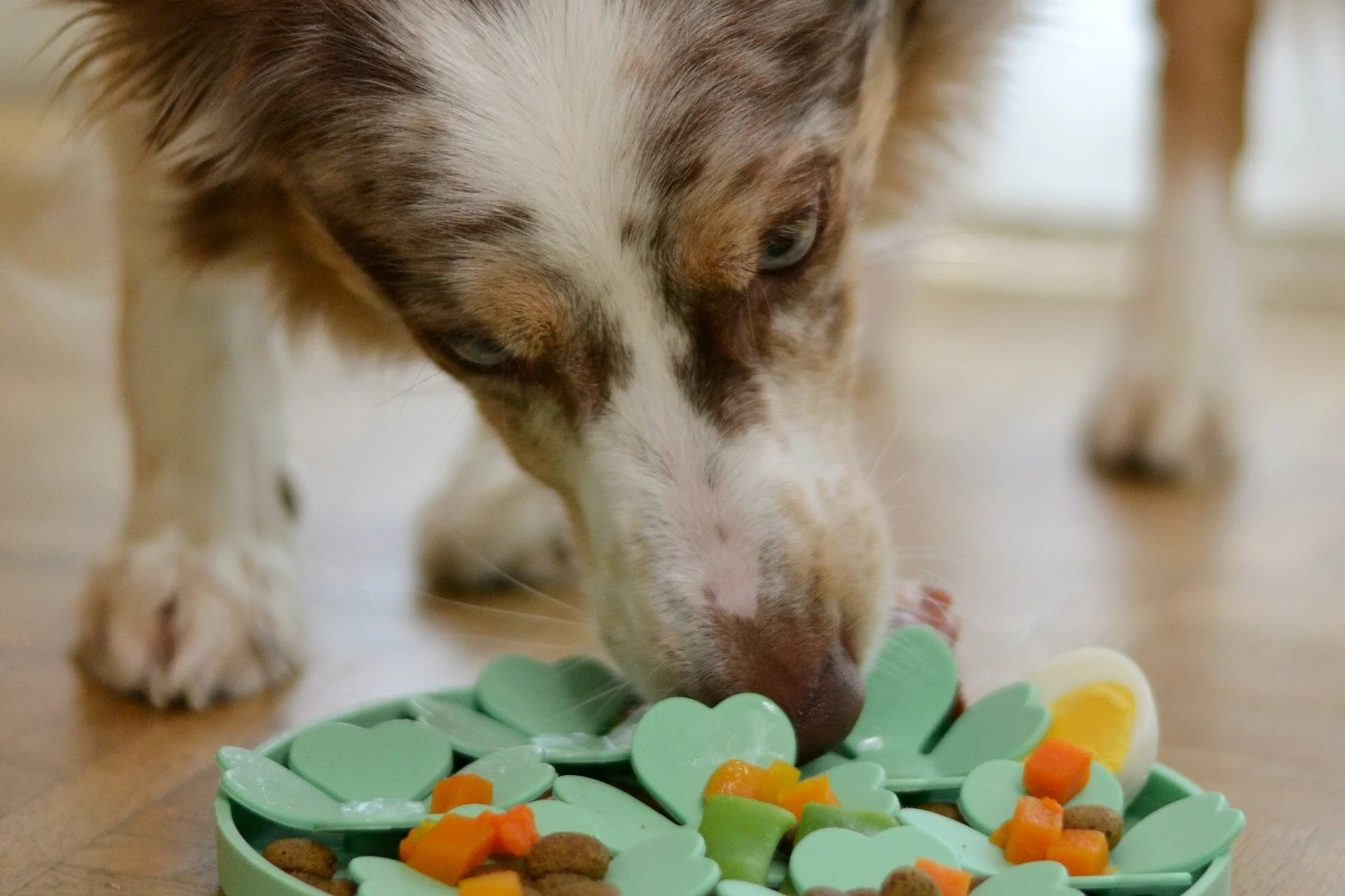
A maze dog bowl is a slow feeder with walls, spirals, or channels molded into the base, so your dog has to work food out of narrow paths instead of scooping it up in big mouthfuls. The pattern you choose matters more than the color or the brand: an open spiral is a gentle start, a deep, tight maze is a real challenge, and the right one depends on your dog’s face, food, and patience.
This post looks closely at maze patterns themselves. You will learn how the common layouts differ, how to match a maze to your dog’s muzzle and kibble, how to tell when a maze is too hard or too easy, and how to keep those narrow channels clean. If you want the bigger picture of how every type of slow feeder works, start with our post on how slow feeder bowls work.
What Is a Maze Dog Bowl?
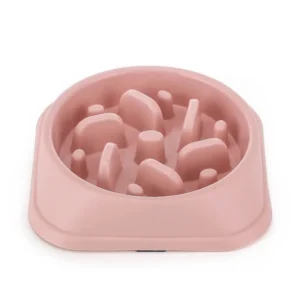
A maze dog bowl is a feeding bowl with raised barriers inside it. The barriers split the food into many small pockets and paths, so a dog cannot bury its face in one big pile. Instead, it has to lick, nudge, and pick at each section.
The Complete Slow Feeding Starter Kit
Get our expert cheat sheet delivered to your inbox — plus an exclusive 15% discount code for your first order.
The American Kennel Club describes slow feed bowls as bowls usually made of food-safe plastic with raised ridges and areas within the bowl, and explains that those ridges challenge dogs as they eat and keep them from eating too quickly. A maze bowl is simply a version where those ridges form a path or pattern.
Maze bowls are popular because they do not need any setup. You pour in the normal meal, put the bowl down, and the shape does the slowing for you. That makes them one of the easiest tools for a dog who empties a regular bowl in seconds.
Maze Feeder or Maze Dog Bowl: Is There a Difference?
People search for both terms, and in everyday use they mean almost the same thing. Still, there is a helpful way to tell them apart when you shop:
- Maze dog bowl. A bowl shape with a maze built into the floor. It has sides like a normal bowl and holds a full meal. It is meant for everyday feeding.
- Maze feeder. A wider term that can include flat maze plates, maze inserts that sit inside an ordinary bowl, and multi-level maze trays. Some are meant for full meals and some for treats or part of a meal.
Puzzle feeders are a step further. The AKC explains that with puzzle feeders, a dog must use its nose, tongue, and paws to solve the puzzle and release the food. A maze bowl never hides the food behind lids or sliders. Your dog can always see and smell it; the maze just controls how fast it can be reached. Our comparison of a slow feeder vs puzzle feeder explains when each one fits better.
The Main Maze Patterns, From Easy to Hard
Maze bowls look very different from each other, but most patterns fall into a few families. Here they are, roughly from easiest to hardest for a typical dog.
Open spiral
One long path curls from the edge toward the center. The walls are usually low and the path is wide. It slows dogs a little without frustrating them, which makes it a good first maze for puppies, seniors, and nervous eaters.
Petal or flower
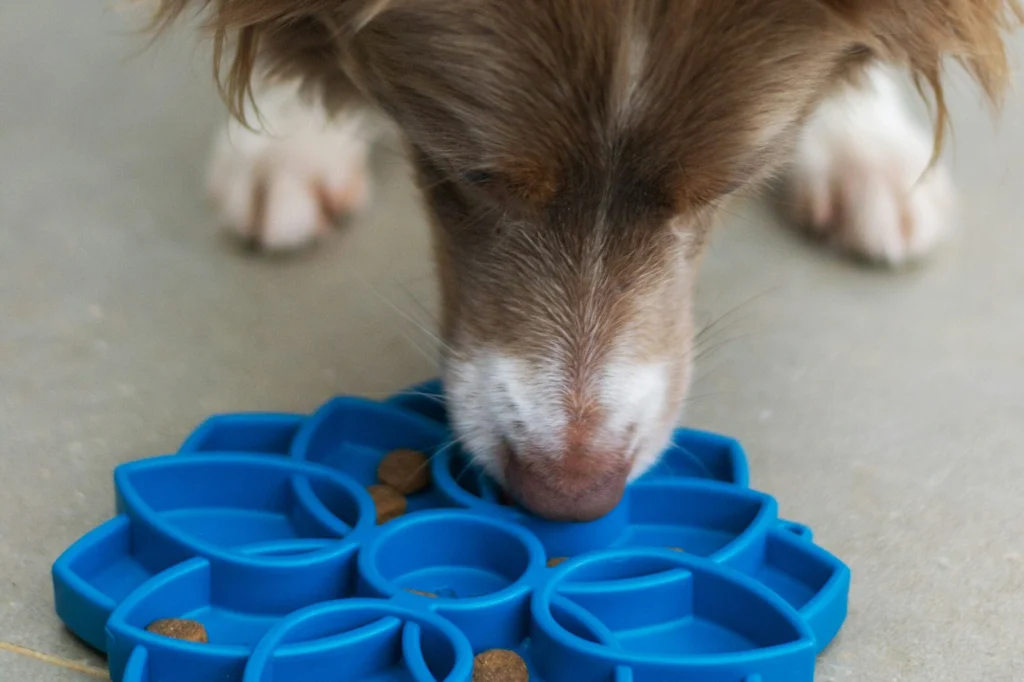
Rounded lobes radiate out from the middle, a bit like a flower. Each lobe holds a small amount of food. This pattern spreads a meal out and works well with both kibble and soaked food.
Wave or ridge
Rows of curved ridges run across the bowl. Dogs tend to lick along the valleys between them. Ridges are often shallower, so they are a good middle ground for small dogs and short muzzles.
Tight channel maze
Narrow, deep, winding channels that branch and turn. This is the classic “maze” look and the most challenging single-level pattern. It suits confident, food-driven dogs who have already mastered an easier bowl. Our Treat Maze Bowl uses a maze pattern with a non-slip base for small and medium dogs.
Multi-level maze
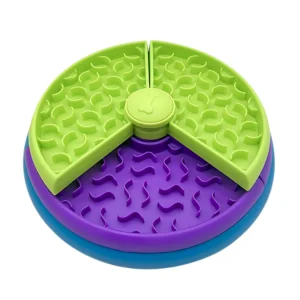
Two or three maze depths in one bowl. You can fill only the easy zone at first and add the deeper zones as your dog learns. The Triple Maze Feeder is built this way, so one bowl can grow with your dog’s skill.
How a Maze Changes the Way Your Dog Eats
A maze does not make food less tasty. What it changes is how each bite happens. In a normal bowl, a dog can take a huge scoop with every bite. In a maze, the walls limit how much fits between the teeth at once, so a dog switches to smaller bites, licking, and nosing pieces out of corners.
That matters because gulping has real downsides. The AKC lists choking, vomiting, discomfort, and a higher risk of bloat as risks of eating too quickly, and recommends slow feeder bowls as one way to help dogs eat at a slower pace. The AKC also notes that the added challenge of a slow feed bowl can make mealtimes more fun.
You may also notice a calmer dog after meals. A meal that takes a little effort uses some of your dog’s energy and curiosity, which is why many owners use a maze bowl alongside other food games. If you want to add more mental work, the AKC points out that snuffle mats work similarly to slow feeder dog bowls with raised areas, using sniffing instead of licking.
Matching the Maze to Your Dog’s Face and Food
The best maze pattern for one dog can be useless for another. Before you buy, check three things.
1. Muzzle shape
Long-nosed dogs can reach into deep, narrow channels. Flat-faced dogs such as Pugs, French Bulldogs, and Shih Tzus usually cannot, and a deep maze just frustrates them. Choose shallow ridges or a petal pattern for short muzzles. Our post on slow feeders for flat-faced dogs goes into detail.
2. Kibble size and food type
Very small kibble slides easily through tight channels, so it suits a harder maze. Large kibble can jam in narrow paths, so pick wider channels. Wet or soaked food spreads into every corner and works best in shallow mazes, where your dog can lick it out. For canned meals, see our tips on a slow feeder for wet dog food.
3. Meal size and bowl size
A maze bowl needs to hold one full meal without food heaped over the walls, or your dog will simply eat the top layer quickly. Our guide to what size slow feeder your dog needs shows how to measure one meal and check the footprint against your dog’s muzzle. Our maze bowls are designed for small and medium dogs and cats.
| Your dog | Maze pattern to try first |
|---|---|
| Puppy or first-time slow feeder user | Open spiral or petal |
| Flat-faced breed | Shallow wave ridges or petal |
| Small dog with tiny kibble | Tight channel maze once confident |
| Dog on wet or soaked food | Shallow petal or ridges |
| Very fast, very confident eater | Multi-level maze, deepest zone filled |
Signs the Maze Is Too Hard or Too Easy
Watch the first few meals closely. Your dog will tell you quickly if the pattern is wrong.
Too hard
- Your dog walks away from food it normally loves.
- It paws or flips the bowl hard, or starts chewing the walls.
- It barks or whines at the bowl, or leaves food stuck deep in the channels.
- Meals take so long that your dog gives up before finishing.
Too easy
- The meal still disappears almost as fast as in a normal bowl.
- Your dog licks straight across the top because the food is heaped over the walls.
- It still gulps, coughs, or brings food back up after meals.
If the maze is too hard, move to an easier pattern or fill only the easy section for a while. If it is too easy, split the meal into two smaller portions or step up to a tighter maze. Our post on whether a slow feeder is frustrating for dogs covers more signs and fixes.
Making a Maze Bowl Part of the Routine
Most dogs adapt to a maze bowl in a few meals, but a gentle start helps. Try this simple plan:
- Start with a few treats. Drop some favorite treats into the easiest part of the maze and let your dog find them. Keep it short and fun.
- Mix bowls for a few meals. Put part of the meal in the maze and the rest in the old bowl, then move more food into the maze each day.
- Use the same spot and time. A predictable routine keeps your dog calm, which helps it slow down.
- Pick the bowl up after the meal. This prevents chewing and keeps the maze for mealtimes only.
- Rotate patterns if you like. Some owners keep two different mazes and swap them so meals stay interesting.
Our step by step guide to introducing your dog to a slow feeder has more tips for stubborn or anxious dogs. And if your dog enjoys the challenge, a flat puzzle tray like the Puzzle Bites Feeder is a good next step.
Keeping Maze Channels Clean
The same narrow walls that slow your dog down also trap crumbs, gravy, and saliva. A dirty maze can smell and put a dog off its food, so cleaning matters more than with a plain bowl.
The FDA advises that you wash pet food bowls and scooping and measuring utensils with soap and hot water after each use. For a maze bowl, that means:
- Rinse right after the meal so food does not dry in the channels.
- Scrub each path with a bottle brush or an old toothbrush kept just for pet dishes.
- Check the corners and the base, where wet food likes to hide.
- Let the bowl dry fully before the next meal.
- Check the product care label before using a dishwasher.
For a full routine, see our post on how to clean a slow feeder and lick mat.
When a Maze Bowl Is Not Enough
A maze bowl is a helpful habit tool, not a medical treatment. If your dog vomits often, chokes, loses weight, or seems hungry all the time, call your vet before changing bowls. Fast eating can have health causes that no bowl will fix.
Bloat needs special attention. The AKC describes bloat, or gastric dilatation-volvulus, as a medical and surgical emergency and says to call your vet or emergency vet immediately if you think your dog has symptoms. Signs to know include a swollen belly, retching without bringing anything up, drooling, and restlessness. Our guide to dog bloat symptoms lists them in full, and our post asking do slow feeders prevent bloat explains what a slow feeder can and cannot do.
One more thing to keep in mind: the AKC notes that some studies have linked elevated dog bowls to a higher risk of bloat, and suggests talking to your vet if you are thinking about a raised bowl for health reasons. A maze bowl on the floor is the simple default for most dogs.
Pick a Maze Your Dog Can Solve
The right maze dog bowl is one your dog can finish without frustration but cannot gulp from. Start with an easy spiral or petal pattern, match the depth to your dog’s muzzle and food, and move to a tighter or multi-level maze once your dog is confident. Keep the channels clean, and call your vet if fast eating comes with vomiting or other signs of illness.
You can compare all of our maze and ridge designs in the slow feeder bowls collection, and our guide to the best slow feeder for dogs helps you weigh a maze bowl against other styles.
Get Your Free Slow Feeding Cheat Sheet
Everything in this article — plus portion charts, feeder comparisons and meal plans — in one printable PDF. A 15% discount code is included.
Frequently Asked Questions
Do maze dog bowls really slow dogs down?
Yes, for most dogs. The walls stop your dog from taking large scoops, so it has to lick and pick food out of small sections. The AKC recommends slow feeder bowls as one way to help dogs eat at a slower pace. If your dog still finishes quickly, try a tighter pattern or smaller portions.
What is the difference between a maze feeder and a puzzle feeder?
A maze feeder keeps food in view and uses walls or channels to slow access. A puzzle feeder hides food behind lids, sliders, or compartments that your dog has to move with its nose or paws. Maze feeders suit everyday meals, while puzzle feeders add more mental work.
Can a maze dog bowl be too hard for my dog?
Yes. If your dog walks away from food, paws hard at the bowl, chews the walls, or leaves food stuck in the channels, the maze is too difficult. Switch to a shallower pattern or fill only the easiest section until your dog builds confidence.
Are maze bowls good for puppies?
Many puppies do well with an easy maze, such as an open spiral or petal design. Choose shallow walls, watch the first meals, and pick the bowl up afterward so your puppy does not chew it. Our bowls are sized for small and medium dogs, including puppies of those sizes.
How do I clean a maze dog bowl?
Rinse it right after each meal, then wash it with soap and hot water, as the FDA recommends for pet food bowls. Use a small brush to reach into each channel, check the corners and base, and let it dry fully. Follow the care label before using a dishwasher.
Sources
The veterinary and government resources referenced in this post:

Digital marketing specialist at BrightSeen Marketing Agency. Turns veterinary research into clear, practical feeding guides for pet parents.
Mahmoud works for BrightSeen Marketing Agency, which looks after our SEO and GEO and Meta ads.
View all articles by Mahmoud