 Written by
If you have ever stood in a pet store aisle eyeing an elevated feeding stand, you have probably wondered whether it is a smart upgrade or an unnecessary extra. Raised bowls are marketed as easier on the neck, tidier at mealtime, and generally more comfortable for dogs and cats. For years, plenty of pet parents recommended them without much hesitation.
A closer look at veterinary research tells a more complicated story, especially for large and giant-breed dogs. Here is what the science actually says, which pets might genuinely benefit from a raised bowl, and which setups are safer if your dog or cat tends to gulp meals too fast.
Why Raised Bowls Became Popular in the First Place
The appeal is easy to understand. Elevating a bowl a few inches off the floor can mean less bending for a tall dog, less splashing around the water dish, and a tidier feeding station overall. For small apartments and busy households across the country, an elevated stand can also simply look neater tucked into a kitchen corner. None of that is wrong, and for many average-sized, healthy dogs and cats, a raised bowl is not dangerous on its own. The concern that has emerged from veterinary research is more specific, and it centers on bloat risk in certain dog breeds.
Slow Feeding for Better Digestion & Bloat Prevention
Get our expert cheat sheet delivered to your inbox — plus an exclusive 15% discount code for your first order.
The Bloat Connection: What the Research Actually Found
Bloat, formally known as gastric dilatation-volvulus (GDV), is a life-threatening emergency in which a dog’s stomach fills with gas and can twist on itself, cutting off blood supply. The American Veterinary Medical Association (AVMA) and the American Kennel Club (AKC) both identify GDV as one of the most urgent conditions a dog owner can face, with survival depending heavily on how fast a dog reaches emergency veterinary care.
A widely cited risk-factor study led by researchers at Purdue University, with support from the AKC Canine Health Foundation, looked specifically at large and giant-breed dogs and found that feeding from a raised bowl was associated with a meaningfully higher risk of bloat compared to floor-level feeding. The finding was notable enough that veterinary resources such as VCA Animal Hospitals and the AKC Canine Health Foundation now generally caution against elevated feeders for bloat-prone breeds unless a veterinarian recommends one for a specific medical reason.
It is worth being precise here: this research applies to large and giant breeds with deep chests, not to every dog. A ten-pound Chihuahua eating from a slightly raised dish is a very different situation than a 120-pound Great Dane doing the same.
Which Dogs Are Most at Risk
According to the AKC and veterinary school resources, the dogs most associated with bloat risk tend to share a deep, narrow chest conformation. That includes Great Danes, Weimaraners, Saint Bernards, Standard Poodles, German Shepherds, Doberman Pinschers, Irish Setters, and Basset Hounds, among other large and giant breeds. Other recognized risk factors include eating one large meal a day instead of two or more smaller meals, eating very quickly, having a first-degree relative who has had bloat, and general stress or anxiety around mealtime. If your dog checks several of these boxes, a raised bowl is one variable worth reconsidering, alongside slower eating habits in general.
When a Raised Bowl Might Still Make Sense
None of this means elevated feeders are universally bad. Veterinarians sometimes recommend a raised bowl for dogs with specific medical needs, such as megaesophagus, certain forms of arthritis, or neck and spine conditions that make lowering the head genuinely painful. Senior dogs with stiff joints can also find mealtime more comfortable with a modest boost in bowl height, particularly during colder months when arthritis symptoms tend to flare, something pet parents in colder states like Minnesota, Wisconsin, and across the Northeast often notice as temperatures drop each fall and winter. The key difference is that these are individual medical decisions made with a veterinarian, not a default choice for every dog based on marketing alone. If your dog falls into a bloat-risk category and also has a mobility issue, talk to your vet about the safest way to balance both concerns, which may include a bowl raised only slightly rather than to full standing height.
What About Cats?
Cats are not considered a significant bloat risk the way large-breed dogs are, so the GDV research above is primarily a dog concern. That said, elevated bowls can be genuinely helpful for senior cats with arthritis, since many older cats find it uncomfortable to lower their head repeatedly to a floor-level dish. On the flip side, a raised bowl does nothing to address fast eating in cats, and it will not help with whisker fatigue, which happens when a bowl’s sides press against a cat’s sensitive whiskers regardless of height. For cats, the shape and width of the dish usually matters more than how high it sits off the ground.
A Floor-Level Alternative That Solves the Real Problem
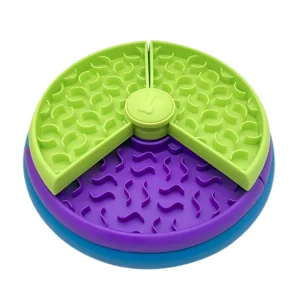
If your actual goal is slowing down a fast eater rather than reducing neck strain, a raised bowl is not the right tool anyway. A textured slow feeder bowl set at normal floor height, like our Interactive Licking Bowl, uses ridges and raised patterns to make dogs and cats work for each bite, which naturally slows down gulping without introducing any of the elevation concerns discussed above. For dogs who finish a bowl in under a minute, a maze-style design such as the Triple Maze Feeder adds an extra layer of mental engagement while keeping the bowl low and stable on the floor. Both approaches target the actual risk factor, eating too fast, without the elevation debate at all.
How to Choose the Right Setup for Your Pet
Start by asking what problem you are actually trying to solve. If your dog or cat eats too quickly, a slow feeder at floor height is the more evidence-backed choice, especially for large and giant breeds with deep chests. If your pet has a diagnosed medical condition that makes floor-level eating physically uncomfortable, a raised bowl may be appropriate, but that decision belongs with your veterinarian rather than a product description. And if neither concern applies, a simple, stable, floor-level bowl in a quiet corner of the kitchen is usually the safest default for most healthy dogs and cats across the country, whatever the climate or season.

Get Your Free Slow Feeding Cheat Sheet
Everything in this article — plus portion charts, feeder comparisons and meal plans — in one printable PDF. A 15% discount code is included.
Frequently Asked Questions
Are elevated bowls bad for every dog?
No. The research concern is concentrated in large and giant breeds with deep chests. Small and medium dogs without other risk factors are not considered to be at meaningful added risk from bowl height alone.
My vet recommended a raised bowl. Should I still worry?
Not if the recommendation came from your veterinarian based on your dog’s specific health needs. General research findings are meant to guide default choices, not override individualized veterinary advice for your own pet.
Can a raised bowl help with arthritis?
It can make mealtime more comfortable for some senior dogs and cats with joint pain, which is why vets sometimes recommend a modest height increase on a case-by-case basis.
What is a safer option for a dog that eats too fast?
A textured slow feeder bowl or a maze-style puzzle feeder kept at normal floor height addresses fast eating directly, without the elevation factor that has been linked to higher bloat risk in large breeds.
Mealtime should feel safe and simple, not like a guessing game. Whether your dog needs a slow feeder to pace those meals or your cat needs a lower, wider dish for happier whiskers, you can browse our full lineup of U.S.-made-for-comfort feeding solutions in the Pets Sparkle shop and find the right fit for your pet’s size, age, and habits.

Mahmoud Mohamed Samir is an SEO/GEO Specialist who turns veterinary research into clear, practical feeding guides, built so pet parents get straight answers whether they search on Google or ask an AI assistant.
View all articles by Mahmoud